
I attended the World Health Summit in Berlin for the first time this year. I was struck by the ubiquitous influence of private actors – and industry’s claims on what remains of development aid budgets.
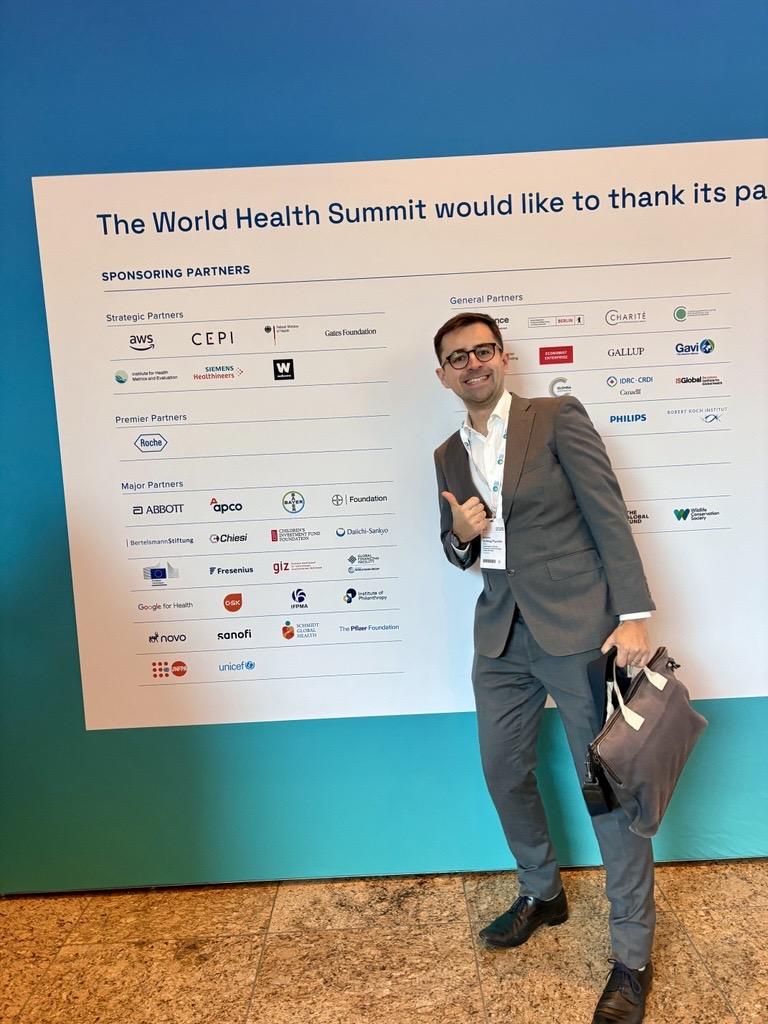
The World Health Summit is a privately organized platform for global health discussions. Its list of “sponsoring partners” displayed prominently at the entrance, left little doubt as to whose voices would set the tone: the pharmaceutical industry, big tech companies, mega-philanthropic foundations, and global health partnerships on the lookout for fresh funding. Almost all the main panel sessions had pharmaceutical company representation.
These actors sent large delegations, despite the exorbitant registration fees (4000€ for the industry, 900€ for philanthropy). The Gates Foundation had 34 registered participants, Wellcome 31 (including their own photographer!), while Bayer (23), Amazon (19), and Sanofi (17) also had substantial manpower.
Sponsors did not merely contribute to the summit’s luxurious rooms, delicious food and communication apparatus – they also bought a seat at the table, and the opportunity to shape the script of conversations.
Take for instance a Tuesday afternoon session hosted by Bayer, moderated by the company’s “head of strategic communication” and featuring Bayer Pharmaceuticals’ “chief health equity office and global health of public affairs” on the panel, alongside partners from the Gates Foundation and others. So much for an “open and frank” discussion on “Financing the Future of Health: Building the Next Generation of Public-Private-Philanthropic Partnerships (PPPPs)”.
Meanwhile, Tik Tok should get the award for the most brazen reputation laundering. Its side event on “youth perspectives on mental wellbeing online” clashed sharply with mounting evidence that the platform harms young users’ mental health.
The Accra Reset and its call to redistribute power towards Global South countries dominated many of the Summit’s conversations. Industry representatives, however, had a different message: global health must “share the risk to foster innovation” to incentivize the development of pharmaceuticals and technologies targeting diseases disproportionately impacting low-income countries.
Their recipe? Donors should “de-risk investments” by developing “multi-year, long-term funding”; providing “market guarantees” and “predictable demand”; supporting a “strong, predictable IP regime and favorable trade environment”; while ensuring that “the industry has a seat at the table” through “true partnerships”. This sounds a lot likethe public-private partnership model that has dominated global health the past quarter century.
In three days at the Summit I surely reached my annual quota of “global health nonsense”. Still, I’m glad I went: the sessions made current political priorities impossible to miss, and in that sense, the Summit fulfilled its important function of facilitating multistakeholder dialogue.
See you next year?
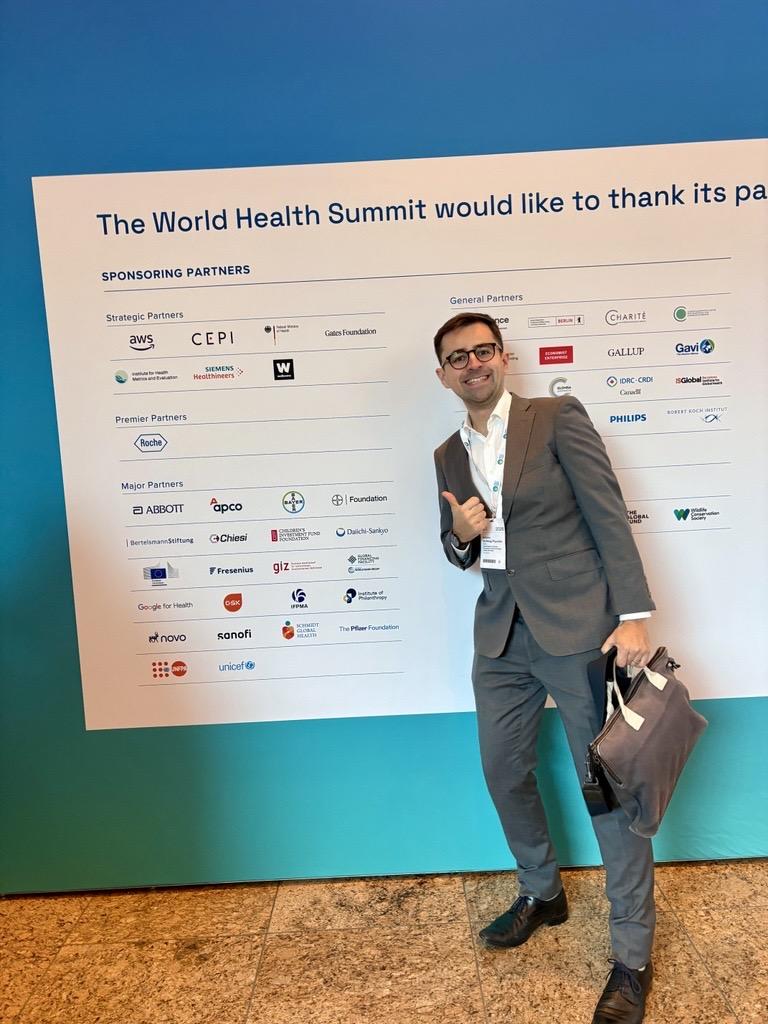
Antoine in front of the sponsor board at the World Health Summit