Subscribe to our weekly International update on Health Policies
Young (and occasionally less young) researchers, mostly from LMICs, present their views on global health issues.
In recent years, global health discourse has increasingly adopted the term “ polycrisis” to describe the confluence of different global crises — armed conflict, the climate emergency, pandemics, and economic instability — that collectively strain health systems and governance structures. The concept indeed captures an important reality a...
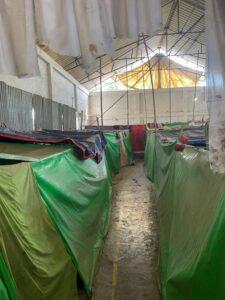
Since May 2023, Manipur, situated in the North-easthern part of India, has experienced a prolonged period of ethnic violence that has killed more than 250 people and displaced over 60,000 residents across the state. Much of the national attention has focused on political instability and the breakdown of law and order. However, inside relief camp...
The International Day of Happiness (IDoH), celebrated on March 20, raises a simple question every year: what makes a society happy? This year’s theme of “caring and sharing” may seem to find its answer in individual acts of kindness. However, decades of global statistics tell a different story. It turns out that happiness is not something ...
Dans un contexte de recomposition des relations internationales, la transition du multilatéralisme vers des accords bilatéraux dans le cadre de la stratégie « America First » constitue pour le Mali à la fois une opportunité de dialogue direct et un risque accru de dépendance. La capacité du pays à négocier des partenariats équilibré...
For centuries, societies have sought to understand health through the data they could collect. From Roman censuses to parish registers in Florence and from the earliest civil registration systems to large-scale digitized population databases. Today, India is generating an unprecedented volume of health information through its rapidly expanding d...
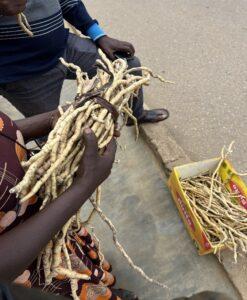
On 3 March every year, the global community comes together to celebrate United Nations World Wildlife Day (WWD), recognizing the essential role that wild animals and plants play in sustaining ecosystems, economies and human well-being. This year’s slogan “Medicinal and Aromatic Plants: Conserving Health, Heritage and Livelihoods” places ...
The reform of the global health architecture (GHA) discussed in the last WHO Executive Board (E.B.) in February 2026, is a matter of strategic importance for the future of the global health system (GHS) and its functions and for the shaping of the GHA itself. The E.B. approved a Decision requesting that the Director General of WHO: (1) designs a...
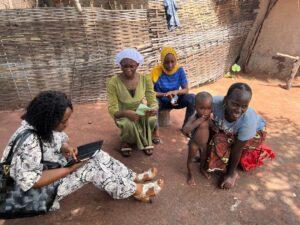
Guinea is less dependent on US funding than many other African countries. As a result, the impact of changes in global health funding on Guinea (and countries like it) is often neglected. In December 2025, Delphin Kolié (Centre National de Formation et de Recherche en Santé Rurale de Maferinyah, Guinea) interviewed several key actors involved ...
In November of 2025 the 30th session of the Conference of Parties (COP30) took place in Belem, Brazil.While the COP has been the central platform for environmental policy for decades, and a touchpoint on current attitudes towards the climate crisis, health has surprisingly not played a very central role in the past. It appears this is – at las...