
Why being global health’s indispensable payer no longer buys leadership
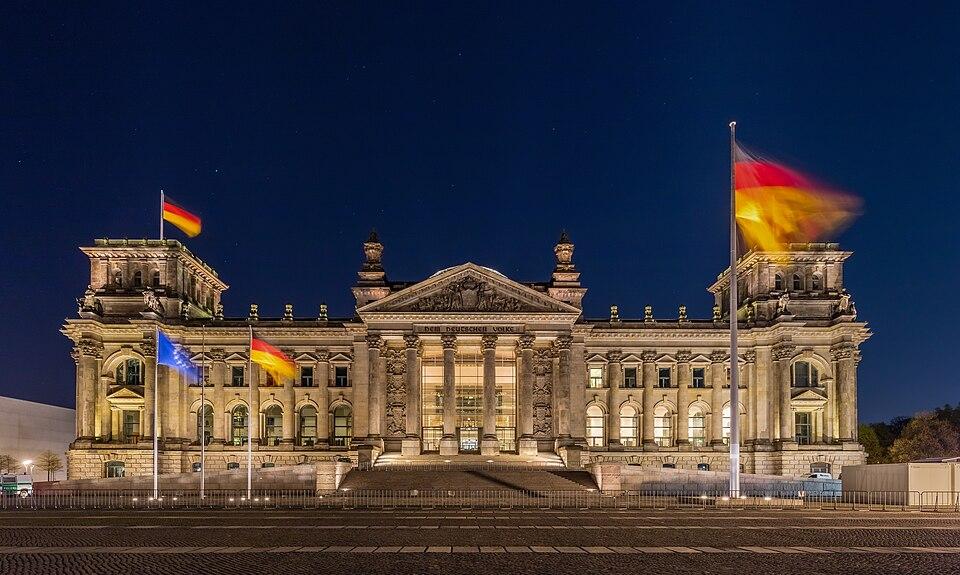
Germany may be the country the World Health Organization (WHO) can least afford to lose. That does not make it the country others are willing to follow.
The United States has withdrawn from WHO, reduced foreign assistance for health and begun recasting its global health engagement around bilateral “America First” health agreements. The resulting funding shock has made Germany an obvious stabiliser. But its rise also exposes a larger problem. Financial weight can protect institutions from immediate disruption without necessarily generating wider political authority or trust.
From latecomer to indispensable payer
Over the past two decades, Germany has moved from being a relative latecomer in global health to one of its most important state actors. Under chancellor Angela Merkel, health became more visible in G7 and G20 diplomacy; Germany supported WHO reform and later hosted the WHO Hub for Pandemic and Epidemic Intelligence in Berlin. Its role in negotiations to increase WHO assessed contributions reinforced its reputation as a serious defender of predictable multilateral financing.
The 2025 midterm review of the federal global health strategy reaffirmed Germany’s ambition to remain a “leading shaper” of global health. After the US withdrawal made Germany WHO’s largest financial contributor, commitment increasingly looked like influence, stabilising the multilateral health order.
But stabilisation is not the same as leadership. This is the promise and limit of fiscal multilateralism, the belief that reliable financial contributions to international institutions can be converted into authority. Money may close budget gaps. It does not settle who should set priorities, or why others should follow.
The limits of fiscal multilateralism
Germany’s own choices show how unstable this role has become. The federal government’s proposed 2027 budget, still subject to parliamentary approval, points towards a more selective approach. Under the current proposal, the Health Ministry’s international health allocation would fall by 7.4% to €106.4 million and flexible international public-health funding by 15.3% to €47.3 million. Funding for the WHO Pandemic Hub would remain at €15 million, half its earlier level. These are not final cuts, but they signal current priorities.
At the same time, Germany’s assessed WHO contribution would rise slightly, Gavi funding would remain at €80 million, and the Global Fund contribution would fall only marginally. This is less withdrawal than narrowing and prioritising Germany’s global health engagement.
The broader trajectory points in the same direction. Germany’s total official development assistance fell by around €5 billion to €25.8 billion in 2025, equivalent to 0.56% of gross national income and again below the UN target of 0.7%.
A January 2026 reform plan made the strategic turn explicit. Development policy would become “more strategic, more focused and more partnership-based,” while acknowledging German interests more openly.
If approved, the 2027 budget proposal would extend that logic into global health itself: substantial commitment, but more selective and tied to national interests.
Tensions surfaced during WHO Director-General Tedros Adhanom Ghebreyesus’s visit to Berlin in March 2026, amid reported disagreements over access to Chancellor Friedrich Merz and a possible German candidate for the next WHO Director-General election. The episode exposed the structural tension beyond diplomatic awkwardness: WHO needs German money, stability and political backing, but not necessarily German ownership. Berlin wants recognition for its institutional weight, yet financial indispensability does not make others follow.
Being needed doesn’t mean being followed
The same lesson appeared outside health when Berlin failed to secure a non-permanent seat on the UN Security Council, losing to Portugal and Austria despite being one of the UN system’s major contributors. The defeat was unprecedented for Germany’s record of Security Council candidacies.
No single explanation can be assigned to the secret ballot. Germany entered the race much later than its competitors, Russia reportedly campaigned actively against it, and cuts to development assistance may also have weakened support. But Germany’s position on Gaza brought another issue into view: credibility.
Foreign Minister Johann Wadephul acknowledged after the vote that Germany’s positions on Ukraine and Gaza may have influenced how countries voted. Germany’s historical responsibility towards Israel is widely understood, but its response to the war in Gaza has fuelled accusations, particularly in parts of the Global South, that it applies international rules selectively. A post-election analysis by Deutsche Welle identified this tension: a country presenting itself as a defender of international law faced growing questions about whether it applied that commitment consistently.
That matters for global health. Health diplomacy does not exist apart from foreign policy. Countries asked to trust Germany’s commitment to equitable multilateralism also observe how it behaves on international law, conflict, trade, climate and development. Political authority is cumulative, and so is distrust.
For much of the post-Cold War period, a bargain seemed plausible: rich countries like Germany could exercise disproportionate influence in multilateral institutions because they financed and defended them. Germany’s version was more restrained and rules-based than that of many larger powers, but it still rested on asymmetry.
That bargain is weakening. In a multipolar world, leadership depends not only on what a country contributes, but on whether others find its claims to principle credible.
As the United States pulls back, Europe will have to carry more of the burden. But swapping one dominant donor for another does not solve the deeper problem of who gets to shape multilateral institutions. For many countries in the Global South, the issue is not only who pays, but who sets priorities, writes the rules and holds influence. More funding cannot settle those questions.
From paying more to sharing power
Germany’s South-North Commission, launched in June 2026 with commitments to equal agenda-setting, joint decision-making and regional consultations, matters. It deliberately invokes Willy Brandt’s North-South Commission, whose 1980 report reframed development as mutual survival rather than charity. Its language endured, but few of its ambitious proposals were implemented. A recent assessment warns that the new commission must move beyond the earlier model of eminent figures producing recommendations from above and instead accommodate the diverse and conflicting interests of the Global South.
The test is whether new arrangements transfer real influence rather than merely widen consultation. If they do, it could model a different kind of German leadership, based on restraint and shared authority.
Germany may be the last stabiliser, but stabilising institutions is no longer enough. Germany’s experience points to a new phase of multilateralism. Financial commitment remains indispensable, but it cannot substitute for alignment, consent and earned leadership.