
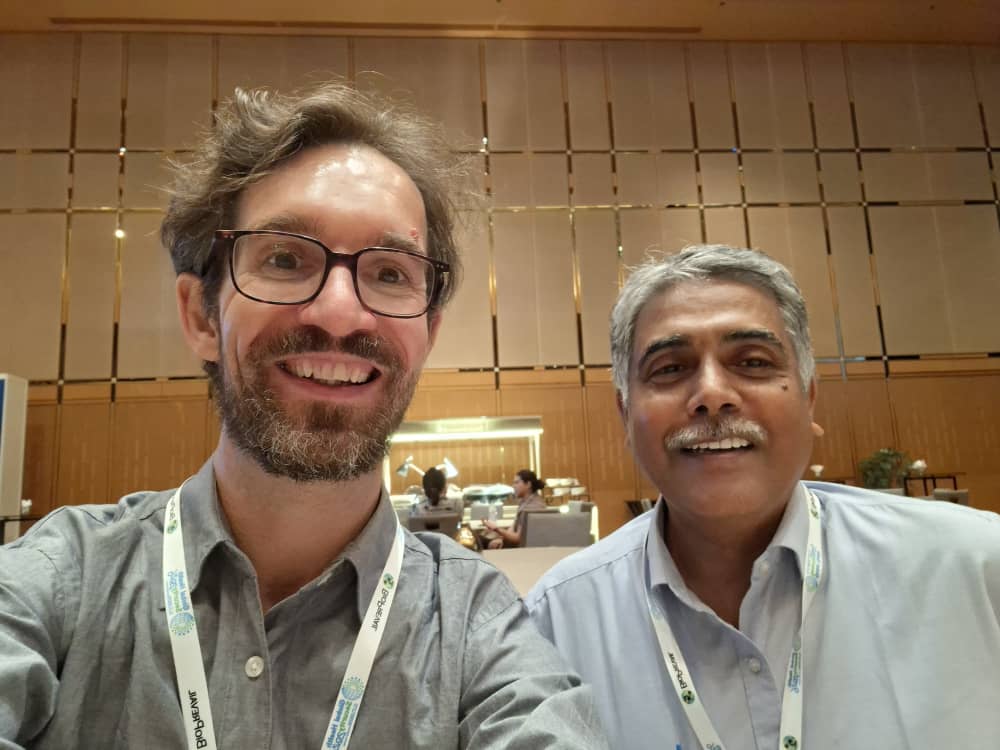


The Global Health Security Conference 2026 took place in Kuala Lumpur from June 9-12th. The timely event, especially in the wake of recent Ebola and Hantavirus outbreaks , brought together a large number of international stakeholders and provided critical reflections on advancing the health security agenda by reinforcing policies, governance, multisectoral collaboration, and coordinated action and implementation. The discussions had a strong focus on traditional health security themes like biological threats, biosecurity, biosafety, zoonotics, surveillance, One Health, laboratory systems, AMR, AI, genomics, and preparedness. Overall, the agenda clearly seemed to be guided by the major post-COVID risk perception and priorities such as pandemic preparedness, climate-health risks, synthetic biology governance, and regional health security cooperation.
However, viewed against the current broader global health landscape, the Global Health Security (GHS) debates in Malaysia had some notable gaps, or at the very least a scattered focus on certain themes. Critical perspectives remained rather marginal, among others the recent structural approaches that encompass human rights discussions in relation to pandemic and climate risks; discussions on socio-ecological determinants of health, biodiversity governance, food sovereignty, inequalities, justice, etc. From a multilateralist perspective, cross linkages with the Sustainable Development Goals (SDGs) and broader sustainability agenda, as well as with the WHO Global Health Strategy and Fourteenth General Programme of Work (GPW 14 – 2025–2028) were also missing. One is left to wonder about the continuing siloes.
In the current complex health landscape, it is needless to mention that health security and health-system strengthening should no longer be treated as separate agendas. With that in mind, the limited focus on health systems and UHC was perplexing. By now it should be clear that countries with strong primary care, workforce capacity, and resilient health systems can prepare, detect and respond better to catastrophes than countries relying mainly on a firefighting mode. Strengthening national as well as subnational health systems, and recognizing and integrating PHC and UHC as foundations of health security should thus become vital in the discussion of GHS. This triggers a number of critical questions: How can health security investments strengthen routine health services? How should countries integrate preparedness into primary care? Which health system reforms and transformations improve resilience during multiple concurrent crises?
General health indices like maternal and child health and UHC have shown significant progress in recent decades. However, from an epidemiological transition perspective, one cannot help but wonder how the epidemic of multiple and co-morbidities and shortened healthy life expectancy (HE), which have emerged as causes of health system overload especially in LMICs, will affect health security in the wake of emerging threats.
Except in a small number of sessions community engagement was underrepresented. Missing perspectives included, among others, advancing community engagement and social trust, building participatory surveillance systems, and community-led impact assessments as well as preparedness including by harnessing nature-based solutions through a broader, holistic strategy. From the COVID-19 pandemic it is apparent that trust and community engagement are among the strongest determinants of response success.
On a related note, there was also insufficient focus on local and indigenous knowledge systems and their potential contribution towards preparedness and risk mitigation. This is particularly notable given the growing calls to decolonize global health and broaden the evidence base for preparedness. Health challenges cannot be understood through a single scientific paradigm alone. Local, Indigenous, experiential, and disciplinary knowledge systems each provide different but legitimate understandings of contextual realities. Success of implementation and localization of global health security are contingent on creating spaces for diverse knowledge systems to coexist and interact with due consideration of a pluralistic evidence base as well.
Other significant omissions related to urban systems, megacities and governance, informal settlements; conflict zones; marginalized communities including migrant workers, refugees, indigenous populations with limited health access.
Finally, Global South leadership could have been more prominent. Although there was substantial participation from the Global South, the framing of strategic discussions still appears dominated by traditional health security institutions based in the North, and techno-managerial approaches. Decolonizing health security and promoting more locally led preparedness through alternative governance models including participation of marginalized groups are clearly needed in the upcoming events.
While the program was excellent in terms of the more technical elements of biosecurity, including harnessing of artificial intelligence and advanced technologies and emergency responses, there was not enough emphasis on areas like health systems transformation; social, economic and political determinants; humanities and social sciences; rights, equity and justice; and long-term societal resilience.
In conclusion, the conference largely reflected a ‘preparedness and threat management’ model aligned with a traditional Global Health Security Agenda (GHSA) paradigm rather than a broader ‘resilience and systems transformation’ approach.
Disclaimer: This perspective is a personal viewpoint by the authors and does not represent an institutional position.