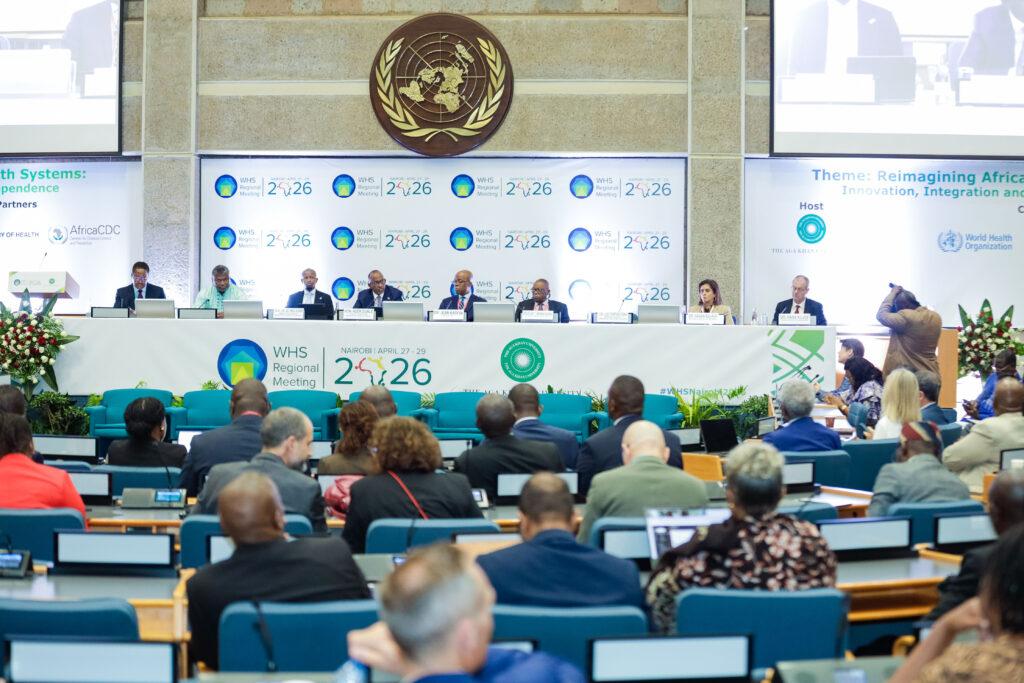

Last week the World Health Summit Regional Meeting 2026, themed ‘Reimagining Africa’s Health systems: innovation, integration and interdependence’, took place in Nairobi, Kenya at a critical moment for global health. WHS Nairobi (and side events on the margins) brought together policymakers, researchers, and practitioners to reflect on (re-) building resilient health systems on the continent. I participated virtually in the meeting. While much of the discourse was focused on Africa’s role in global health architecture reform, financing, pandemic preparedness and digital innovation, several equally important themes received less attention and deserve greater visibility, particularly nutrition, traditional medicine, and – to a lesser extent perhaps – the role of community health workers. Arguably, all of these came up in Nairobi, and community health workers were even discussed in quite some detail. Yet, there was room for more explicit links with the overall theme of the meeting, certainly for nutrition and traditional medicine. A future regional WHS in sub-Saharan Africa could perhaps feature them as standalone subthemes?
Nutrition remains one of the least integrated components of health systems despite its fundamental role in shaping health outcomes. At the summit, the burden of malnutrition including undernutrition, micronutrient deficiencies, and diet-related non-communicable diseases was acknowledged, but not consistently framed as central to health system strengthening. Nutrition is (still) often treated as a vertical programme rather than a cross-cutting priority. If health systems are to be truly integrated, nutrition must move beyond siloed programming and be embedded within primary healthcare, prevention strategies, and broader social policies. Without this shift, efforts toward UHC risk overlooking a fundamental determinant of health.
While traditional medicine has been rising on the global health policy agenda in recent years, there’s still not enough attention for its integration in health systems. As most participants in Nairobi know very well, across many African contexts, traditional medicine remains a primary source of care for a significant proportion of the population. While not a dominant theme at the meeting, the topic emerged within broader conversations on integration, local innovation, and African-led solutions. Traditional medicine was implicitly acknowledged as part of culturally grounded care and locally available resources, aligning with calls for more context-responsive and self-reliant health systems. However, the discussions stopped short of outlining clear frameworks for its integration. This highlights an important gap and an opportunity to more deliberately engage traditional medicine through research, regulation, and collaboration within formal health systems.
Equally important is the role of community health workers (CHWs), who are often the first point of contact between communities and the health system. The critical role of community health workers in advancing primary healthcare and universal health coverage was highlighted. Though not as a standalone theme, CHWs were recognized as essential links between communities and formal health systems, supporting prevention, surveillance, and service delivery. The summit reflected a shift from viewing CHWs as auxiliary actors to core members of the health workforce. This underscored the need for their formal integration, structured training, and sustainable financing. Strengthening CHW programmes is key to ensuring health systems are community-centered and responsive to local needs. By the way, at an event on the margins of the WHS, Africa CDC and Africa Frontline First strengthened their partnership to accelerate Community Health Workforce expansion.
The Nairobi meeting emphasized the need for inclusive and context-responsive health system strengthening. Technological advances and policy commitments are important but must be complemented by investment in community-based systems and locally grounded solutions. As the global health community reflects on summit outcomes, there is an opportunity to broaden the narrative. Nutrition, traditional medicine, and CHWs are central to equitable, resilient health systems. Elevating these priorities is essential to ensure systems respond to global challenges and remain grounded in community realities. This requires sustained political will, cross-sector collaboration, and equitable resource allocation at all levels including local and national governance structures for sustainability efforts.