
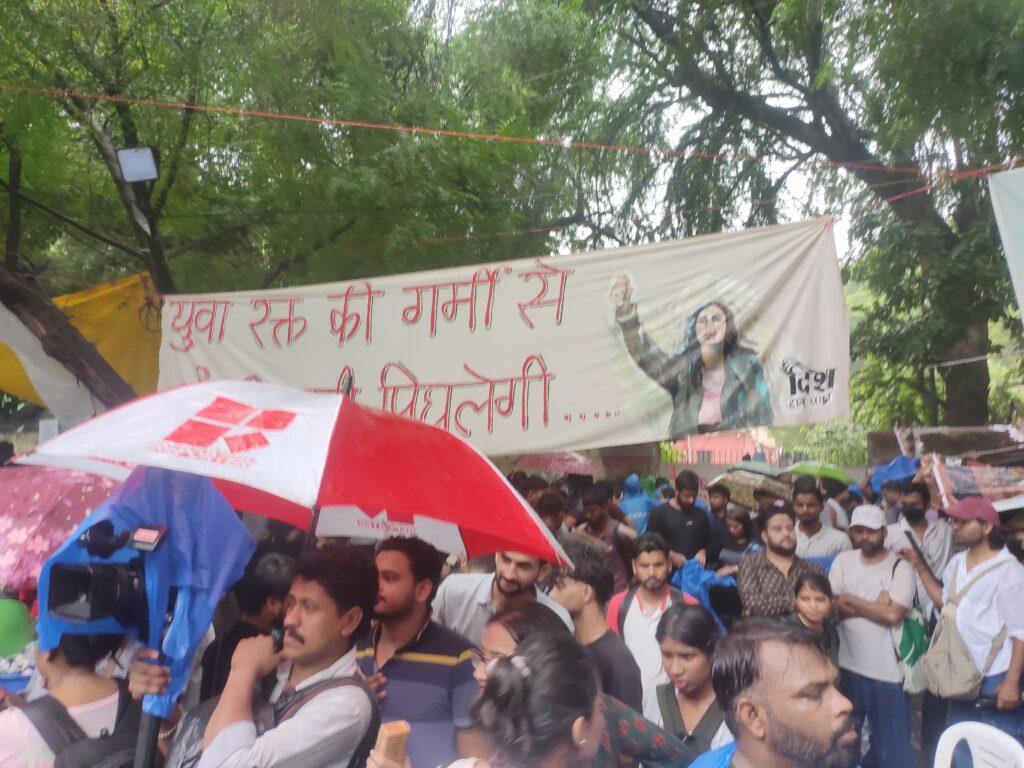





The Indian “cockroach movement” led by Cockroach Janta Party is a recent and vivid expression of Gen Z anger and youth mobilization. It emerged after the Chief Justice of India compared some unemployed young people to ‘cockroaches’ during a court hearing; he later clarified that he had not intended to disparage India’s youth as a whole. Young activists reclaimed the label and turned it into a collective political identity. That does not prove that Indian youth share a single diagnosis of the problems or a common political agenda. It does, however, signal a widening loss of institutional trust. One that no doubt goes beyond India.
In 2025, Gen Z-led protests challenging corruption, political repression, and economic hardship toppled governments in Nepal and Madagascar, and shook governments in Kenya, Togo, and Morocco. Similar anger is visible in high-income countries, where young people are confronting housing unaffordability, AI-driven precarity, and climate inheritance. Can this anger be channelled into the WHO-convened global health reform process and the Accra Reset? The question demands reflection and action, not performative “youth engagement”.
Are we listening? What does Gen Z anger tell us
The same diagnostic signal flashed in Nepal in September 2025. What began as a protest against a government social media ban rapidly evolved into a confrontation over corruption, nepotism, political privilege, and state accountability. Police killed at least 19 protesters on day 1, and the final death toll rose to 76. Government buildings were burned and the prime minister resigned. Young people made institutional failure visible through their lived experience of the state.
The deaths, injuries and destruction from the protests also demand analytical and ethical reflection. Anger can reveal how institutional failure is experienced, but it cannot explain its causes, prescribe what should replace existing systems, or justify violence. Across the world, young people are observing and experiencing systems designed by people who will not live with their consequences. Global health is not exempt from this diagnosis.
Two distinct Global Health Reform tracks under pressure
The WHO-led reform and the Accra Reset are among the leading global health reform processes. Both reflect an architecture exhausted by donor fatigue, geopolitical fragmentation, vaccine nationalism, and concentrated power in donor capitals and philanthropic foundations. Too often low-income countries have been treated as implementation sites rather than equal participants in decision-making. The Accra Reset names the problem more honestly: sovereignty, domestic resource mobilisation, local manufacturing, and an end to permanent dependency. In the midst of Gen Z rage, will serious diagnosis lead to a serious reform?
Are we reflecting? Whose knowledge shapes reform
Global health already has many mechanisms for engagement: civil-society dialogues, youth councils, stakeholder consultations and leadership programs. The WHO reform process commits to civil-society and youth engagement, and WHO maintains a Youth Council. The harder question is whether participation changes decisions.
The current Joint Task Force on GHA reform and the High-Level Panel of the Accra Reset feature few Gen Z representatives. Even when few young people gain access to these spaces, they are often those who have mastered the accepted institutional language –fluent in the vocabulary of equity and inclusion, comfortable with PowerPoint, and sufficiently invested in the system’s legitimacy that they unlikely to disrupt its agenda.
What happens when those in the streets – whether in Delhi, Kathmandu, Nairobi, Lagos, or those involved in housing protests in Spain or Canada – are not asking to be invited into the room, but are instead demanding to change who controls it, sets the agenda, and decides the participation?
This is not a failure of individual goodwill; it is structural. Institutions’ dependency on the existing financing flows, hierarchies of expertise, and power relations cannot easily accommodate a generation that perceives these structures as mortgaging its future. If Gen Z anger is treated merely as an input to manage, rather than a signal that the time horizons, incentives, and priorities of current decision-makers are fundamentally misaligned, Global Health reform will produce yet another round of elegant reports and modest procedural adjustments. Young people are asking us to wake up. It is time we listened.
Ethnographic work in remote Nepal points to the similar gap between how institutions understand maternal health policies and how women actually experience them. Safe motherhood commitments can coexist with staff shortages, unreliable transport, and geographical inequities. The issue is therefore not only whether marginalised people (or young people) enter the policy rooms, but whether their lived experiences and their rage are treated as evidence of how governance is actually (not) working. Otherwise, participation becomes another form of the reform theatre we already know too well.
Are we taking action? What happens after participation and consultation
But there is hope. The recently adopted WHO African Region’s 2026–2035 financing strategy emphasises country leadership, domestic resource mobilisation, accountability and participation. If implemented well, it could show the Accra Reset ‘in action’. The Accra Reset has a window of opportunity as it is framed around sovereignty rather than dependency. But if the high-level panel recommends “more inclusive governance” while leaving the underlying political economy of global health financing untouched, it may become another African-led reform welcomed in principle and diluted in practice. If, instead, it treats the Africa’s demographic reality—and that of the wider Global South—as a political fact rather than a talking point, it could become a vehicle for shifting actual power.
That requires more than inviting a few younger faces in. Gen Z is not asking for a seat at a table where the menu has already been written by people unlikely to still be accountable when the bill arrives. They are questioning whether the table itself need to change.
Clearly, there is no single global Gen Z movement. The anger is local, and context-specific, making it harder to co-opt into one narrative. The Indian “Cockroach Janta Party” protestors are not the same as Nepali Gen Z protesters or young people in Barcelona worried they may never own a home. What they share is a structural position: they inherit the costs these systems push into the future.
Global health reform is, therefore, at a turning point. Anger can expose institutional failure but it cannot substitute for a program. The real test is whether participation of young people and community-based groups actually changes agendas, budgets, and accountability. This requires not only inviting them in, but also providing mentorship, access and sustained support.
Those of us who are not Gen Z still remember what it felt like to inherit decisions made by others. Our responsibility is to create spaces where young people’s lived experiences and questions shape how global health problems are understood and addressed. Reform should make consultation part of a process of learning: listening to diverse experiences, reflecting on what they reveal, acting on what is learned, and learning again from the results.
If global health can approach reform in this way, Gen Z anger needs not simply be incorporated into existing processes; it can reshape how power, responsibility, and accountability are shared across generations.
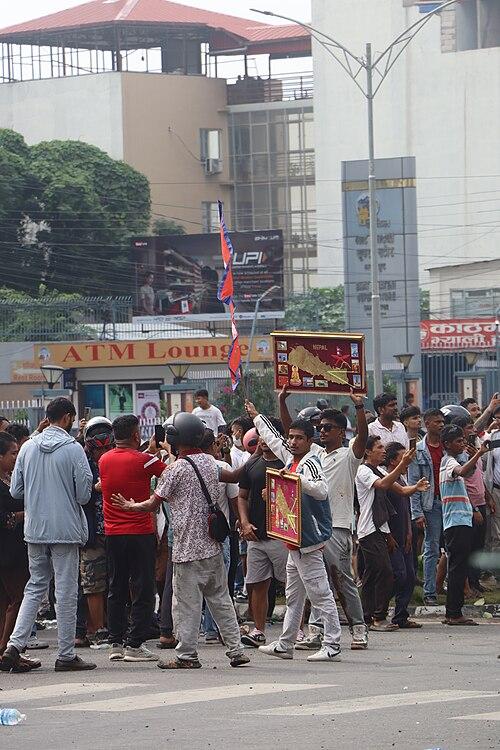
2025 Nepalese Gen Z movement protesters in street
(Picture credits: via Wikimedia Commons हिमाल सुवेदी, CC BY-SA 4.0 https://creativecommons.org/licenses/by-sa/4.0)