
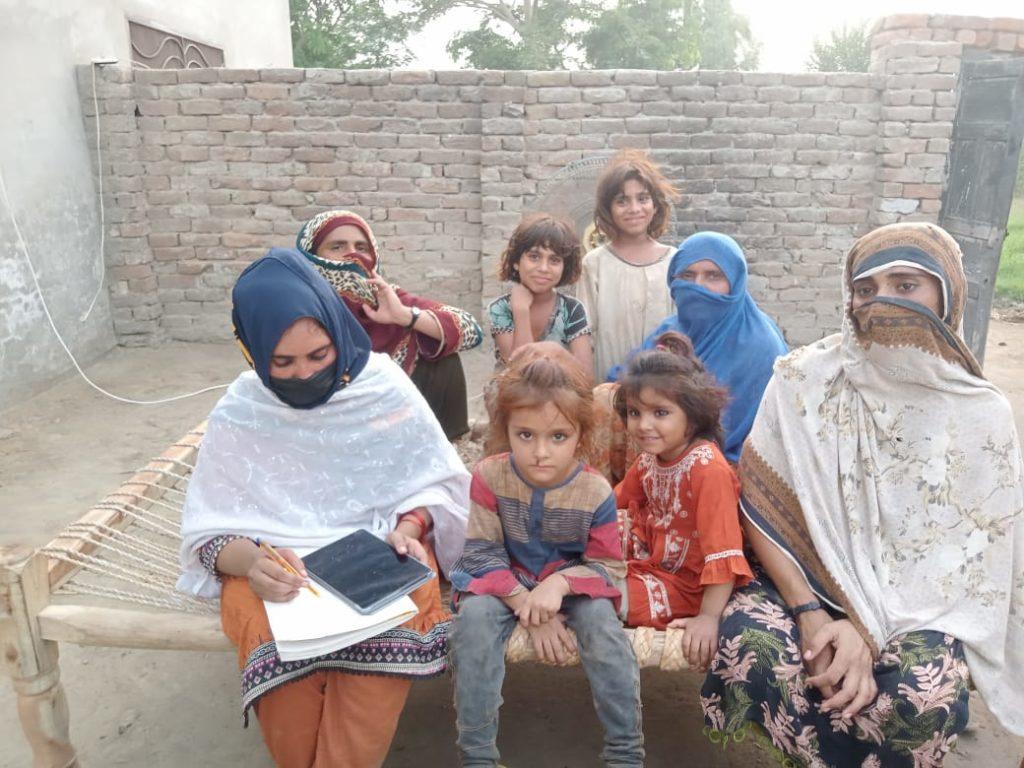




Three decades ago, the Lady Health Workers (LHW) program was launched in Pakistan to bring primary health services to communities, a flagship program by the Government of Pakistan. Local women were recruited and trained to provide basic maternal and childcare, family planning, immunizations, and health education at people’s doorsteps, as reflected in the Program’s name (i.e., the National Program for Family Planning and Primary Healthcare). The program turned out a massive success, transforming the health seeking behavior of rural populations leading to a documented decline in maternal and neonatal mortality, and rise in coverage of health and family planning services.
The Program began with LHWs working as stipend-based volunteers; later they became permanent government staff however, increasing costs and making expansion difficult. A number of innovative reforms were rolled out in the LHW Program in Punjab, following the devolution of health services to the provinces. Still, by 2012, half of Punjab’s population remained uncovered by the LHWs, especially in urban slums and remote villages. Workforce numbers fell further over the years due to retirements, terminations and hiring freezes, and LHW roles remained limited despite additional tasks assigned to them. The program could not adapt to new health challenges or tools due to the limited capacity of the workers, and investments in newer reforms. These newer reforms focused more on strengthening primary care service delivery in existing health facilities (e.g., equipping them for 24/7 basic Emergency Obstetric and Newborn Care (EmONC)). High salary obligations of LHWs also restricted growth and innovation. By 2020, the need for an overhaul of the LHW Program, and a new community health strategy in Punjab was clear, prompting the Government to explore alternative models.
Punjab reform
In 2025, Punjab’s Government launched a major reform in this regard: the outsourced Community Health Services program, of which the centerpiece is a new Community Health Inspector (CHI) cadre. Starting as a pilot with 500 CHIs in late 2024, around 20,000 CHIs are now being recruited and deployed across the province to work alongside the ~39,000 existing LHWs. This effectively doubles the community health workforce and is designed to ensure that every community – rural or urban – has at least one health worker. The aim is for CHIs to fill the gaps left by the LHW program and bring a fresh, modern approach to community healthcare. They are also meant to replace every other outreach health worker in their catchment areas (e.g., the vaccinator, sanitary inspector, etc.) by taking over a holistic approach to health services through a single cadre.
The CHI initiative is not just an expansion in numbers, it also represents a qualitative leap in how community healthcare is delivered. Being certified by the Pakistan Nursing Council, CHIs are more qualified than traditional LHWs. This allows them to provide a broader range of services. While they still provide maternal and child health care, they also address general health needs for all ages including outreach vaccination services, disease surveillance, screen and monitor chronic illnesses, provide health education on nutrition and hygiene, treat minor ailments, and quickly refer serious cases to nearby health facilities. In essence, a CHI serves as an “all-in-one” community health provider not limited to one demographic or task, but acting as a frontline resource for the entire community.
The management and accountability structure of CHIs is also transformative. Instead of being hired as government employees, CHIs are recruited through third-party organizations, who are contracted by the Health and Population Department. This outsourcing model infuses flexibility and performance-based payments into the system. The government sets the qualifications, training standards, and job descriptions for CHIs, and outlines performance benchmarks (in the form of coverage targets). The contracted organizations hire individuals meeting these criteria and deploy them as CHIs. This arrangement means CHIs work on a contractual basis, with performance closely monitored and evaluated by the third party and the Government. Another modern element is the integration of digital technology. Each CHI will use a tablet to record data during community visits, feeding into the electronic health database. This creates a real-time picture of community’s health. Digital records let CHIs track patients over time and improve referrals. Health officials can also monitor these reports to spot trends (e.g. outbreak predictions) and respond promptly. It’s a significant upgrade from the paper-based registers LHWs used – a faster and more accurate flow of information to decision-makers is now possible. Over time, the real-time data from CHIs will enable more responsive public health actions and the establishment of a community health registry.
In terms of their role in communities, CHIs serve as the primary liaison between the community members and the formal health sector. A CHI is assigned a specific catchment area – eg. a cluster of villages or a neighborhood in a city with the mandate to get to know that community’s health profile in detail. By virtue of frequent home visits and interactions, CHIs become trusted figures to whom people can turn when they have any health issues.
Future impact
The CHIs are expected to already have a positive impact in the near future. By plugging service gaps, more people will receive essential healthcare at their doorstep leading to healthier communities. Each area having an assigned health worker will no doubt also increase public trust in the system.
Thanks for sharing this. Really interesting to see how CHIs are making a difference in connecting communities to healthcare. It’s inspiring to see such practical solutions taking shape in Punjab. Makes me wonder, how can we make sure these efforts last in the long run and reach the people who need them most?