
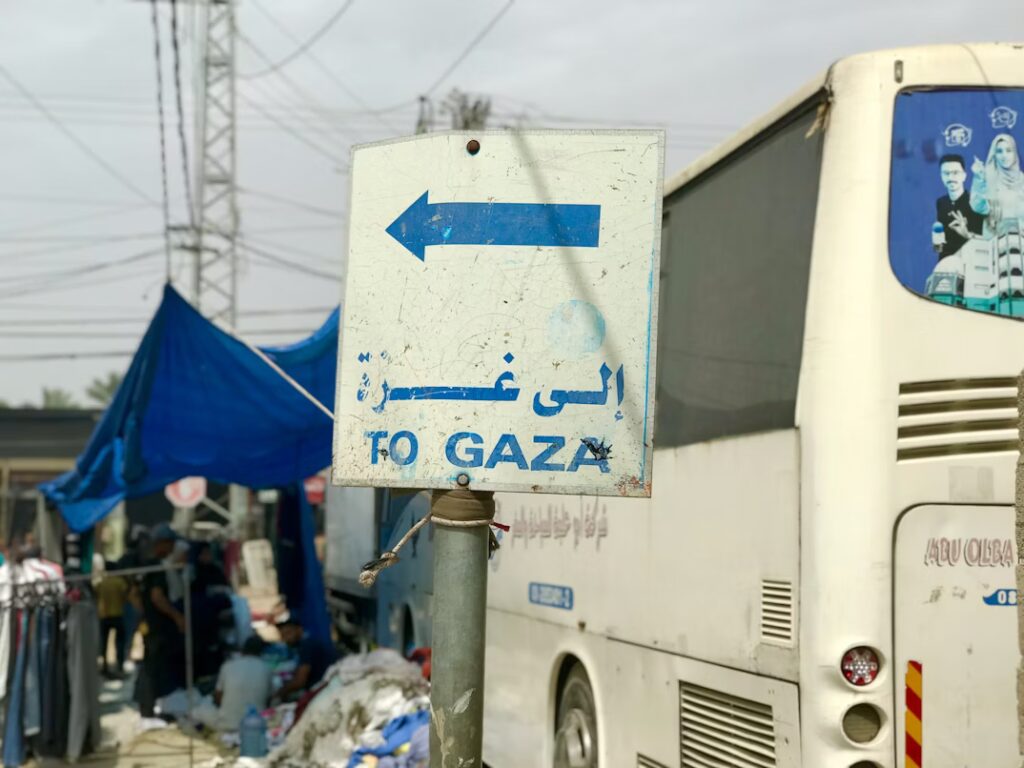

In recent years, global health discourse has increasingly adopted the term “ polycrisis” to describe the confluence of different global crises — armed conflict, the climate emergency, pandemics, and economic instability — that collectively strain health systems and governance structures. The concept indeed captures an important reality as today’s crises rarely occur in isolation. Yet, in some places, crises are not simply overlapping and connected shocks, but a permanent political condition. Gaza represents one of the clearest examples.
For decades, Gaza’s health system has operated under conditions that challenge many of the assumptions underlying global health governance. Repeated cycles of Israeli violence, prolonged occupational siege, restricted movement of people and goods, and chronic shortages of essential medical supplies have produced an overstretched, donor-dependent health system functioning under continuous pressure. While the scale of destruction and human suffering in recent months of the genocidal war has drawn global attention, Gaza’s health system did not suddenly collapse: the havoc of the past few years came on top of a long-standing constrained functioning of the health system shaped by political realities.
Traditionally, the global health architecture and the humanitarian ecosystem evolved as largely separate systems – even if there was always some overlap at their respective ‘ends’. Global health governance focused primarily on health system strengthening, disease control, and technical cooperation, while humanitarian actors were expected to respond to acute emergencies such as armed conflict and displacement. A range of frameworks were developed to respond to crises, including emergency humanitarian response, health system resilience strategies, and the Humanitarian–Development–Peace Nexus (HDPN) — formally articulated following the 2016 World Humanitarian Summit in Istanbul— which aims to bridge immediate relief with longer-term recovery and stability in fragile settings.
Gaza – and Palestine in general – challenges this distinction. When emergency conditions become prolonged and structural (as is the case in an increasing number of settings), the distinction between humanitarian response and health system development begins to blur. The humanitarian system, in particular, was historically designed for short-term emergencies — natural disasters, acute conflicts, or sudden population displacement. In such settings, humanitarian actors step in to stabilize conditions until national systems can resume functioning. In Gaza, however, emergency response has gradually become a permanent mode of operation. Health services increasingly relied on international assistance to retain some (very basic) level of functioning, while the underlying political determinants shaping the crisis remain(ed) largely outside the scope — or control — of humanitarian intervention.
This dynamic raises important questions for global health governance – even more so now that the global health ecosystem is being ‘reimagined’.
Many global health frameworks emphasize technical solutions: strengthening service delivery, improving supply chains, investing in health workforce training, or enhancing disease surveillance. These interventions are undoubtedly important. Yet, Gaza illustrates the limits of technical approaches when health system performance is fundamentally shaped by broader political structures. In such contexts, the determinants of health system functioning extend beyond health policy into domains of security, mobility, infrastructure, and governance.
Another challenge lies in the persistent tendency within mainstream global health discourse – particularly among institutions shaping financing priorities – to depoliticize health crises. Framing crises primarily through technical or humanitarian lenses can obscure the political conditions that produce and sustain them. Yes, the People’s Health Movement has emphasized this for decades, and closer to the mainstream, The Lancet—University of Oslo Commission on Global Governance for Health (2014) also already highlighted these issues more than a decade ago, while these days, The Collective for the Political Determinants of Health continues this vital work. Nevertheless, by and large, the political determinants of health remain insufficiently reflected in dominant global health governance frameworks.
Gaza’s experience reminds us that health systems do not operate in isolation from political environments. The capacity of hospitals to function, of health workers to practice safely, and of patients to access care is inseparable from the broader context in which those systems “exist”. Yes, humanitarian actors have played a critical role in sustaining life-saving services under extraordinarily difficult conditions, for which they deserve full credit. However, Gaza suggests that humanitarian response alone cannot substitute for addressing the structural determinants that shape health system vulnerability.
As global health leaders increasingly debate the future of global health governance, Gaza offers an important, if uncomfortable, lesson. It demonstrates the limitations of frameworks built primarily around short-term emergencies on the one hand and “technical” solutions on the other hand when confronted with prolonged political crises.
Rather than viewing Gaza solely as an exceptional case or just a complicated setting, it may be more useful to see it as a warning signal for global health governance in the 21st century. In a world where protracted conflicts are becoming more common and crises increasingly overlap (ànd feed on each other), global health institutions may need to rethink how they engage with the political determinants that shape health systems. If global health governance is to remain relevant in an era of sustained instability, it must confront the deeper structural conditions that determine whether health systems can survive, adapt, and ultimately serve the populations that depend on them.
In the coming months, the global health architecture reform debate continues, with among others a high-level meeting hosted by the Wellcome Trust, and similar discussions hosted by WHO at the next World Health Assembly in May. Gaza reminds us that global health governance cannot be limited to technical preparedness alone. Without confronting the political conditions that shape health systems in protracted crises, even the most sophisticated global health frameworks will struggle to deliver on their promises.
If global health governance is to remain relevant in a world of protracted conflicts, it must move beyond emergency thinking and technical solutions, and confront the political realities shaping health systems.
From where I sit, it’s long overdue, moreover. After all, Gaza has faced a ‘polycrisis’ for decades.