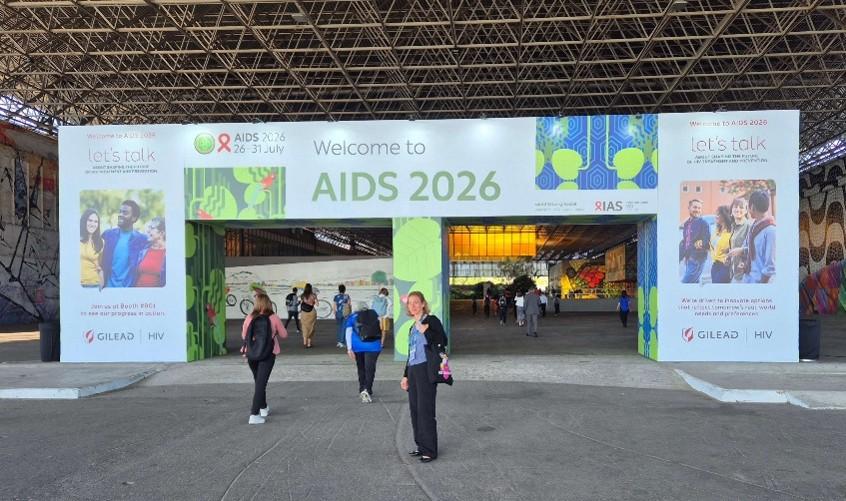

From July 26-31st 2026, the 26th International AIDS Conference (AIDS2026), took place in Rio de Janeiro, Brazil. I was fortunate to attend one of the largest HIV-related events. This year’s conference theme was “Rethink. Rebuild. Rise”, referring to the huge changes in the funding landscape, the need to thoroughly rethink the HIV/AIDS battle and eventually rise again while rebuilding the programs. AIDS2026 brought more than 7000 researchers, implementers, policy makers, activists from 170 countries together to discuss successes, challenges and to share lessons learned on how to optimize HIV care and prevention in difficult times. Just back from Brazil, below you find my take on the conference, mostly focusing on some sessions and presentations I attended.
During the opening ceremony, Dr. Beatriz Grinsztejn, the director of the International AIDS Society mentioned persistent gaps, but also stressed that progress continues to be made, giving (some) hope. But obviously, inequality was also highlighted in the opening session, including by the executive director of UNAIDS, Winnie Byanyima. From his side, the Minister of Health of Brazil, Dr. Alexandre Padilha, affirmed “Innovation without access is injustice”, setting already a prominent theme for the conference.
A dire funding landscape
As mentioned above, the conference took place against the backdrop of profound changes in the funding landscape in 2025. Setting the scene, the new UNAIDS Special Report came out on July 27th. It indicated that we will not reach the goals of 2030 to end AIDS as public health threat, unless countries sustain financing, protect human rights, strengthen community leadership, and scale up prevention and treatment services. An accompanying report by KFF/UNAIDS showed a 25% drop in donor funding in 2025.
Recent evidence shows major disruptions in services, including loss of human resources (see AmfAR’s PULSE study, released just before AIDS2026, and at the conference eg Abstract OAX110LB; Luke – Abstract OAF3502 among many others). The PULSE study showed a 51% funding cut in prevention services; 22% of PMTCT services were interrupted. Results from a study from Aidsfonds combined interviews and data from sources including PEPFAR, UNAIDS, and the Global Fund to show devastating consequences for HIV and malaria programmes. A session at the Global Village at the conference discussed the overall funding landscape, based on CHAI’s (June) analysis.
Some more key themes & a few personal highlights
In the context of funding cuts, many countries are thinking about how to proceed, and find solutions, with a few interesting sessions including on the use of AI initiatives, and finding ways to involve communities with the current means. We have to adjust to, and reshape the ‘new reality’.
Long-acting PrEP for HIV prevention was the overarching topic of the week, with the key message being the importance of choice. Study results on weekly and monthly oral PrEP and long-acting injectable PrEP are promising. However, prices remain high, with patent control by pharmaceutical companies (Pignataro, THPEF619). In their oral presentation, Cross et al showed that the new monthly oral PrEP could be produced at a price as low as 15USD per person annually (Cross, OAE0504 and AIDS). South American countries have not received authorization to manufacture generic versions, as they are considered too wealthy. This point was raised throughout, and activists were notably present to make the case that changes are needed. Where drugs are available, access remains low: in 9 sub-Saharan countries only 200,000 doses of lenacapavir have been delivered so far, while demand is much higher, with stock-ruptures being reported. Hence the key message: “Innovation without access is not innovation; it is injustice”.
The role of communities was shown to be crucial, for prevention, treatment and support of HIV services. However, needless to say, this is being threatened by the funding cuts.
One of the big questions is also how countries will adapt their programs to ensure continuity in antiretroviral treatment for the millions of people living with HIV who have started. How do we reform, adapt and reach the UNAIDS goals after the shock of the past few years? There were some hints at AIDS2026 of how this can be done, but it’s early days and clearly, a successful transformation is more likely in some than in other settings.
As the conference covers many topics, I refer to the IAS website, the AIDS2026 blog, and the AIDS2026 abstract book for a more extensive overview.
A few personal highlights nevertheless:
ITM was in Rio with 7 people and presented amazing work around HIV prevention and care services for young women and female sex workers: great work by Prudence Tatiana, Mary Kaakyo, Willy Le Roi Togna and Anke Rotsaert!
Last but not least, I shouldn’t forget to mention the amazing activism seen throughout the week, with protests, activities in the Global Village and even a beautiful fashion show which blended research and fashion in a very cool science communication project, “HIV Unwrapped” in São Paulo.
Way forward in difficult times
In conclusion, the conference was largely dedicated to the innovations on HIV prevention, particularly long-acting PrEP. The current inequality which blocks some countries and populations from accessing them, needs to be tackled sooner rather than later. In addition, re-visiting HIV care delivery with integration of services, community involvement and use of digital innovations can definitely help to keep the vulnerable people free from HIV, or if that fails, allow them to live healthy with HIV.
Disclaimer: This perspective is a personal viewpoint by the author and does not represent an institutional position.
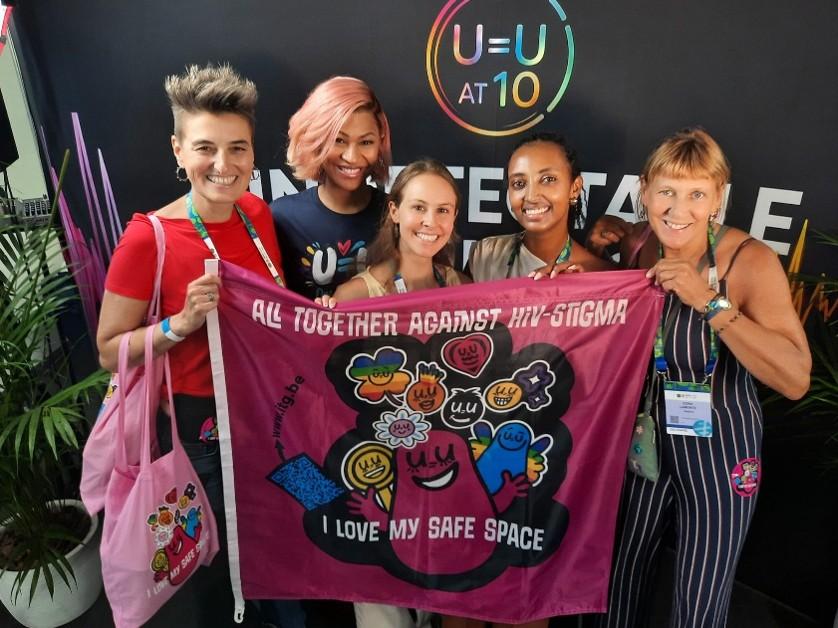
Wenne Mertens (ITM, far left) and Cora Lamonte (ITM, far right) celebrating the 10th anniversary of the U=U campaign with the delegation of Preventionaccess.org (president Dr. Monique Carry 2nd on the left).