

By Jacquie Oliwa for the Paediatric Reflex, in commemoration of World Children’s Day, 20 November 2026
The child survival agenda is one of global health’s greatest achievements. Over the past three decades, investments in immunisation, nutrition, maternal and newborn care, and the treatment of infectious diseases have collectively saved millions of lives. Yet as we commemorate World Children’s Day, we must confront some uncomfortable realities. The job is far from done: we are still leaving out “the missing middle”, and survival alone is no longer an adequate measure of progress. What should the post 2030 agenda look like? How can we ensure that every child has the opportunity to survive, thrive and carry health and wellbeing into the next generation?
The SDG picture is troubling
The 2030 deadline is close. The United Nations’ 2026 assessment report found that the current pace is insufficient to achieve all the Sustainable Development Goals (SDGs). Expanded social protection coverage, reductions in child mortality, improved nutrition, and increased access to education are among the key advances, but gaps remain wide and momentum is slowing.
In 2024, nearly five million children died before their fifth birthday, including 2.3 million newborns. Another 2.1 million older children, adolescents and young people aged 5–24 years died. More than 80% of under-five deaths occurred in sub-Saharan Africa and Southern Asia, reflecting persistent global health inequities. Many children who survive infancy face developmental delays, disability, malnutrition, poor mental health, interrupted education, violence, displacement and climate-related threats.
Furthermore, 23% of children under five are still stunted, and dietary diversity for children remains inadequate, especially in sub-Saharan Africa. Millions of children still do not receive routine immunisations, and health outcomes for the poorest, especially in fragile settings, are much worse. The gap for the most marginalized children (by income, gender, and location) persists and sometimes widens as education levels rise. Conflict, climate disruption, inequality and rising debt-servicing costs are holding many countries back.
UNICEF’s 2023 assessment found that two-thirds of child-related SDG indicators were off pace. Based on the trajectories available then, only 60 countries, home to a quarter of the world’s children, were expected to meet their targets by 2030. Around 1.9 billion children in 140 countries risked being left behind.
These shortfalls are not an argument for abandoning the SDGs. Preventable deaths remain unacceptable, and existing targets require action. But we must also ask what the current goals and indicators fail to capture.
The missing middle
Global child health has traditionally concentrated on pregnancy, birth and the first five years of life. More recently, adolescent health has gained traction. Between these agendas lies a “missing middle”: children aged roughly 5–9 years, or 5–14 years in some frameworks.
Children enter school, form social relationships, gain independence, and undergo important physical, cognitive and emotional changes. Disability, chronic conditions, mental health difficulties, injuries, violence, poor nutrition and learning problems may also become more apparent.
Yet these children often disappear from health information systems. Requejo and colleagues identified weak data on children aged 5–9 years, alongside gaps in measuring development, disability, chronic conditions, injuries and violence.
If global frameworks mainly focus on under-five survival and adolescent health, they overlook a crucial developmental stage and may potentially miss opportunities for prevention and early support.
A life-course approach
The post-2030 agenda should retain improved survival as an ongoing task, while adopting a life-course approach to health and wellbeing.
Our ambition should be for children not only to survive, but also to thrive, enter adulthood in good health and, should they choose parenthood, have healthy children of their own. Early nutrition, nurturing care and adversity can influence development and health well into adulthood. Black and colleagues linked early adversity and nurturing care with development and functioning across the life course.
The World Health Organisation, UNICEF and World Bank Group’s Nurturing Care Framework offers a useful starting point, connecting health, nutrition, safety, responsive caregiving and early learning. However, it focuses mainly on pregnancy through to age three. Its principles should extend through the missing middle and adolescence, reflecting the needs and opportunities of each stage.
Adolescent wellbeing measurement is also fragmented. Newby and colleagues found that available data and tools are insufficient and inconsistent. They proposed five connected domains: health and nutrition; connectedness and contribution; safety; learning and skills; and agency and resilience.
What should come next?
A post-2030 framework should connect outcomes currently scattered across health, nutrition, education, child protection, disability and social protection. It should cover survival, development, nutrition, mental health, learning, safety, inclusion, participation, climate risks and transitions into adulthood. There is, however, genuine concern about an ever-longer list indicators and their lack of neutrality.
Molenaar’s body of work on maternal and newborn health measurement shows how standardisation can create tensions between international reporting demands and locally relevant knowledge. What is selected, defined and counted shapes which problems become visible, comparable and fundable, while other concerns may disappear. The post-2030 agenda must ask not only whether indicators are technically valid, but whose priorities they reflect, what work they create for health systems, and whether they improve local services and outcomes.
Countries need a manageable core set of indicators, disaggregated by age, sex, disability, geography and socioeconomic position. Children and adolescents where possible should help define what it means to thrive, and which outcomes matter to them. Families, communities, frontline workers, policymakers and researchers from diverse settings should also be involved in deciding which indicators should be tracked after 2030.
The unfinished survival agenda demands action, but our ambition must go further. Every child should have the opportunity to survive, thrive and carry health and wellbeing into the next generation. By 2030, we should be ready to measure progress against that fuller agenda, including progress among children whom global health has too often missed.
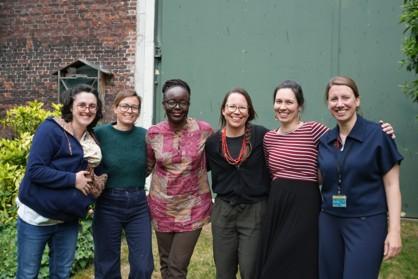
Some of the members of ITM’s Paediatric Reflex