Subscribe to our weekly International update on Health Policies
Young (and occasionally less young) researchers, mostly from LMICs, present their views on global health issues.
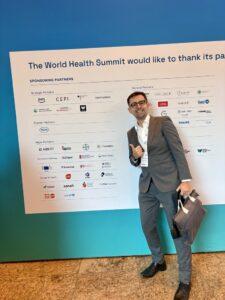
I attended the World Health Summit in Berlin for the first time this year. I was struck by the ubiquitous influence of private actors – and industry’s claims on what remains of development aid budgets. The World Health Summit is a privately organized platform for global health discussions. Its list of “sponsoring partners” displayed prom...
In the last three years, women’s health has become more prominent within the global health space with momentum to close the costly $1 trillion gap. This year’s it was one of the World Health Summit’s six themes: Health Equity for Women, Children, and Youth: Ensuring Rights, Inclusion, and Participation. Leaving WHS2026, I can’t help but...
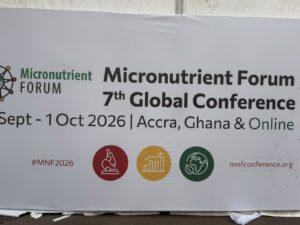
From 28 September to 1 October, I attended the Micronutrient Forum’s 7th Global Conference (#MNF2026) in Accra, Ghana. Under the theme “Nutrition at the Frontiers of a Changing Environment”, the forum brought together the global nutrition community (researchers, programme implementers, policymakers, funders, and experts from different sector...
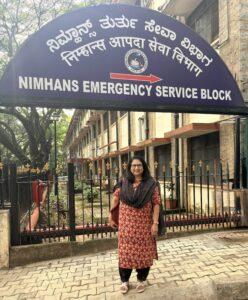
The theme for World Mental Health Day 2026, “Lived Experiences Heard: Real Voices, Real Change”, is particularly relevant and timely for India. As mental health receives increasing attention in public health, policy and research, the theme invites us to look beyond the availability of services and ask whether the experiences of people living...
Four industries kill on a population scale. The rules that make their products cheap, available and advertised remain the least measured part of the epidemic, certainly in LMICs like Cambodia. Tobacco, ultra-processed food, fossil fuels and alcohol account for 19 million deaths a year: 34% of all deaths (56 million), and 41% of deaths from nonco...
On 27 September 2026, thousands of doctors marched through the streets of Sulaymaniyah in what was arguably the largest healthcare protest witnessed in the Kurdistan Region of Iraq (KRI) in recent years. Beginning at the University of Sulaymaniyah campus and ending at one of the city’s main public hospitals, the march represented a dramatic esca...
Michael Kremer has been appointed Chief Economist of the World Bank Group (WBG), one of the largest multilateral funders of health systems globally, amid funding cuts and the closure of USAID. He is the first economist to enter the role after having already received a Nobel Prize. More importantly, Kremer brings extensive experience in translati...
Armed conflict disrupts health systems in ways that extend far beyond the destruction of hospitals or shortages of medical supplies. The ability of patients to access care depends on whether health systems can sustain referral pathways, coordinate services across different levels of care, and maintain continuity despite insecurity, displacement,...
Deccan Dispatches 1 On 26 August, ice, rock and water came down the Bhote Koshi river in Nepal, and took out towns and villages on both sides of the Nepal-China border. Experts are still arguing about the exact trigger with an avalanche into a glacial lake possibly being one of the prevalent explanations. The UN was on the ground within a day...