
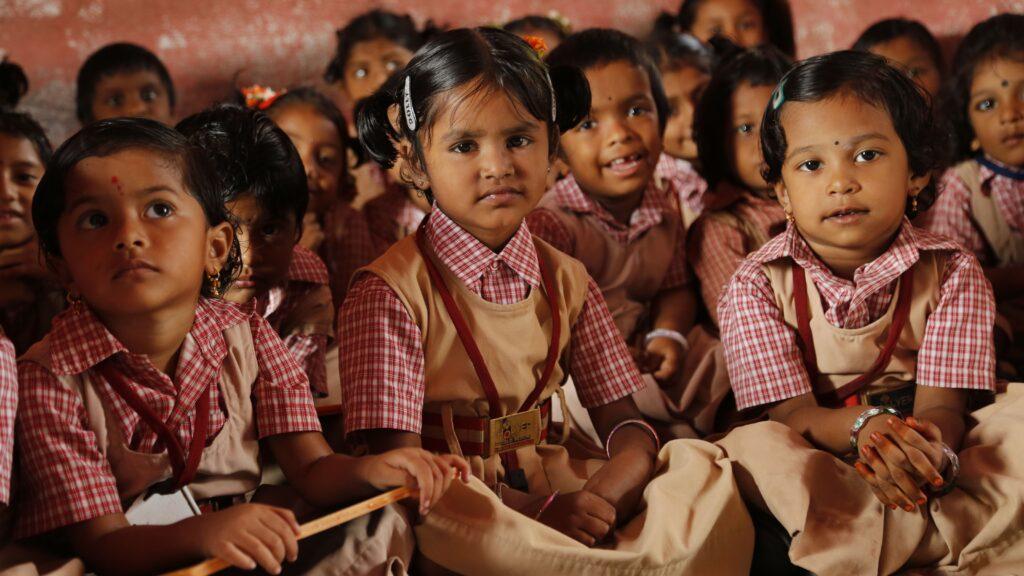

As the world marks Children’s Day on 20 November, it is worth reflecting on the hopes families place in education. In India’s rapidly developing context, many families uproot their lives and move to a city as an investment for their children’s future. Parents leave villages and smaller towns in search of work and better livelihoods, hoping their children will live lives they could not. However, in urban poor settings, this hope often comes at a considerable cost with families stretching their limited incomes to pay for school fees, uniforms, transport and other expenses.
Urban families in India now have more schooling options, including a growing number of private schools advertising affordable fees. Yet even modest fees can be a substantial burden for households with uncertain or daily wages. Moreover, securing a place in school does not necessarily mean a child is receiving a good education.
In recent years, India has made important commitments to improving school education through the National Education Policy (NEP) 2020 with a vision for equitable, inclusive, and quality education, and renewed emphasis on foundational learning, holistic development, and teacher preparation. NIPUN Bharat Mission 2021, a flagship programme of India’s Ministry of Education, has made foundational literacy and numeracy a national priority, aiming for every child to attain these skills by the end of Grade 3. The PARAKH Rashtriya Sarvekshan 2024, a large-scale, nationwide learning and competency assessment survey in India across government, government-aided and private schools showed that at Grade 3, national average scores (percentage of questions answered correctly) were 64% in language and 60% in mathematics, with urban students averaging 63% and 59%, respectively. These figures provide a useful picture of learning across the school system in urban India. But at the same time, averages can conceal a less visible challenge, where children in the same classroom may be learning at very different levels.
Not all children start from the same place
Children’s health, development, and learning are shaped by social determinants, including family income, parental education, food security, housing, sanitation and neighbourhood safety. Early-life nutrition, physical, and mental health influence brain development and children’s capacity to engage, communicate and learn. India’s programmes, including Mission Saksham Anganwadi and POSHAN 2.0 (India’s integrated nutrition and early childhood development programme) and PM POSHAN (a centrally sponsored scheme in India that provides free hot cooked meals to school children), recognise the links between health, nutrition, and education and lay important foundations for child development. But we need to keep building on this foundation, ensuring that children not only survive, but also thrive – with health, care, and educational opportunities to realise their potential.
One child may enter school already familiar with books and numbers, while another is still learning in a language different from the one used in the classroom. Some children grasp new concepts quickly while others need more time, practice or even a different explanation. Yet the pedagogy is often organised around the grade rather than the child’s actual understanding. When children struggle to keep up, gaps begin to accumulate. While this is not an argument for lowering expectations, it is a call to action for recognising that children need different kinds of support to reach expectations.
Encouraging initiatives that respond to learning differences
A number of encouraging initiatives have seen the light in recent years to try take into account learning differences of children.
The Teaching at the Right Level approach of Pratham (education NGO in India) assesses children’s actual learning levels and thus organises instruction around what they need to learn next, rather than assuming that all children in a particular grade are at the same level of understanding.
Other initiatives are now helping researchers and educators understand how and why children learn differently. The Learning Variability Network Exchange (LEVANTE)* examines differences in learning within individual children, across groups, and across contexts building an open, cross-cultural evidence base. NYU’s Global TIES for Children (an international research center dedicated to improving child development outcomes in LMICs) translates rigorous research into practical, scalable solutions for children’s learning and development. UNESCO advances inclusive education by urging systems to respond to learners’ diverse needs, backgrounds, and abilities. India’s NIPUN Bharat, similarly, emphasises competency-based learning and continuous formative assessment to help teachers identify gaps and respond to children’s progress. However, the challenge is to make these commitments part of everyday classroom practice. Therefore, assessment should not simply label children as high or low performers, but should help teachers decide what to do next.
Better urban data, disaggregated by neighbourhood and school type, would help reveal where inequalities in health, development, and learning intersect, while stronger co-ordination between education, health, nutrition and urban development systems could help ensure that these interconnected needs inform local planning and service delivery.
On November 14, India already celebrated Children’s Day. On a day like this, it’s good to remember the hopes that bring so many families to our cities. We must ask whether children are learning, whether their different needs are recognised, and whether they are making progress. A good education should not depend on a family’s ability to pay, the neighbourhood in which they live, or the type of school their child attends. It should be a promise that every school is equipped and supported to fulfil.
* Disclosure: The LEVANTE programme has recently awarded a grant to my organisation.
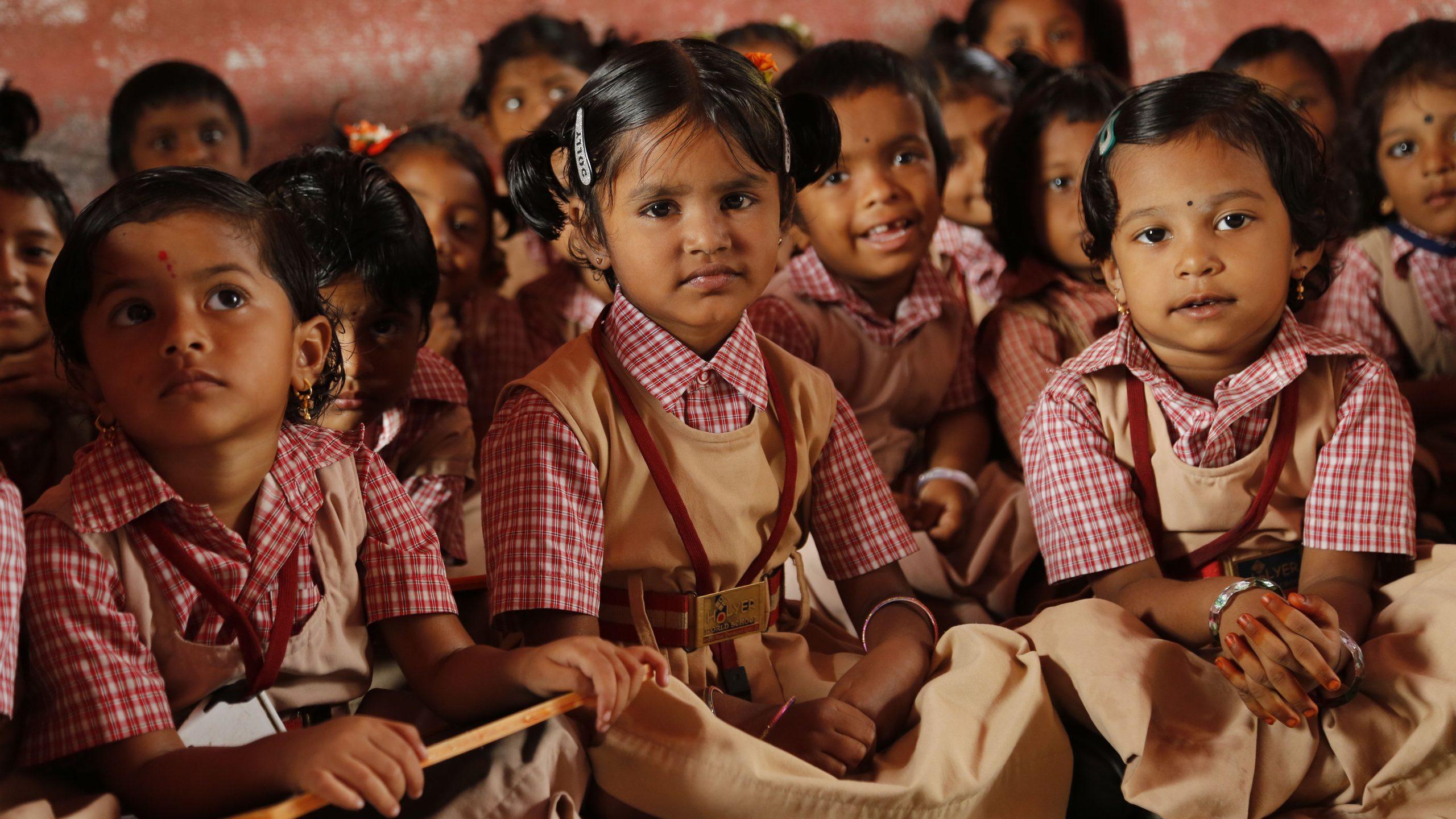
Picture via Pexels.com – credits Suresh Boddhu https://www.pexels.com/ca-es/foto/gent-bufo-maco-assegut-5636692/