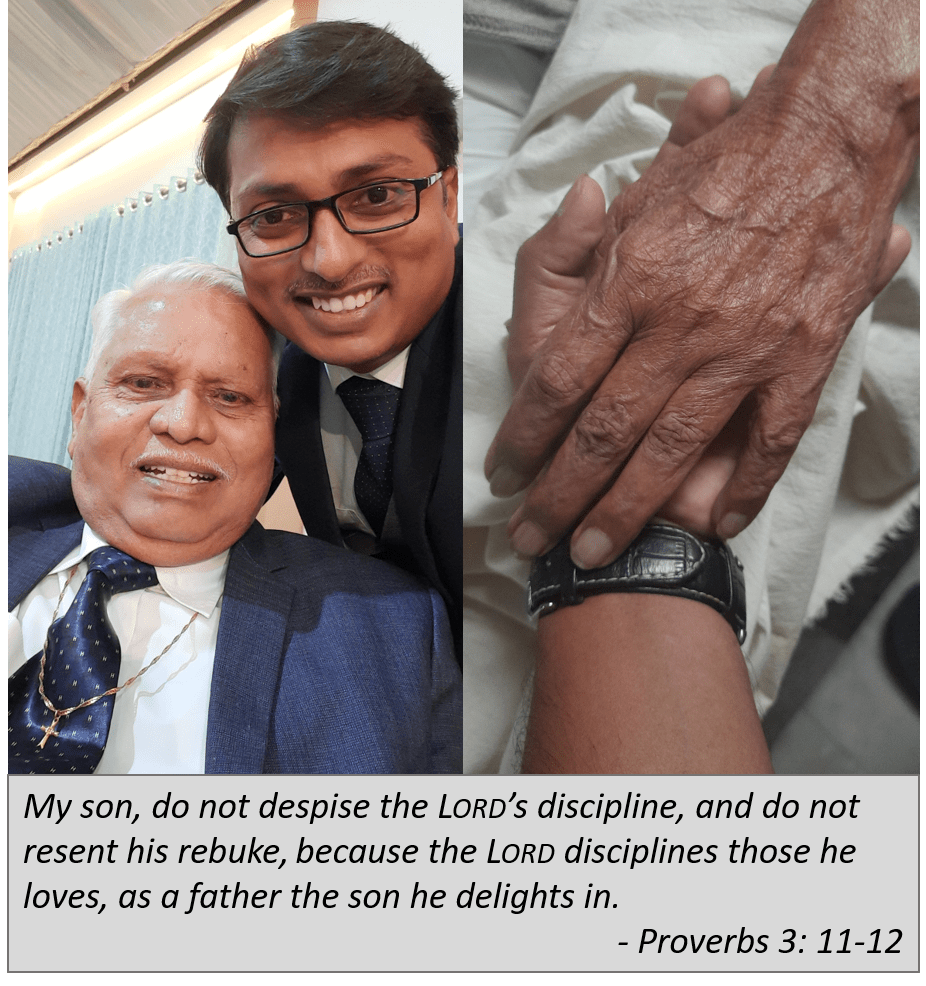

On 27 April 2026, my father (age 83) died peacefully at home after a rapid decline from advanced liver cancer. Just over a month earlier, what had begun as seemingly common symptoms gradually developed into a terminal diagnosis of metastatic liver and bile duct cancer. From late March to the end of April, my family moved between several places of care. The final stage of care took place not in a hospital ward but in the home, where care was intimate, continuous, spiritual, and deeply personal. This article emerges from that journey.
In addition to being a mourning son, I write as a medical anthropologist trained to study health systems, health policy, illness experiences, care practices, and the moral worlds surrounding suffering. In addition to my PhD in Public Health & Policy and my current work in health policy and systems research (HPSR), I also hold a Master of Divinity degree. I have long been involved in the thought process of suffering, mortality, pastoral care, and spiritual meaning through theological study and ministry contexts. As a result, my father’s illness was experienced and interpreted not only within biomedical and anthropological frameworks but also through a theological understanding.
This article is therefore neither a separate clinical case report nor a purely personal memoir. Rather, it is a reflexive case study that sits at the crossroads of medical anthropology, theology, research on health systems, and end-of-life care. Using a retrospective trajectory of disease, I explore how advanced cancer care is navigated through the fragmented but interconnected levels of the Indian health system, and how families become the invisible infrastructure that maintain the continuity of care. Simultaneously, I reflect on how anthropological and theological sensibilities shaped our understanding of prognosis, suffering, caregiving, prayer, and what ultimately came to constitute a “good death.”
This article draws on reflexive methodology and retrospective illness narrative reconstruction. The analysis is based on caregiver experience, clinical consultation, diagnostic reports, referral interactions, conversations with healthcare providers and reflective observations recorded during the course of the disease. Rather than treating subjectivity as methodological weakness, this article approaches lived experiences and involvement as a valuable source of insight. In medical anthropology, reflexivity has long challenged the assumption that emotional detachment from the field is necessary for meaningful understanding. Throughout the illness trajectory, I found myself in a series of unstable and overlapping roles: a son attempting to emotionally process impending loss, a family caregiver, an interpreter of biomedical information, theologian searching for meaning in suffering, and reflexive observer of the health care system we were navigating. These identities often overlapped in an uncertain way.
The Illness Trajectory as Health System Navigation
The illness trajectory began in the last week of March 2026, when my father began to experience a progressive weakness, severe constipation, persistent cough, loss of appetite, and a noticeable loss of weight. At first, these symptoms seemed quite common and manageable.
Our first point of care was the health care centre at the IIT Kanpur campus on 26 March, where blood tests were done. He was treated symptomatically with antibiotics and oral rehydration. When we returned to my hometown-Daund on March 29, we went to see a well-known local doctor that evening. Repeat routine blood tests and chest X-rays were mostly uninteresting. Treatment was mainly focused on the control of cough and relieving constipation. However, since the constipation continued and the general weakness deepened, an ultrasound examination was recommended on 31 March.
The results of the ultrasound tests on April 1st drastically changed the medical and emotional landscape of the illness. The report suggested liver metastasis, that left me in shock and disbelief. The referring doctor made me realize that we had crossed an invisible line from a routine investigation to a completely different reality. Even before I could accept this reality, the physician immediately phoned a medical oncologist friend in Pune, discussed the case, and helped arrange an urgent PET (Positron Emission Tomography) scan appointment for Friday 3 April. As suggested by the oncologists, our doctor initiated the Alpha-fetoprotein tumour marker test simultaneously.
Reflecting anthropologically, I was struck by how continuity within the healthcare system often depended less on formal institutional integration and more on interpersonal trust between clinicians. Informal referral networks between doctors seemed to compensate for the system fragmentation. What could otherwise have been a lengthy bureaucratic process has been speeded up by the professional relationship and clinical responsiveness.
On 3 April we travelled to Pune (80 kms from my hometown) for oncological consultations and for PET scans at a multi-speciality hospital. The oncologist counselled us carefully and examined my father thoroughly before the scan. PET findings strongly suggested advanced cancer, and biopsy was advised. Tissue samples were collected on 8 April, and the final pathology report, received by 15 April, confirmed advanced dual malignant cancer, affecting both liver and bile ducts. Subsequent consultation with the oncologist gradually shifted the orientation of care from treatment toward palliation. Given my father’s age, advanced disease stage, progressive frailty, and rapidly declining physical condition, aggressive treatment was strongly discouraged. Multiple people (not only doctors) explained that chemotherapy would likely increase suffering without meaningfully improving survival or quality of life. During the cancer consultations, I found myself simultaneously listening like a worried son and analysing how the prognosis was being conveyed.
The same week, we visited a palliative care centre in Pune run by the Cipla Foundation on 17 April through a close friend, where similar counselling was offered with remarkable sincerity and compassion. The doctor there gently explained that survival could vary from a few months to just a few weeks, depending on the rate of decline and weight loss. When I discussed palliative care options, I paid attention not only to the medical advice, but also to the moral language in which the words dignity, comfort, quality of life, and hope were used.
These consultations became morally significant moments. Importantly, the decision not to pursue aggressive treatment was not framed as abandonment. Rather, it represented a shift towards comfort-oriented care and the preservation of dignity. As an anthropologist observing these interactions while simultaneously inhabiting them as a son, I became increasingly aware that the goals of care themselves undergo transformation during terminal illness. The central question was no longer how to defeat disease, but how to minimise suffering and accompany dying meaningfully.
Home, Prayer, and the Moral World of Dying
In the last week, from Sunday 19 April, care was increasingly moved to homebase. My elder sister and brother-in-law held a particularly important place in the care-giving chain. Their presence was remarkably firm and comforting during the final weeks of my father’s illness. My niece and nephew also became active participants in the care process despite their young age. They were deeply attached to their grandfather and reacted to his illness with remarkable love and care, helping to care for him in small but meaningful ways as his health declined. Friends, relatives, pastors, church members, and extended kin visited continuously during those final days, offering practical help, emotional solidarity, physical presence, and prayer. The house gradually transformed into a ‘space’ not only of caregiving, but also of vigil, spiritual accompaniment, and collective preparation for death. Prayer became constant— not always as a request for miraculous recovery, but often as a means of strength, surrender, reassurance, and accompaniment in the midst of impending loss. Anthropologically, these experiences invite attention to kinship not simply as a system of relatedness but as a form of care infrastructure – “Kinship as a care infrastructure“.
In the last two days dad’s appetite diminished almost completely, weakness deepened, and sleep gradually overtook waking life. Yet the feared physical suffering we had anticipated never emerged in the way we imagined. There was no prolonged intensive care admission, no invasive escalation, and no visible agony during his final hours. Instead, care became quieter, slower, and profoundly relational. By the evening of 26 April, there was a growing recognition within the family that death was approaching. From 6 p.m. onward, my sister’s and I remained gathered around my father’s bedside. The atmosphere was emotionally heavy yet spiritually steady. We sang hymns, read the Psalms, prayed continually, and spoke words of reassurance rooted in the Christian hope and faith in the Resurrection. In those hours, caregiving extended beyond bodily comfort into what might anthropologically be understood as spiritual accompaniment at the threshold of death.
Shortly after midnight, his breathing began to slow. He could no longer speak, but we felt he was still conscious of our voices and of our presence. We repeatedly recited Psalm 23 together, emphasising verse 4, “Even though I walk through the valley of the shadow of death, I will fear no evil,”. The verse no longer felt metaphorical, rather we were witnessing its meaning unfold before us. We continued praying sitting beside my father’s bed as his breathing became progressively fainter. Around 1:00 a.m., my sister placed her hand gently upon his chest and with tears in her eyes softly said, “Pappa, you are about to meet the Lord. Be strong. We are praying for you.” At approximately 1:15 a.m. on 27 April, he died peacefully. Within our family’s Christian understanding, this moment was not only experienced as peaceful and painless death – “good death”, but also as his entrance into the presence of God.
Conclusion
My father’s illness and death have connected the worlds of my professional and intellectual life in a deeply personal way. As a health policy and systems researcher, I have observed the strengths and limitations of the care pathways, especially the key role of compassionate communication and palliative counselling. As an anthropologist and a theologian, I came to realize that dying is never just a biological event managed by a medical system. It is also a social, emotional, relational, moral, and spiritual process. Both anthropology and theology shaped the way I interpreted clinical encounters, navigated institutional settings, understood the palliative decision-making process, and ultimately understood the sense of dying. Even within intimate moments of caregiving at home, anthropological concepts like relational care, dignity, suffering, and the “good death” remained intellectually present, though emotionally difficult to inhabit.
Anthropological training did not protect me from anticipatory sorrow, fear, or emotional weariness. Even theological training did not take away the pain of watching my father physically decline but added an additional layer of interpretation. Prayer in my father’s last days was not experienced only as a symbolic ritual or a psychological coping mechanism. Rather, it served as a meaningful form of accompaniment, a relational presence and a spiritual care.
As a carer and a grieving son, this experience has also made me rethink the dominant biomedical understanding of successful care. In curative frameworks, death is often implicitly seen as a therapeutic failure. But my father’s last days suggested another possibility: that care can sometimes enable peace, dignity, closeness of relationship, spiritual accompaniment, and freedom from avoidable suffering at the end of one’s life.
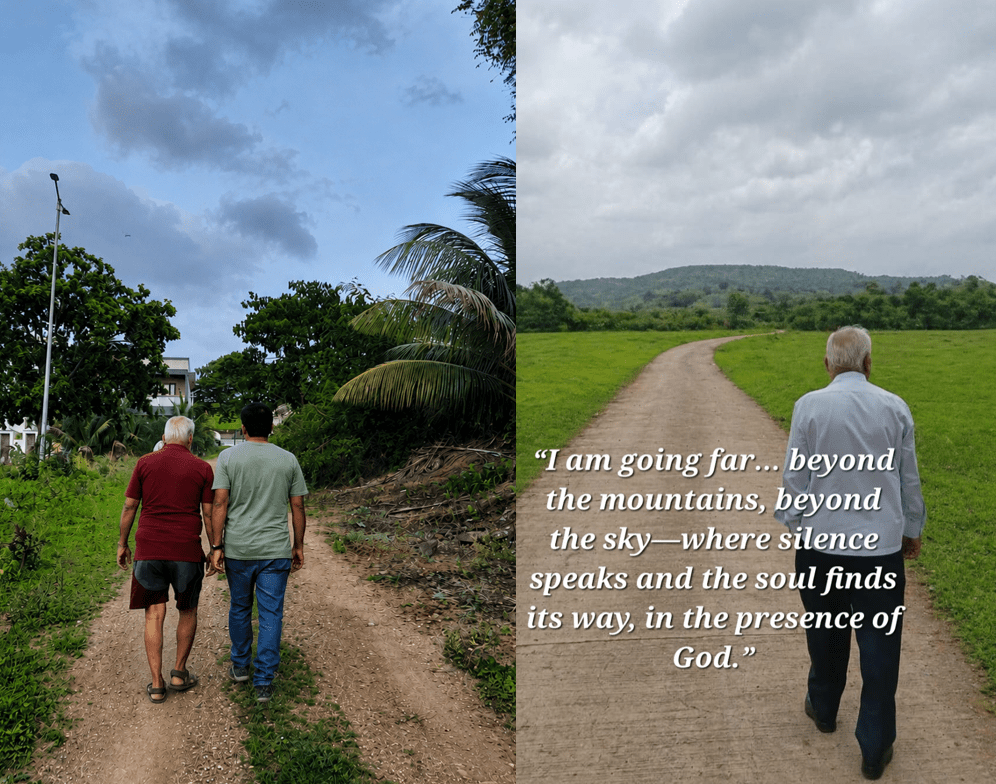
A beautiful reflection of love, faith, and presence. “Even though I walk through the valley of the shadow of death, I will fear no evil, for you are with me” (Psalm 23:4) — your family lived that truth with your father. Praying for God’s comfort and peace over you and your family in this season.
I also want to say how much thought and effort clearly went into writing this — weaving together your professional lens with something so personal couldn’t have been easy. I’ll admit some of the clinical detail is beyond me, but even without fully following every medical term, the heart of it comes through clearly. I hope this reaches other families going through something similar and offers them some guidance and comfort.
Well done Dr. Solomon
You are burn and shining for the truth,and
to the society in the midst of your deepest days
I believe the living GOD gave the strength to do the same., I wish you and bless you for the meaningful matters to the human kind
God shall supply all your nees