I was an intern at the World Health Organisation in 2014, convinced that global health was where change happened. I returned to it in 2025 as an IHP/EV Resident at the International Health Policies (IHP) network and blog hosted at the Institute of Tropical Medicine (ITM) in Antwerp, Belgium. The residency lasted three months. What it left behind will take considerably longer to process.
My primary responsibility was to support the editor (who has a fairly busy job for one person) with the IHP newsletter, one of the most widely read curated newsletters and knowledge management tools on global health policies & governance. This involved sourcing health policy news from across the world, translating the newsletter into European languages and preparing summaries. I also supported editing, uploading blog submissions and other backend operations.
What seemed, on the surface, like editorial and communications work turned out to be a living laboratory for my own doctoral research. My PhD examines the agenda-setting of oral health in India, how certain health issues gain visibility, enter policy discussions, and eventually shape decisions, while others remain invisible, despite their scale. The concept of agenda-setting originates in media studies and describes how editors decide what news reaches the public. In doing so, they shape not just what people think about, but what policymakers consider worth acting on. The parallel to health policy is direct.
Working within the IHP editorial process and watching how news is sourced, curated, and foregrounded, I witnessed agenda-setting in real time. What gets in? What gets left out? How much space does a story occupy? Who is the intended reader? These are not neutral decisions. They are shaped by the editor’s inclination and the gravitational pull of events, among other reasons. I also observed how much of the news finally reaches a global health audience. This was not a revelation in the theoretical sense. I already knew this. But there is a profound difference between knowing something as an idea and watching it operate as a daily editorial practice. The three months gave me a grounding for my research that no reading list could have provided.
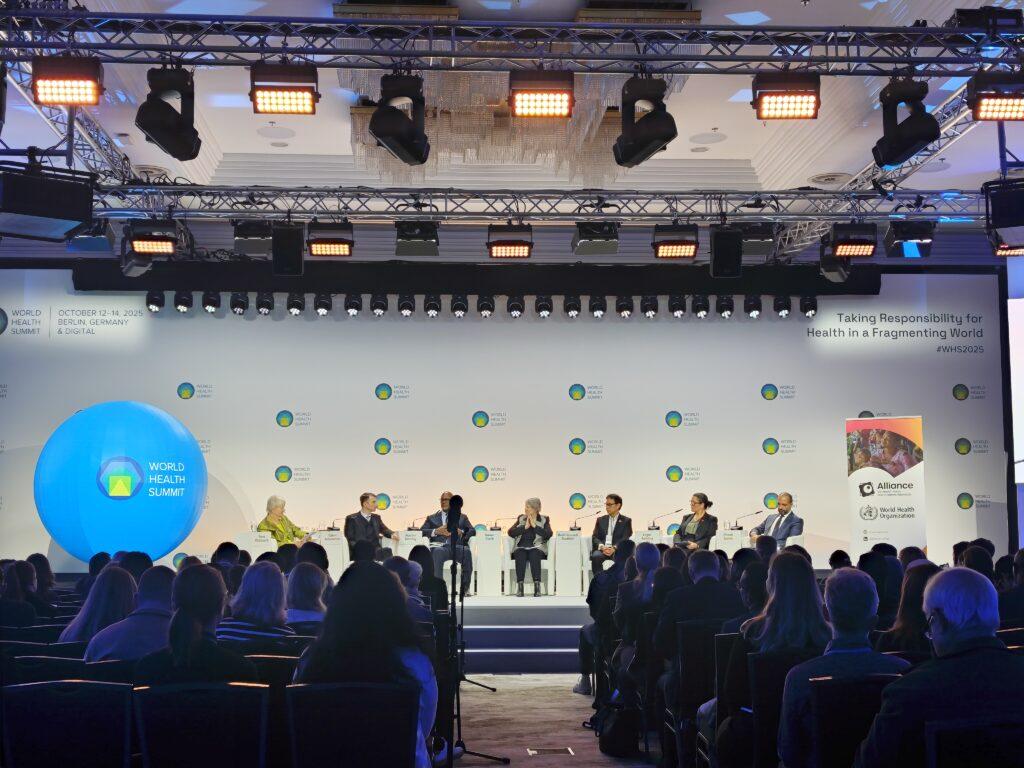
I attended several high-level convenings during my residency, including ITM’s annual colloquium and a webinar on the State of Health Policy and Systems Research organised by the WHO Alliance. I attended the World Health Summit (WHS) in Berlin, in the backdrop of the USA’s withdrawal from global health funding, which affected several programs worldwide and prompted governments to develop new self-reliant plans. Watching the global health financing and governance-dominated discussions at WHS reminded me, perhaps more acutely than ever, of a poem I had once encountered: Ross Coggins’ The Development Set. In this summit, public health decisions were debated in elite spaces far removed from the public realities they claim to represent. The communities. Standing in those rooms, the poem stopped being a critique and became a description.
Returning to global health after a decade away clarified something I had only sensed before. To remain active in global health, to attend the global meetings, build collaborations, and secure visibility, one needs substantial resources: funding, networks, institutional backing, and the freedom to travel. These are not equally distributed. And even when all these conditions are met, working in the global health landscape, one may not expect the change one hopes to contribute. Or it may come slowly, partially, filtered through the very systems one is trying to transform.
What the residency reinforced for me is that the most durable change I can hope to contribute will come from working at the local level, which is specific, contextual, and grounded. If something I contribute scales eventually, if a local insight travels and reshapes thinking elsewhere, that would be a genuine contribution. But I have stopped waiting for global health to deliver the change from the top down. The architecture of global health, its funding structures, its conference circuits, and its publishing hierarchies were not built for that kind of change, and pretending otherwise is a form of self-deception that comes at a real cost.
Not related to the residency, I also attended the Global Oral Health Workshop at Heidelberg University, which unsettled me the most. During a Q&A, one audience member objected to the word decolonisation not in bad faith, but out of something more troubling: a genuine unfamiliarity with what it means as a concept, a practice, a living struggle. This person argued that colonialism was far enough in the past to make the term irrelevant. As though structural inequalities have an expiry date. I sat in that room as a researcher from India, whose work is rooted in precisely those legacies. The dismissal was not merely uncomfortable; it was the kind of epistemic violence that does not announce itself as such. I name it because polite silence is its own complicity. Global health has progressed in its language around equity. It has made far less progress in meaning it.
There is another dimension to this residency that I want to name honestly. I was not merely a recipient of the IHP experience. I brought something to it, too, a perspective that is not routinely present in European global health institutions: a voice from the Global South, with all its related complexity, politics, and different ways of seeing. The two newsletters I independently led had open rates of 36% (higher than usual) and 21%, respectively. The introductions I wrote were, I was told, well-received. I do not mention these to congratulate myself, but because I think it matters to name the dynamic explicitly: the alternative introductions that came from a different cultural and intellectual tradition were noticed. They were appreciated precisely because they were different. And yet, they had to exist within a framework. That is the double nature of being a resident, rather than an editor. You can influence the content; you work within someone else’s structure.
I began this residency carrying the enthusiasm of someone who, despite a decade of distance, still believes that global health matters, that its problems are solvable, and that people of conscience can hasten those solutions. I ended it with a more tempered version of that belief, not diminished, but clarified. The problems are real. The institutions working on them are imperfect. The people inside those institutions are often trying harder than they are given credit for. And the voices that most need to be heard from the communities where these policies land are still, too often, the last to be invited to the table. I came back to global health. I am glad I did. I return to my local work with sharper tools and a steadier sense of where I can be most useful. And if these reflections find their way to someone who is also navigating the distance between aspiration and structure in global health, I hope they recognise themselves somewhere in these pages.
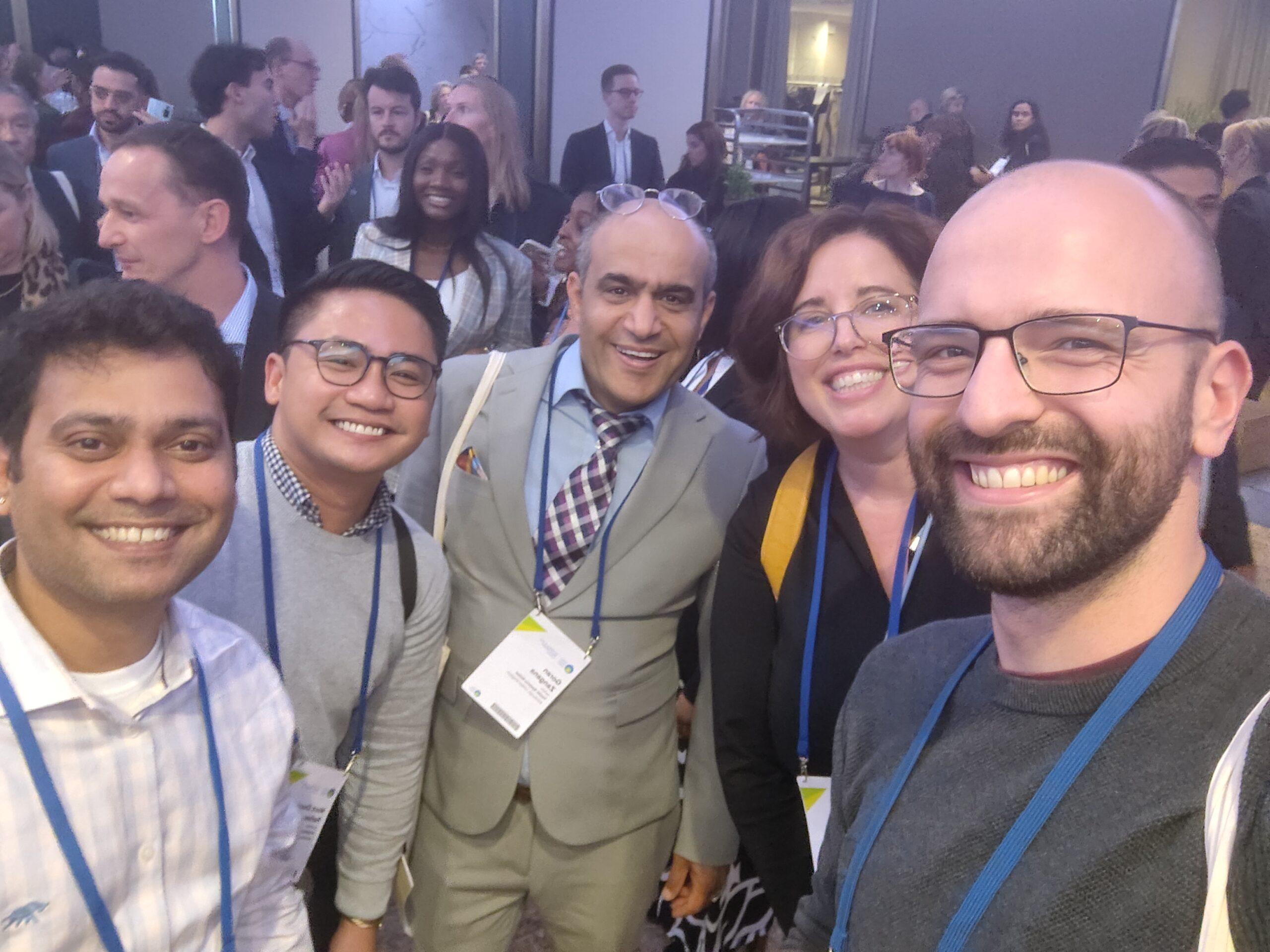
Rajeev (on the left) together with some other young researchers at the World Health Summit in Berlin
Beautifully written, Rajeev. Thanks for sharing your thoughts and reminding us to do the same.
A powerful reflection Rajeev, steeped in nothing but the truth, a commodity defined now by rarity rather than its abundance. Wishing you the best as you take on the local challenges, where the change most needed, occurs.