
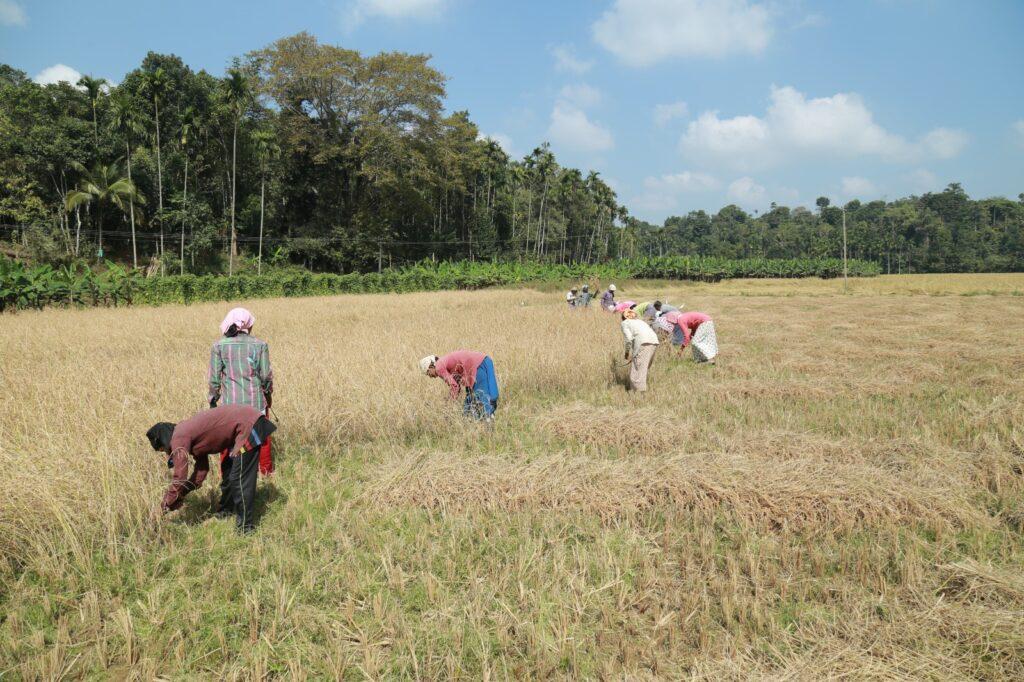

“Because we offer food to our ancestral deities every year… that food must come from our land… it’s not optional, it’s our duty.”
says Ammukutty Amma, an elderly Kurichiya woman from the district of Wayanad, in Kerala (South India). For her, farming is not a matter of choice or livelihood alone, it is a moral commitment woven into ancestry, land, and spirit. In her world, seeds are not commodities to be bought and sold; they are living carriers of memory, obligation, and continuity.
The Kurichiya indigenous community in Kerala is known for its traditional wetland paddy cultivation, clan-based agrarian systems, and the rich agroecological knowledge adapted to the Western Ghats landscape. For them, each season of cultivation is also an act of remembrance, where specific crops must be grown, harvested, and offered to deities, ensuring that traditions remain alive through practice. This intimate connection between culture and cultivation forms the foundation of biodiversity conservation in Indigenous landscapes. Rituals demand diversity. Different crops, traditional rice varieties (tubers, millets, and greens) are not interchangeable: each has its place in ceremonies, food systems, and ecological cycles. As a result, conservation is not externally imposed but internally sustained. When communities protect their traditions, they simultaneously preserve a rich genetic reservoir of seeds adapted to local soils, climates, and cultural needs. Biodiversity, in this sense, is not an abstract environmental goal—it is a lived cultural necessity.
In spite of increasing pressure, resilience
Yet, this delicate relationship between culture and ecology is under increasing strain. The rhythms that once guided agricultural life are becoming unreliable. As Ammukutty Amma says,
“Earlier, the river used to run slowly during the rainy season, and alluvium would reach our paddy fields… Now, it runs aggressively, the topsoil is washed away, and soil fertility has declined. As a result, yields have fallen.”
What this reflects, is more than environmental change; it is a disruption of the very conditions that sustained Indigenous agriculture. Seasonal predictability, soil regeneration, and water flows—once stable enough to support diverse cropping systems are now erratic. Floods erode rather than enrich, rains arrive unpredictably, and soils lose their capacity to sustain multiple varieties. For the Kurichiya Indigenous community, this change is not abstract—it is visible in their own fields, where fewer varieties are now sown, and choices once guided by tradition are increasingly shaped by uncertainty.
And yet, resilience persists. Rather than abandoning diversity altogether, communities reorganise it. Each clan, guided by its elders, takes responsibility for cultivating selected traditional varieties—ensuring that no single household bears the burden of maintaining all seeds. These varieties are then exchanged across clans, circulating knowledge, genetic material, and responsibility within a collective system of care.
For Ammukutty Amma and her community, this quiet exchange is what keeps her seeds—and traditions—alive. What climate change threatens to fragment, community practice tries to hold together. Seeds continue to move—not just across fields, but across relationships—carrying with them fragments of a system that refuses to disappear.
Disconnect with national governance and global discourse
Yet, far from the fields of Ammukutty Amma, another gap becomes visible—one that doesn’t lie in the soil, but in governance.
Kerala already established decentralised institutions such as Biodiversity Management Committees (BMCs) under the India Biological Diversity Act 2002, but their functioning remains largely procedural, often confined to documentation through People’s Biodiversity Registers, with limited translation into active stewardship or livelihood support. In practice, this means that the cultural–ecological systems sustaining agrobiodiversity—such as clan-based seed exchange, women’s custodianship, and ritual-driven cultivation—remain largely invisible within formal decision-making. Moreover, the everyday knowledge that sustains nutrition, climate resilience, and biodiversity does not find a place in local planning, funding decisions, or agricultural support systems.
For Ammukutty Amma and her community, this is not just a gap in policy—it is a silence she encounters when her knowledge has no place in the decisions that shape her future. Yes, policies recognise biodiversity, but in her fields, this knowledge is left to survive on its own. As a result, Indigenous communities like Ammukutty Amma’s continue to navigate climate disruption with minimal institutional support, despite possessing knowledge systems central to resilience. What is at risk here is not just biodiversity, but a relational system of knowledge, practice, and responsibility that modern governance has yet to fully recognise.
This disconnect becomes even more striking when placed against global conversations on climate and sustainability. Across the world, Indigenous knowledge is increasingly recognised as foundational to climate resilience. Frameworks such as the Intergovernmental Panel on Climate Change and the Convention on Biological Diversity emphasise that Indigenous and local knowledge systems are critical for adaptation, biodiversity conservation, and sustainable food systems. Similarly, the Kunming-Montreal Global Biodiversity Framework explicitly calls for integrating traditional knowledge, community stewardship, and biodiversity-based food systems into policy and governance. Yet, for Ammukutty Amma’s community, this global recognition feels far removed from the realities of their village. There are few ways in which these ideas make their way to the village—into Panchayat plans, local budgets, or farming support. In other words, Indigenous knowledge is increasingly acknowledged in principle but not embedded in practice, leaving frontline communities to bear the burden of climate adaptation alone.
For Ammukutty Amma and many others like her, this is a lived reality. Their story reflects a deeper systemic imbalance between human systems and the natural ecosystems that sustain them. The Rockefeller Foundation–Lancet Commission on planetary health already argued in 2015 that human health and civilisation depend fundamentally on the integrity of Earth’s natural systems, yet current development pathways are eroding these very foundations. In Wayanad, this erosion is visible in the breakdown of climatic stability, soil systems, and biodiversity—directly undermining food systems, nutrition, and livelihoods. At the same time, Indigenous food systems demonstrate an alternative pathway: one that integrates ecological stewardship, cultural continuity, and nutritional wellbeing. These systems persist despite—not because of—policy support, however, as this narrative shows.
For Ammukutty Amma, the future depends on whether her knowledge is – at last – heard. Not just in her fields, but also in the spaces where decisions are made. Bridging this gap requires moving beyond symbolic recognition toward bringing Indigenous community’s knowledge into the very spaces where decisions are made—local governance, planning, and resource allocation. Re-aligning local food systems with planetary health principles—ecological sustainability, equity, and resilience—is not only essential for communities like Ammukutti Amma’s, but for safeguarding the future of food and health in an increasingly unstable climate.
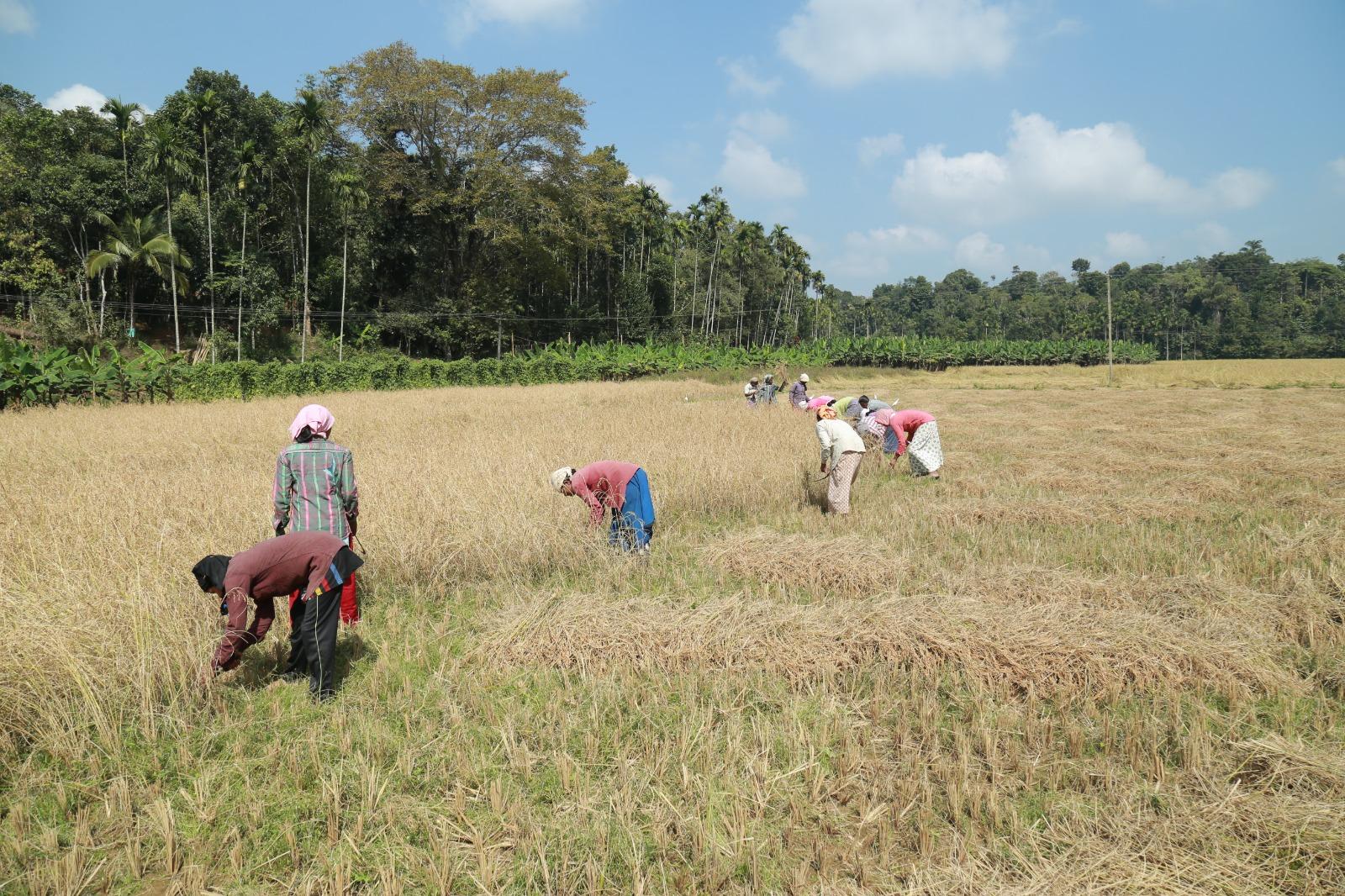
Ammukutti Amma and her clan paddy harvesting on their ancestral land—where farming sustains both food and tradition (picture by author)