
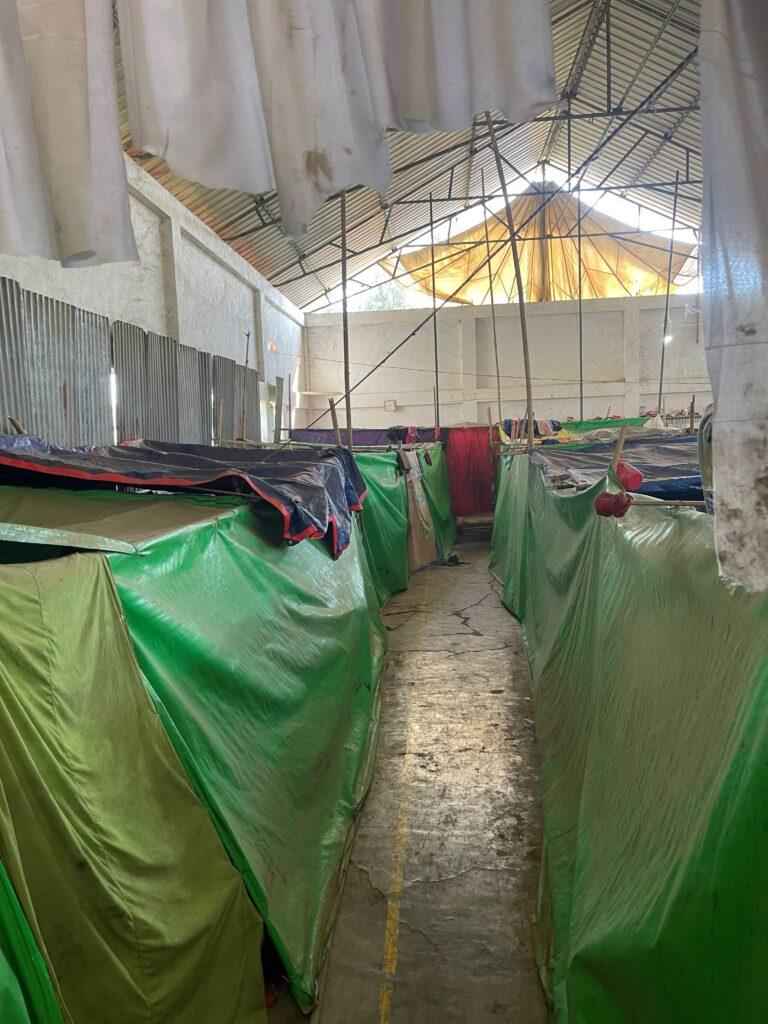

Since May 2023, Manipur, situated in the North-easthern part of India, has experienced a prolonged period of ethnic violence that has killed more than 250 people and displaced over 60,000 residents across the state. Much of the national attention has focused on political instability and the breakdown of law and order. However, inside relief camps another crisis has quietly unfolded: pregnant women trying to navigate maternal healthcare in the middle of displacement, fear and uncertainty. Pregnancy does not stop during conflict, but conflict changes how women access care. Although India has made progress in reducing maternal mortality over the past decade, fragile and conflict-affected areas often experience disruptions in access to maternal healthcare services.
As part of my Master’s thesis research at OP Jindal Global University, I conducted qualitative interviews between December 2024 and January 2025 in six relief camps in Churachandpur district. Through conversations with displaced women, I tried to understand how the ongoing conflict has affected their journeys to seek maternal healthcare.
One of the most striking observations was that the health system had not completely collapsed. Primary Health Centres were still functioning and government maternal health schemes technically remained in place. Yet many women described the system as increasingly difficult to navigate because services were no longer predictable. Frontline services such as ASHA and Anganwadi outreach had become irregular in some areas because many workers themselves had been displaced or were unable to travel freely. Relief camps also did not have structured maternal health services. This meant that pregnant women had to leave the camps and travel to nearby facilities for antenatal check-ups, laboratory tests and delivery.
For many families, this was not easy. Displacement had disrupted livelihoods. Families who previously relied on farming or daily wage work were forced to leave their villages and sources of income, while others could no longer travel safely to work. Markets, transportation and local businesses were also affected. When families moved into relief camps, they lost access to land, tools, livestock and employment opportunities. As a result, many households had little or no income, making even small expenses difficult to manage. Costs such as transportation to health facilities or diagnostic tests became barriers. Some women shared that they delayed antenatal visits simply because “money was tight” or because the family had other urgent expenses. While some financial support was provided by the Manipur state government during the initial months of displacement (around ₹1000, roughly $12, per person), many families said the amount was not enough to cover daily needs, let alone healthcare costs.
Safety was another concern. Women spoke about feeling anxious travelling through certain areas during tense periods. Even short distances could feel risky. In such situations, decisions about seeking care were shaped not only by distance, but by fear that often came from the possibility of crossing tense areas, encountering violence or not knowing whether it was safe to move between locations. Trust also played an important role in where women chose to seek care. In a highly polarized environment, health facilities were sometimes viewed through the lens of community identity. Some women preferred visiting facilities where they felt socially safe or where they believed providers would understand their situation. This shows that maternal healthcare access during conflict is not only about infrastructure or affordability, but also about trust.
The conflict has also intensified existing gender dynamics within households. Decisions about healthcare were often made collectively, but husbands or senior family members usually had the final say. In situations where money was limited, maternal healthcare had to compete with other needs such as food, schooling for children or debt repayment.
What these stories reveal is that maternal health risks in conflict settings are not only medical. They are deeply shaped by social and economic conditions. Facilities may still exist, but access becomes fragile when transport, finances, trust and security are uncertain. Community networks and church groups have played an important role in supporting pregnant women in relief camps. However, community support alone cannot replace functioning public systems.
If maternal healthcare is to be better protected in fragile settings like my state, Manipur, responses must go beyond restoring infrastructure. While conflict makes it difficult to fully safeguard maternal health services, policies can still help mitigate some of the challenges pregnant women face. This includes ensuring safe transportation for displaced women, sustained financial support for displaced families, outreach services within relief camps and rebuilding trust between communities and health institutions. Conflict does not pause pregnancy, but thoughtful policy responses can help ensure that women are not left alone in navigating the journey to safe motherhood.
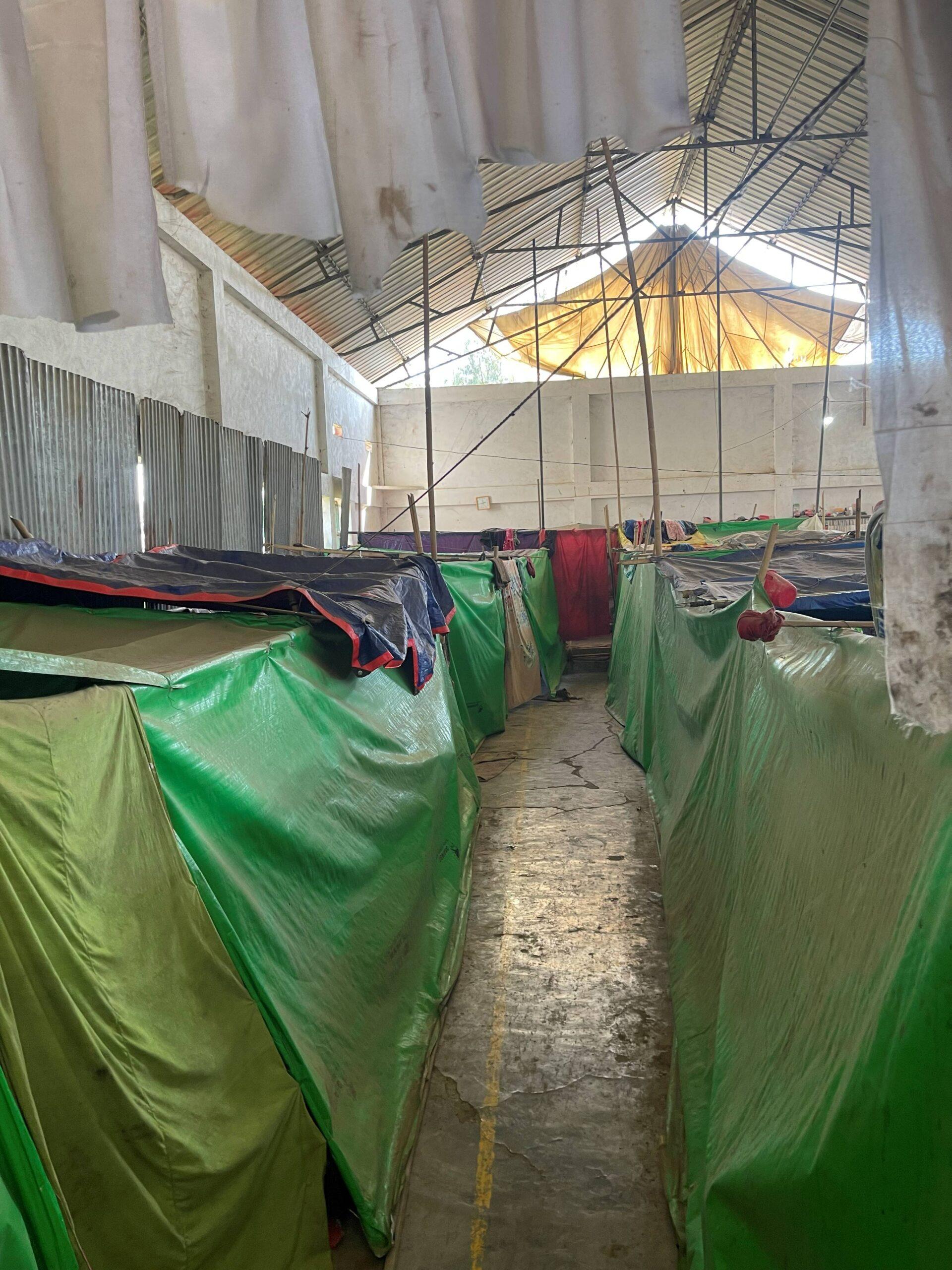
Temporary shelter partitions inside a relief camp in Churachandpur, Manipur. Photo by the author.