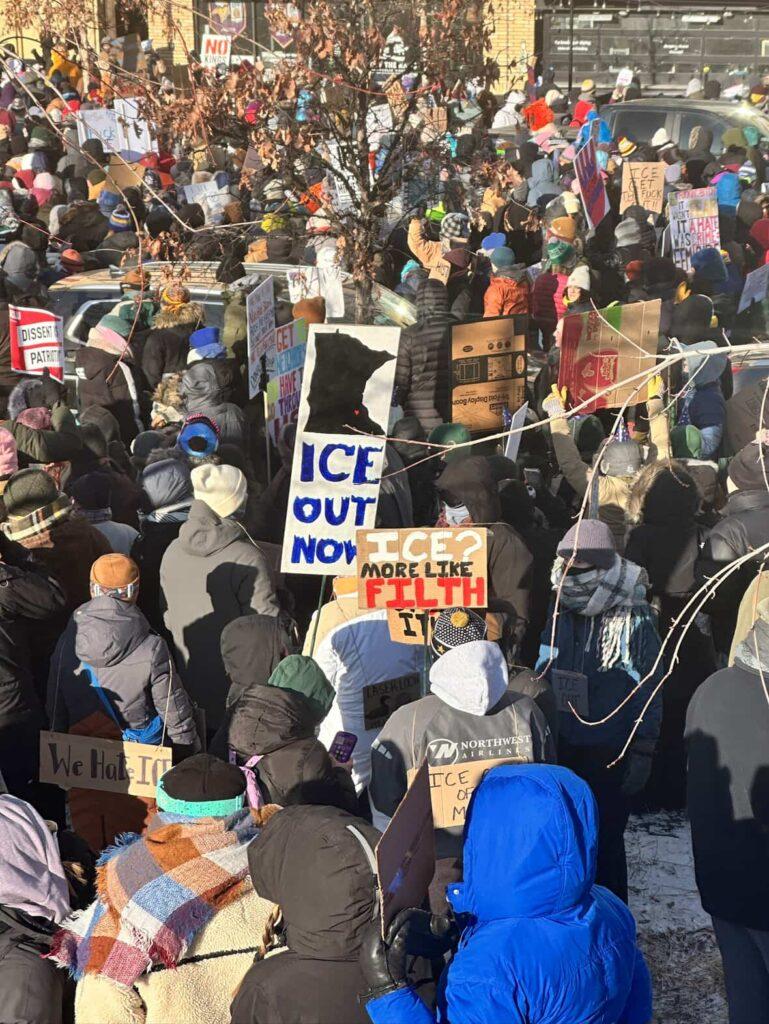

What does a public health crisis look like when it is produced by state power rather than by disease in the U.S. context? Global health scholars have grappled with this question ever since the police murder of Minnesotan George Floyd in 2020, and the subsequent turn toward naming racism as a public health crisis. During the Biden administration, the U.S. Congress formalized this framing with its 2024 Resolution Declaring racism a public health crisis, which defined such conditions as ongoing, unequally distributed, preventable, and sustained by the absence of adequate protective measures. Recent immigration enforcement activities in Minnesota, which include the deployment of an estimated 3,000 federal immigration officers, meet each of these criteria. Just two years after the 2024 Resolution, and now under a different administration, intensified federal immigration operations in Minnesota known as “Operation Metro Surge” are giving concrete form to the conditions Congress identified as constitutive of a public health crisis, manifested through deteriorating access to health care, widespread psychological distress, and the displacement of protective responsibilities from the state onto communities themselves.
Immigration enforcement in Minnesota is reshaping health care access by transforming hospitals and clinics from sites of care into spaces of perceived risk. As unlawful U.S. Immigration and Customs Enforcement (ICE) activities intensify across the Minneapolis area–including the recent murders of Renee Good and Alex Pretti–fear is reshaping daily life not only for undocumented immigrants, but also for legal immigrants, activists, and entire communities of color. An emergency room nurse in Minneapolis described how patients are delaying emergency care, skipping doctor’s appointments, and avoiding hospitals. “When patients do seek care for themselves or for their family members,” he described, “they are often much sicker, critically ill and at risk of life-long health implications, or in the cases where our ambulances are dispatched to collect a deceased person, already dead.” A community organizer reported seeing in one of her mutual aid Signal chats a woman requesting donations of medical supplies for a planned home birth, a choice made out of fear of deportation. These are not isolated incidents or unintended side effects of immigration policy, but rather a return to a familiar paradigm— one in which the state’s role shifts from protecting health to producing risk, rendering immigration enforcement itself a determinant of health. What is unfolding in Minnesota is not simply a crisis of civil rights or a moment of political unrest. It is a public health crisis, and it demands attention far beyond the United States.
Beyond its effects on health care access, immigration enforcement in Minnesota is producing widespread psychological harm that operates at the population level. Intensified enforcement hasn’t generated episodic fear, but chronic, anticipatory stress that now structures everyday life across entire communities. Among the populations that she and her colleagues seek to protect against ICE activities, a community organizer described persistent hypervigilance, sleep disruption, difficulty concentrating, and anxiety as people remain constantly alert to the possibility of detention. Parents report keeping children home from school, while adults alter work routines or stop leaving their homes altogether, compounding social isolation and economic insecurity. This collective distress is shaped by a series of highly visible and widely circulated incidents, including the detention of a toddler, the kidnapping of 5-year-old Liam Ramos, the arrest of a Hmong elder (a U.S. citizen) from his home under subzero conditions, the denial of medical care to Aliya Rahman (a U.S. citizen) who was detained by ICE, and the deployment of tear gas that resulted in infant hospitalization. Understood together, these events signal to the communities in which they operate that enforcement is unpredictable and pervasive.
Finally, the failure to prevent unlawful federal immigration enforcement activities and its deleterious health effects has shifted responsibility for health and safety from the state onto communities themselves. In response to intensified enforcement, residents and organizers have assumed functions typically associated with emergency response in humanitarian settings, including informal health provisioning, real-time surveillance of ICE activity, and neighborhood-based rapid response networks. Mutual aid now provides food, transportation, laundry, and basic medical supplies as health-preserving interventions. As a local nurse observed, this rapid mobilization did not arise spontaneously: “The unique thing about Minneapolis is that since the murder of George Floyd, we’ve had established networks of people willing to show up and do what’s right. Those networks were reactivated and strengthened since Operation Metro Surge.” This response is not evidence of community resilience alone, but also of institutional failure. For global health scholars, such dynamics are familiar from contexts of conflict, displacement, and fragile governance, where populations must assemble parallel systems of care because the state is unable or unwilling to protect health. As one community organizer put it, “It’s just what we do as Minnesotans.” The ways that Operation Metro Surge have prompted community-supplied prevention, reorganized healthcare seeking behaviors, and produced widespread psychological harm marks a critical shift, revealing immigration enforcement in Minnesota as not simply a legal or political issue, but a population-level public health crisis.
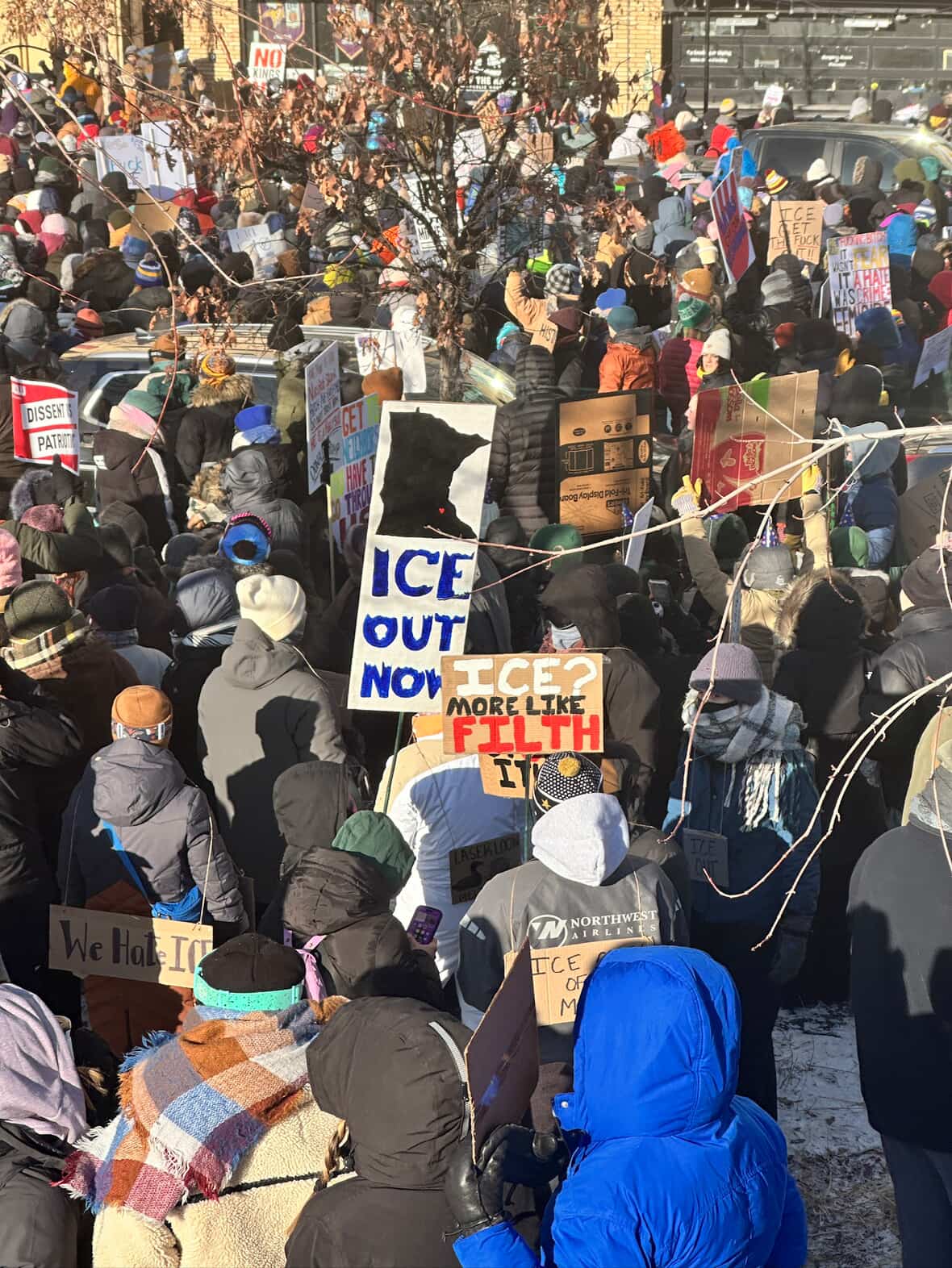
photo credit: Emma Wunrow