


As a new UHC Knowledge Hub is launched in Japan ahead of international UHC Day, global health reform initiatives should align behind UHC as a country-led, sustainable global health model if they want to stay relevant.
Momentum for global health reform is at a peak. The Accra Reset, the Lusaka Agenda, Wellcome Trust’s commissioned proposals, and regional governance discussions (e.g., AU and EU) all recognize that national health and international aid systems are deeply strained by overlapping crises and financing cliffs. Yet this proliferation of initiatives risks reproducing fragmentation and process fatigue. A coherent, unifying vision is essential if global health reform is to finally succeed – a prerequisite for global health’s legitimacy and survival. Universal Health Coverage (UHC) offers this vision, bringing together demands for sovereignty, a need to deliver more equity, and the necessity to strengthen resilience.
Sovereignty has rightly become a defining theme of recent reform efforts. The inequitable distribution of countermeasures during COVID-19 and ongoing cuts to development assistance underscore the need for country-led priority-setting, domestic financing, and regional leadership. Sovereignty on its own, however, is insufficient. Without shared expectations for collaboration and collective action, reforms risk drifting toward nationalism and further fragmentation, weakening collective capacity to manage transnational risks and leaving global public goods under-resourced.
Equity is another powerful driver of reform. Widening disparities within and between countries, reversals in essential services, and economic shocks have deepened health injustices — particularly for vulnerable communities. Yet equity risks remaining an empty soundbite if not accompanied by structural commitments, such as fair financing, protection of civic space, meaningful inclusion of communities, and governance arrangements that meaningfully include those most affected.
Resilience has become a third organizing principle, particularly for pandemic preparedness and climate-related health threats. However, resilience is often pursued through parallel, emergency-focused mechanisms, with siloed investments that undermine integrated systems and do not address multisectoral determinants of vulnerability. A narrow focus on emergency readiness without integration into core health services risks repeating pre-pandemic shortcomings.
Universal health coverage – which means that all people have access to the full range of quality health services they need, when and where they need them, without financial hardship – offers a unifying vision that all governments are already rallied behind. UHC delivers on sovereignty, as it is inherently country-led. UHC enhances equity, as it is grounded in universality and rights-based principles. And UHC is the basis for resilience, as it strengthens health systems as the foundation for health security. UHC also shifts the onus of governance to governments and citizens – enhancing legitimacy and sustainability while reducing aid dependency. Most importantly, UHC reframes the goal of architecture reform as asystem-wide commitment to meet people’s needs reliably, fairly, and sustainably.
As the short window of opportunity and momentum for global reform efforts begins to close, UHC offers a coherent, population-centered anchor that can reunite the fragmented global health sector. If we align reform efforts behind UHC, catalyzed by domestic leaders and policymakers committed to its realization, we can ensure global health delivers meaningful progress — not just another failed reform process.
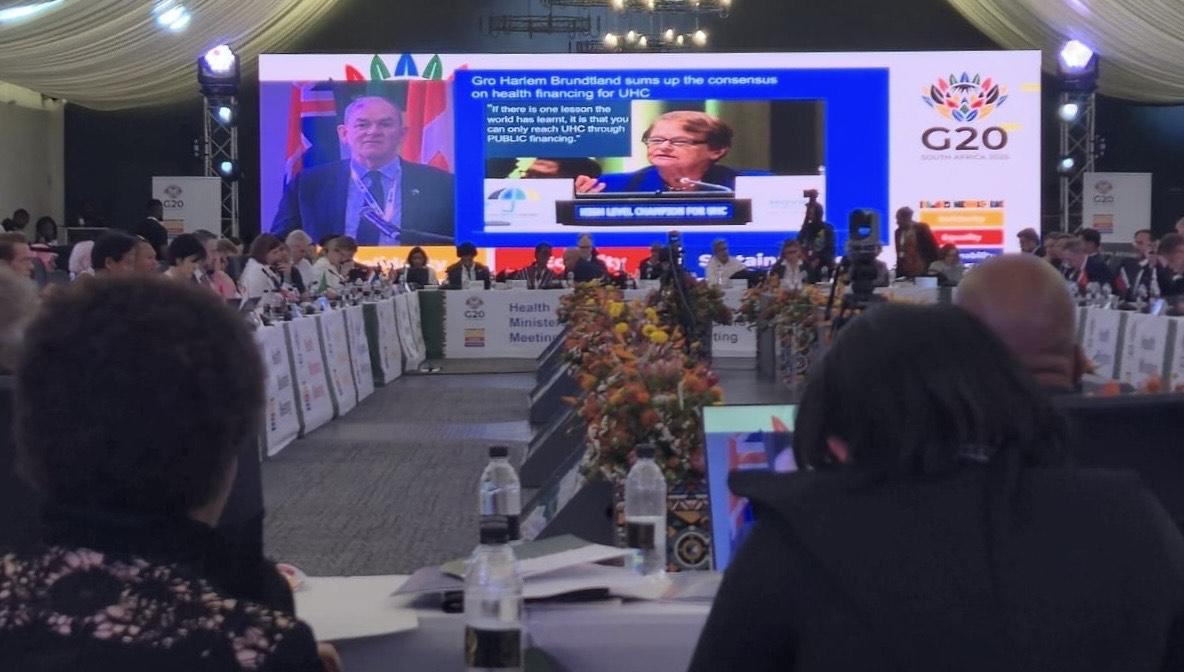
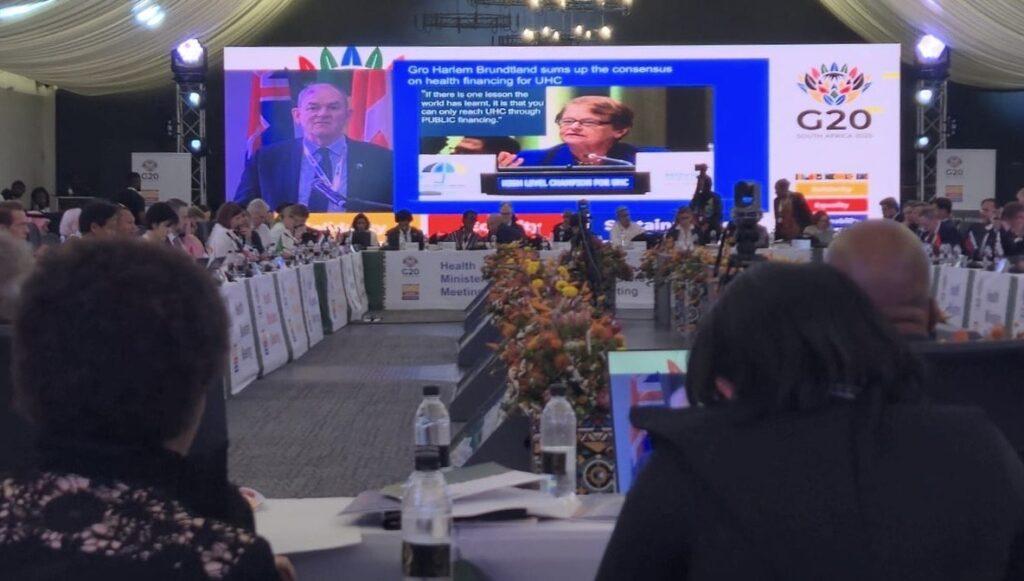
G20 Health Meeting, South Africa, 2025 (c) Arush Lal