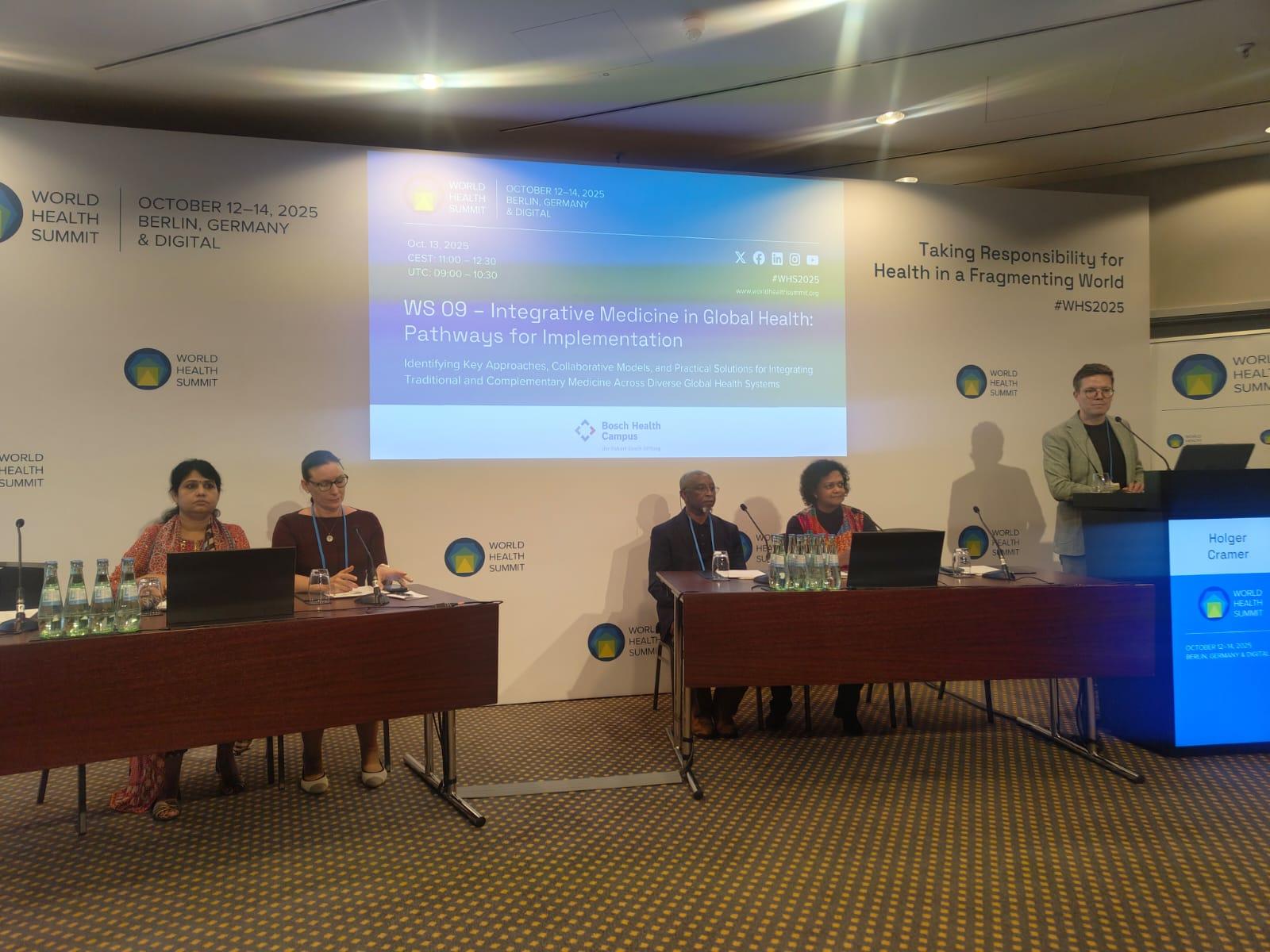
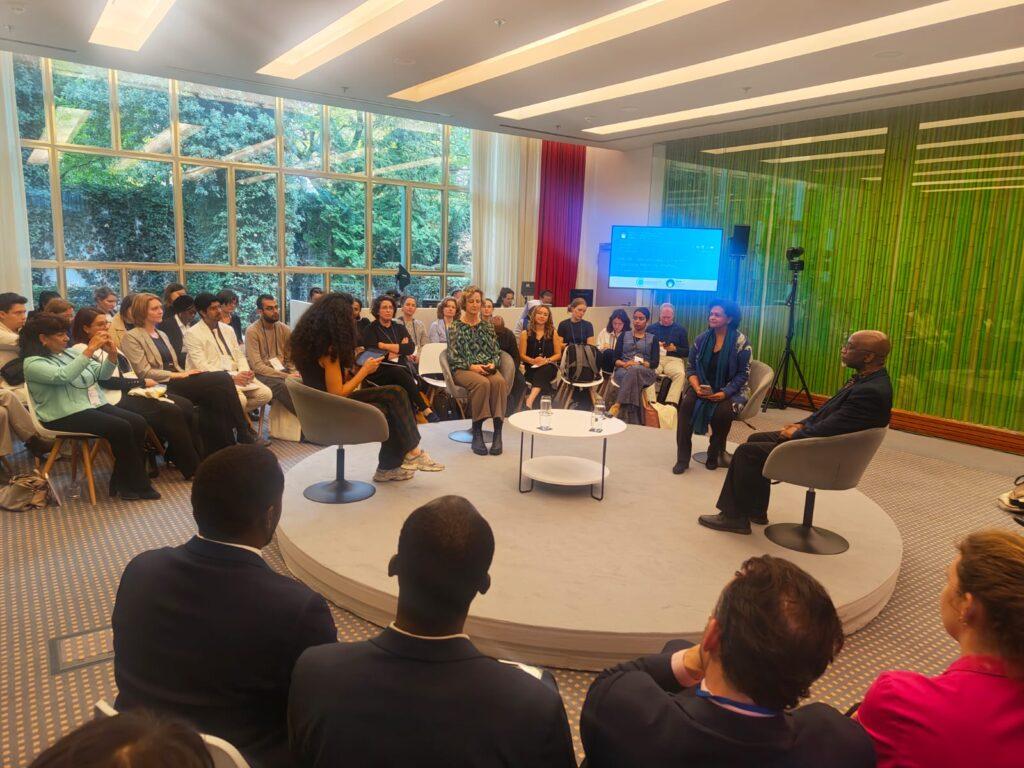
At the 2025 World Health Summit (WHS) in Berlin, Traditional Medicine (TM) found a historic place in the global health dialogue. For the first time, dedicated sessions explored its role in advancing Universal Health Coverage (UHC) and transforming how health systems connect with communities. My curiosity about how TM is gaining visibility at the global level led me to attend both sessions. What emerged was a powerful narrative: TM is no longer seen as a relic of the past, but as a bridge to a more inclusive, equitable, and sustainable future for health.
The timing of these sessions was significant. Earlier this year, the World Health Assembly adopted a new WHO Traditional Medicine Strategy, and WHS became the first major platform to discuss how to implement that strategy. This global momentum was echoed through a call for action: moving “from dialogue to delivery.” The newly established WHO Global Centre for Traditional Medicine in Jamnagar, India, in 2022, represents this shift from rhetoric to research, and from heritage to health innovation.
Traditional Medicine as the Future, Not the Past
The WHO’s Traditional Medicine Strategy is framed around four core pillars: evidence, regulation, integration, and collaboration. The message is clear: TM must be integrated into modern health systems through credible science, equitable governance, and community participation.
Panellists emphasised that traditional medicine is not an alternative to modern healthcare but an integral component of people’s lived experiences. In many countries, a sizeable amount of populations still rely on traditional or complementary practices for primary care. For example, in Germany, a recent survey found that 70% of people use traditional or complementary medicine in some form. These practices persist not only because they are affordable and accessible, but because they are community-owned and legitimate within cultural contexts, qualities that formal health systems often struggle to achieve.
Traditional medicine is deeply intertwined with local ecosystems, rituals, and collective memory. Yet, as several speakers noted, global health has long sidelined these systems, treating them as unscientific or outdated. One panellist described this as a “colonial hangover”, a legacy that continues to marginalise indigenous healing knowledge. The new WHO strategy seeks to correct this imbalance by promoting integration rather than assimilation. That means creating health systems where traditional and biomedical models coexist, with mutual respect and clearly defined roles.
The discussion on integrative medicine was particularly thought-provoking. Many WHO member states have already implemented national strategies to integrate traditional and complementary medicine into public health systems. The session highlighted how such integration could strengthen health systems, reduce costs, and expand reach, especially in rural or marginalised settings where formal care is scarce.
Science, Trust, and the Path Forward
A recurring theme in both sessions was the tension between TM and biomedical validation. While the need for evidence is undeniable, several panellists cautioned against forcing traditional medicine into the mould of clinical trials designed for pharmaceuticals. New approaches, such as network pharmacology, which maps interactions across multiple compounds and biological systems, were discussed as more holistic ways to assess efficacy and safety.
Trust emerged as another crucial theme. Traditional healers often operate at the periphery of formal systems, with little recognition or regulation. As one speaker from South Africa reminded the audience, the challenge is not just scientific but also social: overcoming stigma, reforming outdated laws like the Witchcraft Suppression Act, and training new generations of healers who can bridge ancestral knowledge with contemporary science.
Beyond the scientific debates, the discussions also highlighted the economic and ethical dimensions of TM. The wellness industry now represents nearly 25% of global GDP, underscoring the commercial stakes of this movement. Issues of intellectual property, biopiracy, and benefit-sharing were raised repeatedly, calling for governance frameworks that protect communities as custodians of knowledge rather than treating them as data sources.
TM has gained such visibility at the global health level in recent times. It is the result of sustained political support from countries like China and India. Indeed, India’s partnership with the WHO in establishing the Global Centre for Traditional Medicine has provided both leadership and legitimacy to this agenda. This political push is helping elevate TM from the margins of cultural discourse to the mainstream of health diplomacy.
From Global Dialogue to Local Action
The WHS sessions made one thing clear: TM has arrived at the global policy table, but the next step must be local. For TM to contribute meaningfully to UHC, it must be nurtured through bottom-up approaches, where communities, healers, and local institutions shape the policies that affect them.
TM brings with it not just remedies, but philosophies of balance, interconnectedness, and respect for nature values that modern health systems desperately need. As the world prepares for the next Global Traditional Medicine Summit in New Delhi in 2026, the challenge is to ensure that these global conversations translate into national policies and local practices that truly honour this shared heritage.