
In this short article, Grace Ku reflects upon the Political Declaration and proceedings of the 4th High Level Meeting on Non-Communicable Diseases during the 80th United Nations General Assembly (UNGA) held in New York on 25 September.
The 4th Political Declaration
Almost 6 months prior to the UNGA 4th High-Level Meeting on Non-Communicable Diseases (NCDs), country leaders and representatives all over the world began working on the Political Declaration (PD). Revision 4 (the ‘final’ version) sets, for the first time ever, targets of: 150 million fewer people using tobacco, 150 million more people with hypertension under control and 150 million more people with access to mental health care, to be achieved by 2030.
The following 2030 targets are explicitly indicated in the PD itself:
The High Level Meeting
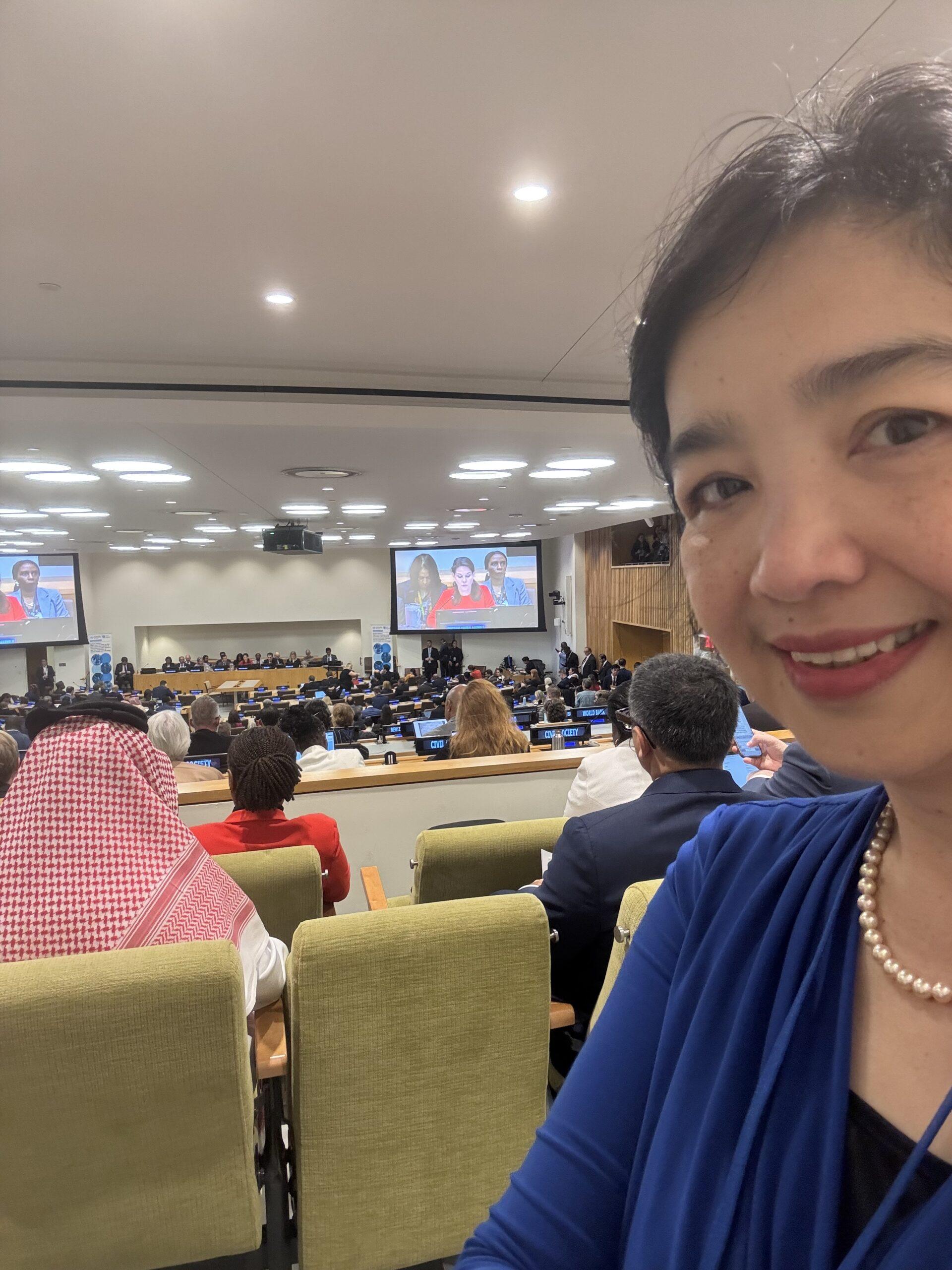
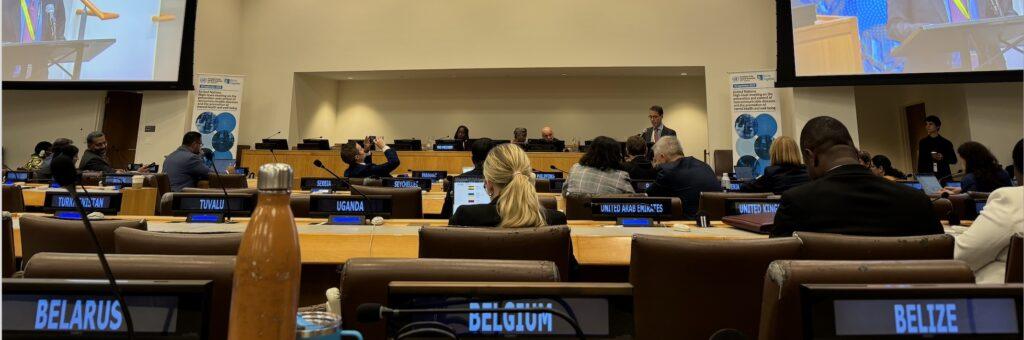
On 25 September, I witnessed first-hand the strong endorsements by more than 120 countries and blocs, and the veto delivered by the United States. In his speech, the US Secretary of Health and Human Services Robert F Kennedy, Jr. stated that “…we cannot accept language that pushes destructive gender ideology. Neither can we accept claims of a constitutional or international right to abortion”. He added that “the draft declaration should not have been included in today’s agenda” as it was “filled with controversy with provisions about everything from taxes to…management by international bodies of communicable diseases.” (These most probably referred to the PD statement “integrating, as appropriate, prevention, screening, diagnosis, rehabilitation and long-term care into existing programmes for communicable diseases, maternal and child health, and sexual and reproductive health programmes.”)
As there was no consensus to adopt it during the meeting, the PD will be submitted to a formal member state vote. With the resounding support of other member-countries, I am confident that this will be endorsed.
Meanwhile, the current non-adoption does not signify inaction. While the PD was meant to strengthen national and global efforts, the majority of the 194 countries have already set National NCD targets and are working towards achieving these using mostly domestic funds, demonstrating commitments beyond words and what is written. Nevertheless, commitments for cooperation at a global level are essential, to support least developed countries and to satisfactorily address the wider determinants of NCDs, which would include, among others, health taxes.
The challenges in NCD and mental health care and the role of integration
How does one manage NCDs including mental health issues ?
NCDs raise particular challenges that cannot be addressed through siloed disease responses. More than that, their drivers cannot be tackled by the health sector alone. Undoubtedly, integration throughout the life-course and across sectors is a cornerstone in organising strategies for action on NCDs and the promotion of mental health and well-being.
Epigenetics has taught us that maternal and paternal exposures can manifest in their children as certain chronic NCDs. Once conceived, the health of the foetus will only be as good as the health (including the nutritional state) of the mother who bore it. Also, certain changes during pregnancy predispose mothers to develop NCDs such as diabetes and hypertension afterwards. Hence, the need to integrate NCD prevention and care in reproductive health services. For instance, integration of diabetes care to identify and address gestational diabetes helps avert risk of adverse health outcomes in both the mothers and their offspring. Children borne by mothers with gestational diabetes have a higher risk of developing obesity, cardiovascular diseases, type 2 diabetes and mental and behavioural disorders (this, and not acetaminophen, is linked to autism!).
The growth and development of the child is inextricably linked to (potential) NCDs: childhood exposures to unhealthy diets, physical inactivity, harmful substances and certain infections predispose them to develop NCDs. Preventable/treatable NCDs such as sickle cell disease, type 1 diabetes, rheumatic heart disease account for 16% of deaths in children.
Among those with NCDs and in adults, there are interventions incorporating psychosocial approaches that can be implemented to achieve good clinical control and better well-being, as well as healthy and active ageing.
And what about gender? Epidemiological data has demonstrated that more men prematurely die from NCDs than women; but while women live longer than men, they spend more years in an unhealthy and inactive state. Hence the need for nuanced responses.
Syndemics of TB, HIV/AIDS, diabetes and cardiovascular diseases have long been established. Hence it is only logical to integrate communicable and non-communicable disease care.
“Please do not cut me into pieces”
Beyond integration of care, we need to address root causes: in the air people breathe, in what they eat and drink, the roads they use, and the conditions in which they live and work. These structural, social and commercial determinants cannot be tackled by the health sector alone. We need integrated actions of different sectors and stakeholders.
The final message? It is high time to revise the way we think. As Carol Nawina, a person with lived experiences from Zambia said in one of the UN HLM NCDs side events: “I am a person, please do not cut me into pieces.”
Indeed, the absence of disease is not the only thing that matters.