


Globally, an estimated 1.8 billion women, girls, and people menstruate. Yet despite the scale and universality of menstruation, menstrual health remains marginal within global health policy and financing architectures. Too often, it continues to be framed narrowly through product provision and hygiene management, rather than recognised as a systems issue situated at the intersection of health equity, gender-responsive governance, bodily autonomy, and social participation. This disconnect persists despite growing recognition, including within UNICEF’s guidance on menstrual health and hygiene, that menstrual health is shaped not only by access to products, but also by the strength, inclusiveness, and responsiveness of wider health and social systems.
Humanitarian crises expose these failures with particular clarity. Conflict, displacement, climate shocks, and economic instability disrupt access to products, sanitation infrastructure, healthcare, privacy, and income simultaneously. Yet crises rarely create inequalities in isolation. Rather, they intensify pre-existing structural weaknesses embedded within health systems, preparedness frameworks, and social protection mechanisms. The barriers experienced during emergencies are frequently the same barriers experienced daily across schools, workplaces, healthcare systems, and public life. As wider debates around climate change and health increasingly acknowledge the disproportionate effects of climate and instability on women and girls, menstrual health remains insufficiently integrated within climate resilience, preparedness, and humanitarian governance agendas.
When grassroots plug health systems cracks
This policy marginalisation reflects a broader tendency to treat menstrual health as peripheral rather than foundational to gender-responsive systems design. Within humanitarian settings, responses often focus on short-term distributions of dignity kits or emergency WASH interventions, while remaining disconnected from wider SRHR, healthcare, protection, and social policy frameworks. The consequence is that menstrual dignity becomes visible to institutions primarily during crisis, rather than being embedded proactively within preparedness planning and public policy. Emergencies in Lebanon and Palestine have exposed the consequences of these longstanding governance gaps particularly starkly. It is deeply concerning that women and girls continue to rely upon moments of instability and displacement for policymakers to acknowledge needs that should already have been structurally addressed through equitable and gender-responsive systems.
At the same time, the rapid mobilisation of feminist and community-led actors demonstrates both the strength of local leadership and the persistent inadequacy of institutional preparedness frameworks. During displacement crises in Lebanon, organisations including Jeyetna, Lebanon mobilised rapidly to distribute menstrual products, pain relief, and practical support through community networks, frequently extending assistance to populations excluded from formal governmental responses. Such interventions reveal an uncomfortable reality within global health governance: communities and grassroots feminist organisations are often expected to compensate for structural policy failures while remaining excluded from financing and decision-making spaces.
These dynamics cannot be separated from wider political contestation surrounding gender equality and SRHR globally. Across multiple settings, language relating to bodily autonomy, reproductive rights, comprehensive sexuality education, and gender equality is increasingly challenged within policy negotiations and funding discussions. Menstrual health therefore becomes politically significant not only because of menstruation itself, but because it exposes deeper questions regarding whose bodies, health needs, and lived realities are prioritised within systems governance. Framing menstruation solely through hygiene or product access narrows both policy ambition and institutional accountability. By contrast, menstrual justice approaches draw attention to the structural conditions shaping menstrual experiences, including poverty, exclusion, stigma, healthcare inequities, and unequal participation within decision-making processes. This broader framing continues to be advanced through the work of the International Confederation of Midwives (ICM) and Menstrual Rights Global.
Menstrual health requires a systems approach across the life course
Importantly, menstrual health must also be understood through a life-course and health systems lens. Menstruation is not confined to adolescence, nor can menstrual health be meaningfully addressed solely through school-based interventions. Across the life-course, menstrual health intersects with primary healthcare, chronic pain management, reproductive health services, workplace participation, mental health, and menopause-related care. Conditions such as endometriosis, adenomyosis, heavy menstrual bleeding, and severe menstrual pain remain significantly under-diagnosed and under-treated globally despite profound implications for quality of life, education, and economic participation. As argued in The[KD1] Lancet’s call for global action on menstrual health and gender equality, menstrual health should therefore be understood not as a niche issue, but as a neglected component of public health and gender equity policy.
The persistence of fragmented and product-centred approaches is also closely tied to the political economy of global health financing. Product distributions are highly visible, easily quantifiable, and attractive within short funding cycles increasingly driven by measurable outputs. Structural systems reform is slower, politically more complex, and more difficult to evaluate within conventional donor metrics. Yet products alone cannot dismantle stigma, strengthen health systems, improve clinical care pathways, or guarantee menstrual dignity across different contexts and stages of life. Sustainable progress requires coordination across healthcare systems, WASH infrastructure, labour protections, social protection mechanisms, education policy, humanitarian preparedness, and climate adaptation planning. It also requires investment in workforce capacity and woman-centred models of care, including the role of midwives and trusted frontline providers, consistent with arguments advanced in The BMJ commentary on high-level commitment for menstrual health.
Ultimately, menstrual health functions as a measure of whether systems are genuinely equitable, responsive, and gender-responsive in practice rather than rhetoric. Without stronger structural integration across health systems, preparedness frameworks, financing mechanisms, and social policy, global responses will continue addressing the visible symptoms of inequality while leaving the underlying governance failures intact.
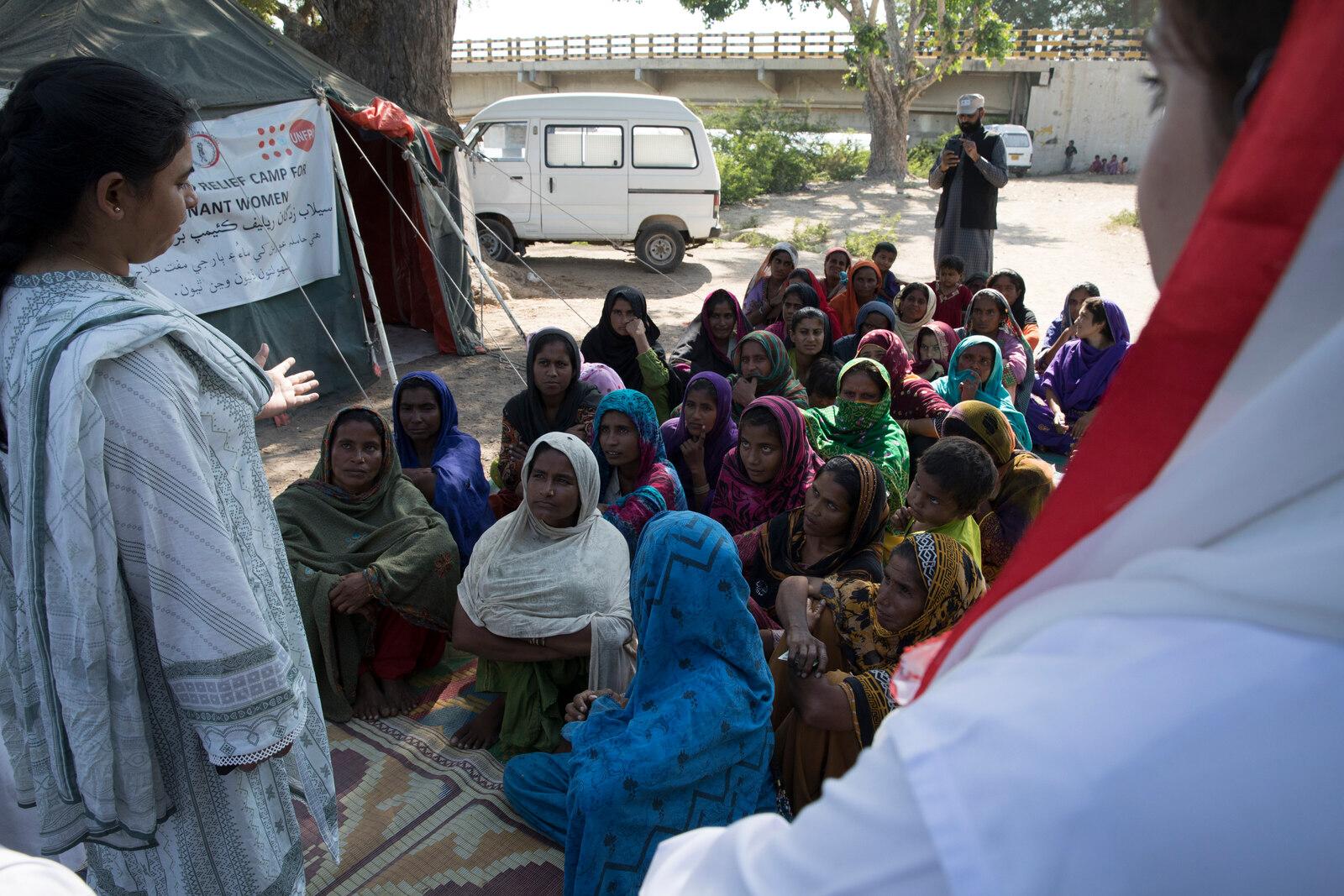
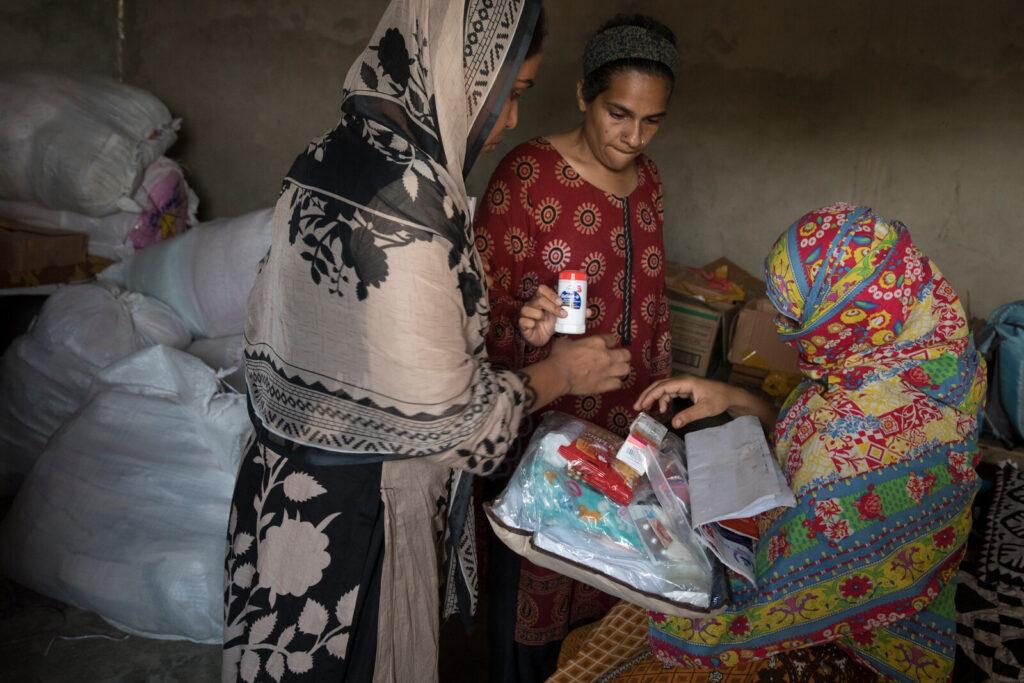
Midwives providing menstrual health education to displaced women after the floods in Pakistan. (credit for both pictures: Janet Jarman)