
As the Lyon “One Health” summit pledges face their first real test at the upcoming World Health Summit Regional Meeting in Nairobi, Africa must finally reject extractive Western engagement and build sovereign, resilient community health systems anchored in professionalised CHWs and genuine local ownership.
Western engagement with Africa—often presented as technical assistance, research partnerships, or climate finance—has too frequently delivered extractive outcomes that weaken community health systems. Resources drain away, local agency erodes, and frontline workers remain vulnerable. Community health workers (CHWs), the backbone of primary care, continue to face chronic underfunding, poor supervision, “ghost worker” leaks, and fragmented donor projects that break continuity of care and public trust. These pressures overlap with climate-driven disease shifts, conditional financing that fails to build real resilience, illicit financial flows and debt that crowd out health budgets, gendered inequities, migration strains, and loss of data sovereignty. Real progress requires confronting both external patterns and domestic governance gaps.
Africa must professionalise and sustainably finance CHWs, invest in local adaptive capacity, and assert collective sovereignty through AU and Africa CDC leadership to build truly resilient, self-reliant community health systems.
CHWs deliver essential frontline services yet remain precariously supported. Programmes suffer from inadequate financing and supervision, while ghost workers divert salaries and supplies. Scaling to two million CHWs by 2030 could yield up to $19 in economic returns per dollar invested, according to Africa CDC analysis. An estimated US$4.3 billion annually is required to build a two-million-strong CHW workforce by 2030. However, many initiatives remain donor-dependent and fragmented, even when they claim alignment with national plans. When external partners create parallel structures instead of integrating CHWs into national civil service systems, communities lose both care continuity and trust.
Lyon “One Health” summit: performative pledges to be put to the test
The recent One Health Summit in Lyon, France captured the tension clearly. Africa CDC secured pledges exceeding US$250 million, including €96.5 million from the EU (with €46.5 million for antimicrobial resistance and One Health workforce efforts) and $166 million linked to the Green Climate Fund and Global Fund for climate-resilient health systems. The language was encouraging: Africa shaping its future, coordinated leadership, and sovereignty as non-negotiable. These funds target critical areas—surveillance, labs, AMR, and climate-health links—that matter for the continent.
Yet the deeper test remains: will these resources strengthen African-owned systems with genuine technology transfer, local manufacturing, and data control, or will they largely flow through established global channels with limited structural change? Experiences with earlier large initiatives show that pledges can deliver short-term infrastructure and workshops, but often fall short on breaking cycles of dependency or building irreversible domestic capacity in diagnostics, vaccines, and regulation.
Climate change intensifies the challenge. Shifting disease patterns, expanding malaria zones, heat-related illnesses, and nutrition insecurity already strain community systems. Africa CDC’s Strategic Framework for Climate Change and Health (2025) notes that over half of recent public health events on the continent link to climate factors. Conditional finance tied to externally designed projects rarely builds sufficient local adaptive capacity at community level, leaving households to bear costs through out-of-pocket expenses and lost livelihoods.
Broader extractive dynamics compound the fragility. Africa loses tens of billions yearly to illicit financial flows, while debt servicing squeezes recurrent health budgets. Data collected by CHWs on household nutrition, symptoms, and reproductive health frequently flows to external platforms without adequate local governance or benefit-sharing, undermining data sovereignty.
Women and girls carry disproportionate burdens through unpaid care work and heightened climate-health risks. Migration and displacement further stretch host communities. Effective responses must be deliberately gender-responsive and migration-aware.
Knowledge production follows similar patterns, with Western priorities often dominating and African communities positioned more as data sources than co-creators. Decolonising this space demands centring African-led questions, participatory methods, and epistemic justice.
Building real resilience: priorities before Nairobi
None of these issues is insurmountable. Sustainable progress depends on three linked actions:
First, strengthen domestic governance: eliminate ghost workers, integrate and professionalise CHWs with reliable pay and supervision, ring-fence frontline budgets, and consistently meet commitments such as the Abuja Declaration.
Second, build productive community capacity: scale climate-resilient interventions, local production of pharmaceuticals and diagnostics, and gender-responsive programming. Regional value chains can cut dependence while creating dignified jobs.
Third, assert collective sovereignty: the AU and Africa CDC should lead unified frameworks for data governance, equitable research partnerships, and migration-sensitive planning. Lyon-style pledges should translate into implementation controlled increasingly from African capitals, with clear accountability to ensure reciprocal benefit rather than extraction. Africa CDC’s work on data governance — particularly its leadership in developing a Continental Health Data Governance Framework — offers a solid starting point.
Rwanda’s community-based health insurance and integrated CHW model, Botswana’s consistent frontline investment, and pharmaceutical efforts in Ghana and Senegal prove that disciplined local ownership delivers results.
Western partners genuinely interested in Africa’s progress should support this shift toward self-reliance. Extraction breeds resentment and dependency; authentic partnership invests in capacity that eventually reduces the need for one-sided aid.
Global health financing strains today offer Africa a clear choice. We can treat Lyon and similar high-level announcements as performative diplomacy while community systems stay fragile, or seize the moment to drive the governance reforms and local capacity-building our people deserve. With discipline, evidence, and a focus on long-term dignity, resilient and equitable community health systems are achievable.
As we prepare for the World Health Summit Regional Meeting in Nairobi from 27–29 April under the theme “Reimagining Africa’s Health Systems: Innovation, Integration, and Interdependence” — with Africa CDC’s Dr Jean Kaseya and other leaders expected — this is the moment to move beyond declarations and build the accountable, locally-driven systems our continent actually needs.
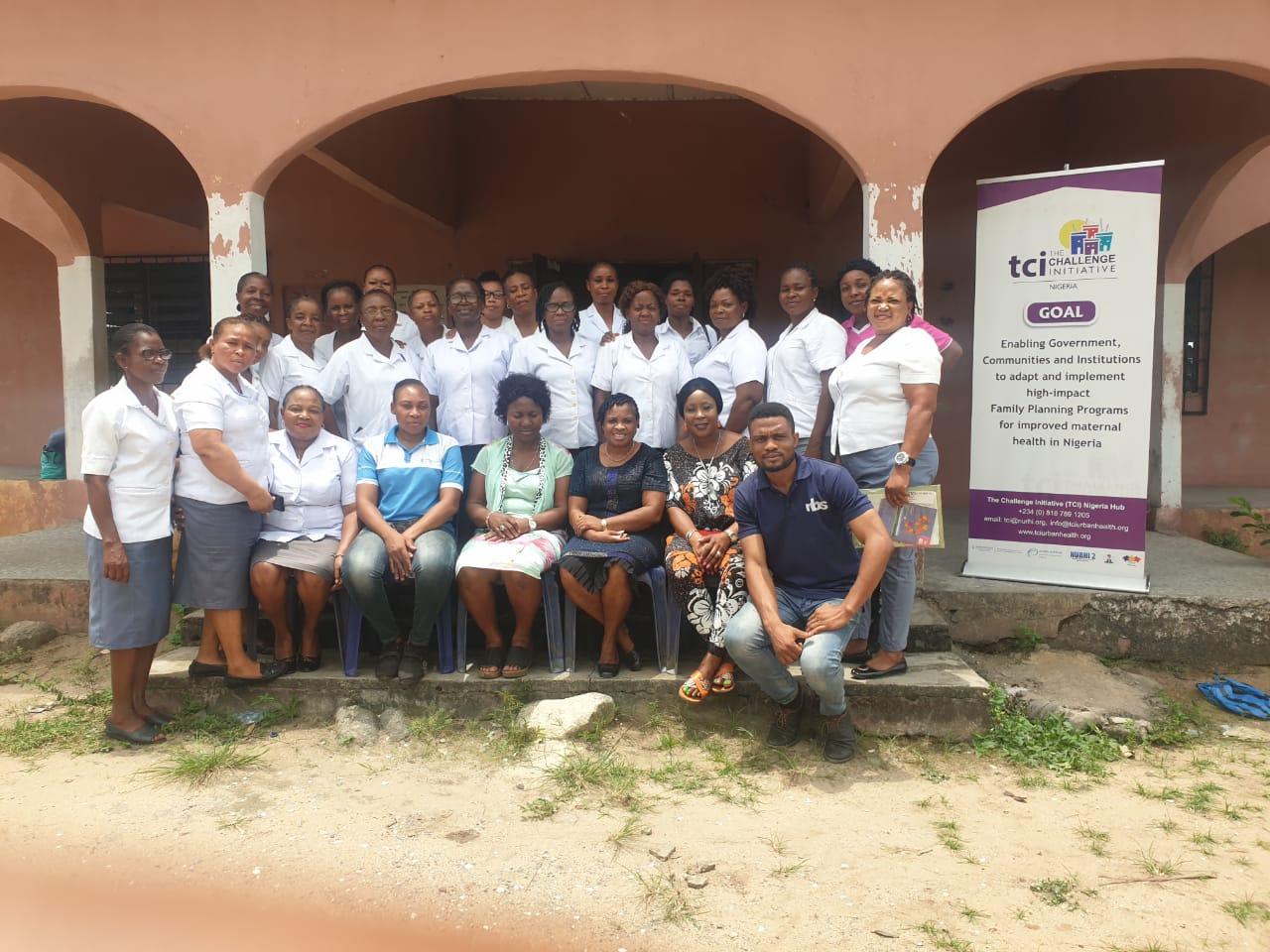
Ikenna Ebiri Okoro (front row, right) with community health workers and partners from The Challenge Initiative (TCI) Nigeria Hub during a grassroots engagement on family planning and maternal health services in Nigeria