

On 3 March every year, the global community comes together to celebrate United Nations World Wildlife Day (WWD), recognizing the essential role that wild animals and plants play in sustaining ecosystems, economies and human well-being. This year’s slogan “Medicinal and Aromatic Plants: Conserving Health, Heritage and Livelihoods” places a spotlight on the need to conserve wild plants as one of the means to ensure health and wellbeing of human populations. Indeed, the World Health Organization recognizes their significance especially in developing countries: on the African continent for example, 80% of the population relies on traditional medicine for primary healthcare.
The medicinal and aromatic plants mentioned in this year’s theme bridge the gap between ancient traditional systems and modern clinical science, providing bioactive compounds that treat complex diseases and serving as the blueprint for most of the modern pharmaceutical drugs. Overall, human medicine is heavily connected to plant biodiversity. Indeed, in recent decades the rate of use of medicinal plants has increased in both developing and developed countries. Developing countries however heavily rely on them, compared to developed countries. One of the main reasons for this is that medicinal plants are readily available, align with different cultures and are perceived to be safe and effective when taken. As a result, the demand for these plants (including in developed countries) is so high that some of the different species are threatened with extinction. Moreover, extinction potential for numerous plants is being exacerbated by climate change.
Efforts thus ought to be ramped up to conserve these plants. Indeed, conserving and preserving medicinal plants not only contributes to health but also stabilizes ecological systems. This ultimately contributes to the different Sustainable Development Goals (SDGs) including SDG 1 (Good Health and Wellbeing), SDG13 (Climate Action) and SDG 15 (Life on Land) among others.
Moving forward in the context of sub-Saharan Africa
There is a need for increased research on medicinal and aromatic plants especially in developing countries. This is crucial to support understanding of the active compounds within these plants, their efficacy and ecological requirements for their replication. While some studies have been undertaken, many aspects and sites are understudied. Yet, important insights could be drawn from the dynamics of such plant uses as well as from their ecological requirements. For example, in Uganda, medicinal plants are known to be critical and have recently been integrated in the health system. Besides, they were widely utilized during the COVID-19 pandemic reflecting the value that local people attach to them.
However, despite their critical value, studies on their application in different locations, efficacy and ecological requirements are very limited. Additionally, stakeholder engagement on their conservation is limited. Their use for medicinal purposes is mainly left for the public health professionals while conservation efforts are considered the territory of conservationists. More robust joint efforts across different stakeholders within Uganda would lead to improved, safer and more sustainable use. One of the opportunities that can be used in this respect is the One Health platform which includes stakeholders from different disciplines. Indeed, medicinal plants provide One Health benefits by addressing public health challenges while also contributing to healthy ecosystems. Drawing upon different stakeholders from different disciplines can thus provide opportunities for improved and more sustainable utilization of these plants across the country. I hope such conversations will emerge during the World Wildlife Day (WWD) celebrations in Uganda slated for February 26th, 2026. This will be a great platform so as to improve stakeholders’ understanding of the complexities in the utilization of medicinal and aromatic plants.
Beyond Uganda, such conversations should be held in other countries as well, and not just when World Wildlife Day is commemorated but also at other events. This is crucial as the world faces numerous health issues and security threats that could be addressed using compounds from such plants.
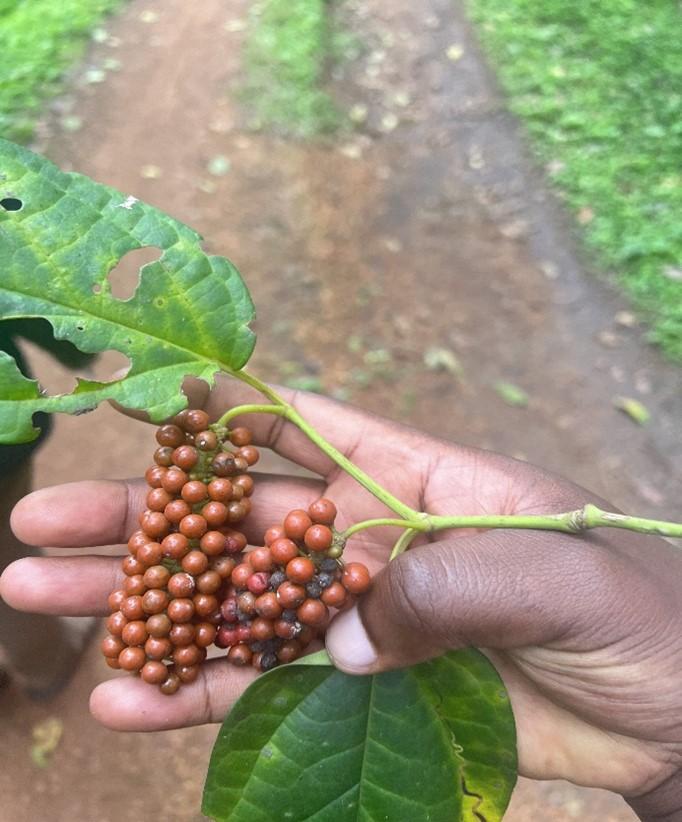
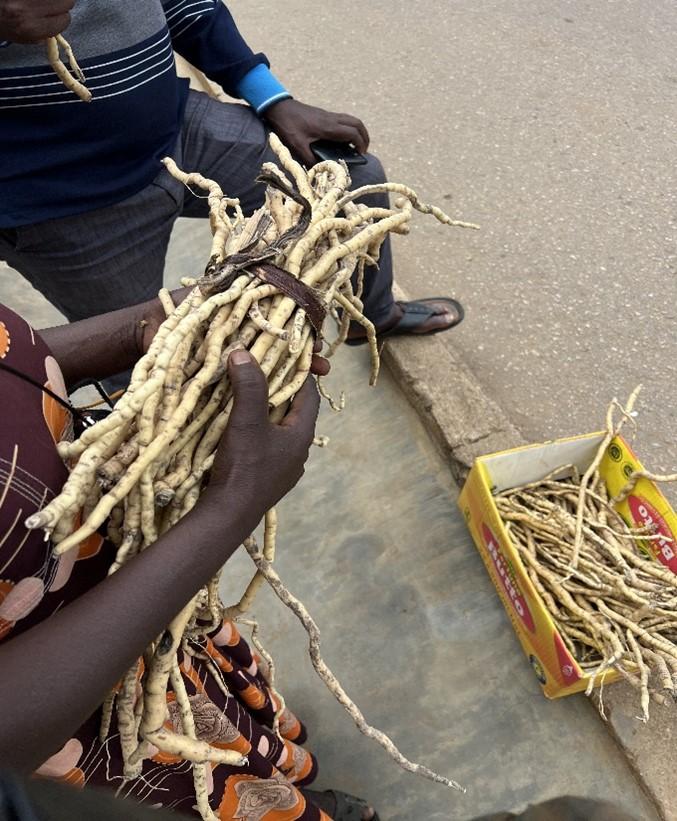
Some of the medicinal and aromatic plants used in Uganda. Background picture: Mondia whitei . Picture at the bottom: Piper guineense
Indeed Medicinal and aromatic plants are nature’s quiet healers, powerful allies in our homes and ecosystems.
As we mark World Wildlife Day in Uganda and beyond, let’s strengthen their role in wellness by investing in One Health research, protecting biodiversity, and passing on indigenous knowledge to future generations.
A healthier planet means healthier people. However, governments should invest in the chemical analysis and advise the stewards of indigenous knowledge on the dosage of the various home remedies before circulation to the markets for consumption.