
Antimicrobial resistance (AMR) is a current crisis that is claiming lives worldwide, with sub-Saharan African (SSA) countries being disproportionately affected. Since Alexander Fleming discovered penicillin in September 1928, he warned that misuse could render antibiotics ineffective, leading to deaths from infections that were once treatable. Today, this is a reality in regions like West Africa, particularly in Sierra Leone, where AMR mortality exceeds that of HIV, tuberculosis, cardiovascular diseases, and maternal and neonatal deaths. The main driver of AMR is improper use of antimicrobial agents, particularly antibiotics. Global efforts should prioritize antimicrobial stewardship (AMS) initiatives, such as establishing national and facility-based AMS programmes, training healthcare professionals, and promoting research and innovation. Furthermore, global initiatives like World Antimicrobial Resistance Awareness Week should be prioritized to educate the healthcare workers and the general public on the benefits of rational use of antimicrobial agents, especially antibiotics.
In recent decades, global initiatives have focused mainly on AMR surveillance. However, this approach alone will not slow progress because it does not address the root cause: inappropriate antimicrobial use, especially antibiotics. A paradigm shift is needed to emphasize AMS as a key strategy in the fight against AMR, especially in SSA countries, which struggle with limited diagnostic resources, financial constraints, and high infectious disease burdens. Funding agencies and researchers should concentrate on equipping various health professional cadres, including doctors, laboratory scientists, pharmacists, nurses, and infection prevention and control (IPC) specialists, with competencies necessary to implement effective AMS interventions to promote rational antibiotics’ use in healthcare facilities and within communities. Training can take different forms, including pre-service education, in-service training, mentorship programmes, and south-to-south and north-to-south knowledge exchanges. Academic institutions should be encouraged to develop formal AMS training programmes to support targeted career development.
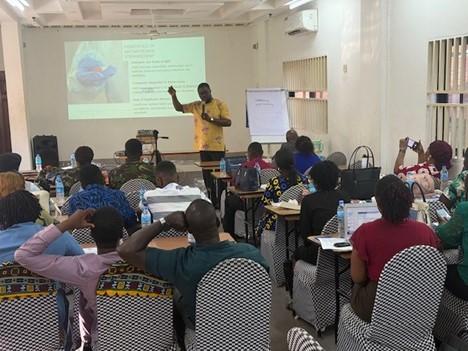
While awaiting scaled AMS training implementation, SSA countries should initiate context-specific in-service AMS capacity development initiatives to cultivate a cadre of AMS leaders and champions who can spearhead the implementation of AMS programmes in healthcare settings. For example, in Sierra Leone, where plans are underway to establish functional hospital AMS programmes in secondary and tertiary facilities, as the WHO AMR focal point, I facilitated comprehensive training for over 30 doctors, pharmacists, nurses, and laboratory scientists from five healthcare facilities nationwide (Figure 1).
Figure 1: 3-day training of medical doctors, pharmacists, nurses, laboratory scientists, and IPC professionals on the hospital antimicrobial stewardship programme, Freetown, Sierra Leone, October 2025.
This training aimed to strengthen institutional capacity for AMS and IPC. Key topics included: principles and importance of AMS in combating AMR, establishing AMS committees and teams with clear terms of reference, WHO AWaRe categorization and its integration within national essential medicines lists, conducting prescription audits and point prevalence surveys of antibiotic use, IPC fundamentals such as standard and transmission-based precautions, healthcare-associated infections (HAIs), and practical exercises on completing WHO AMS Core Elements and IPC Minimum Requirements. Participants gained critical knowledge and skills to start AMS programmes within their institutions, promoting rational antibiotic use, patient safety, and IPC. I plan to follow up with them to assess the implementation of the knowledge and competencies gained.
To broaden the community of practice of AMS, during the commemoration of World AMR Awareness Week (WAAW) 2025, I engaged newly graduated medical doctors and pharmacists on rational prescribing of antibiotics to ensure patient safety and reduce the burden of AMR in the country. My goal was to gain their buy-in and recruit them as AMS-champions (Figure 2).

Figure 2: Engagement with newly graduated medical doctors and pharmacists on rational use of antibiotics to ensure patient safety, Freetown, Sierra Leone, November 2025.
This is a momentous step toward institutionalizing AMS in secondary and tertiary healthcare facilities across Sierra Leone. The trained healthcare workers are now equipped to lead AMS initiatives, which can improve clinical outcomes by reducing inappropriate antibiotic use, strengthening IPC practices, and enhancing national surveillance of antimicrobial use.
I urge countries in SSA to invest in training and educating AMS professionals to ensure the rational use of antibiotics in healthcare, as this is one of the most effective interventions to combat AMR in resource-limited settings with limited infrastructure for comprehensive AMR diagnostics in all healthcare facilities.