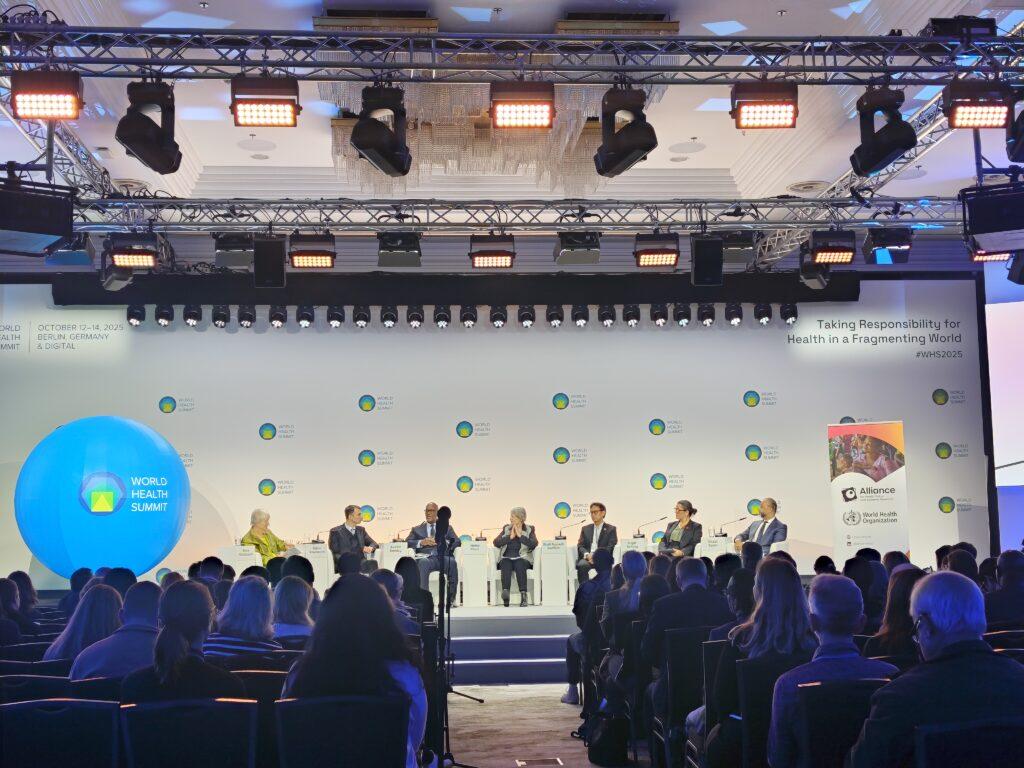

The World Health Summit (WHS) brings together political leaders, corporate executives, academics, global health agencies, entrepreneurs and start-ups, but rarely the communities most affected by the issues discussed. Panels in Berlin remain dominated by ministers, CEOs, and agency heads. Even if some progress has been made over the years, citizens, patients, and frontline workers are still largely missing from the agenda-setting table. This creates a paradox: public health decisions are debated in elite spaces far removed from the public realities they claim to represent. And that’s not even considering the ‘invitation only’ side meetings at the WHS where decisions are taken, defying the values of inclusiveness and open discussion even more.
As reported in a new article, over the years WHS has made some progress in terms of representation and inclusiveness. Still, while this year’s WHS arguably included five official civil society organisations within its (partner) network, an animal rights group and an environmental organisation are also among them, raising some questions about which civil society voices are being heard. Although more health-focused public representatives were present in Berlin, they were largely in the audience. A notable exception was a panel on the role of patients amidst global polycrises, where patient groups shared lived experiences alongside the WHO and advocacy organisations. Such moments signal progress, but they remain exceptions rather than the norm. Panellists in other sessions brought attention to civil society engagement models like PEN plus and the Mission-Oriented Approach.
By and large, though, the focus at summits like the WHS leans toward technological, biomedical, or innovation-driven solutions (AI in health, digital platforms, vaccines, industry partnerships). Meanwhile, social determinants such as housing, nutrition, caste, gender, race, livelihoods, and environmental degradation get token mention. These are the true domains of public health, but they rarely excite global funders or attract headlines.
Even as global health rhetoric has become less overtly colonial, power asymmetries remain. The WHS continues to centre northern institutions, English-speaking experts, and global agencies. Although regional WHS meetings are happening, the role of local actors in them, such as community health workers, patient advocates, and grassroots organisers, remains to be seen. Let’s hope the upcoming one in Nairobi, Kenya, gets this right.
Meanwhile, mechanisms for public scrutiny or accountability in such forums are still weak. WHS shapes global health narratives and funding priorities, yet communities have few ways to provide feedback or influence outcomes. Alternative movements, such as the People’s Health Assembly and the COPASAH Symposium, continue to reclaim space by grounding discussions in lived experiences. Here in Berlin, Medico International attempted something similar with a counter event during the Summit.
To move forward, inclusiveness must go beyond token representation. Direct participation in decision-making, not mere consultation, is essential. Encouragingly, this year’s WHS saw visible youth engagement, signalling that future health systems might benefit from the perspective of younger voices. Yet such engagement needs to be institutionalised, not occasional.
Civil society organisations that live and work among affected communities are crucial for accountability, ensuring that what is promised in policy is realised in practice. These actors have gotten a bit closer to policymakers, but their spaces for influence remain fragile and must be consciously protected.
Ultimately, sustainability in health systems depends not only on financing or technology but also on the relationships of trust built with communities. When people are meaningfully involved, they hold systems accountable and ensure continuity across political cycles. If the World Health Summit truly aims to lead global health dialogue, it must re-centre the people whose health it speaks for and with.
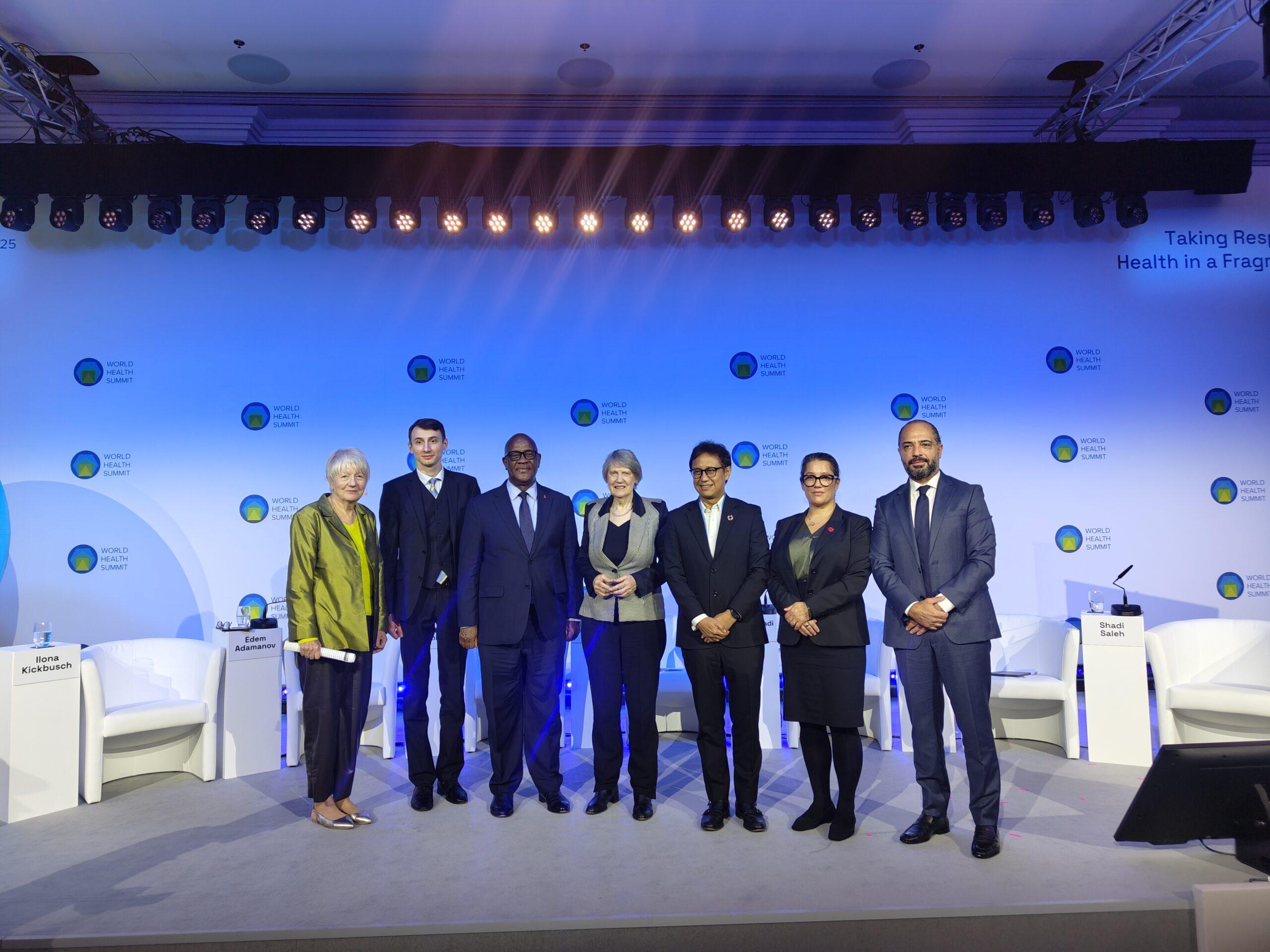
A random panel at the WHS
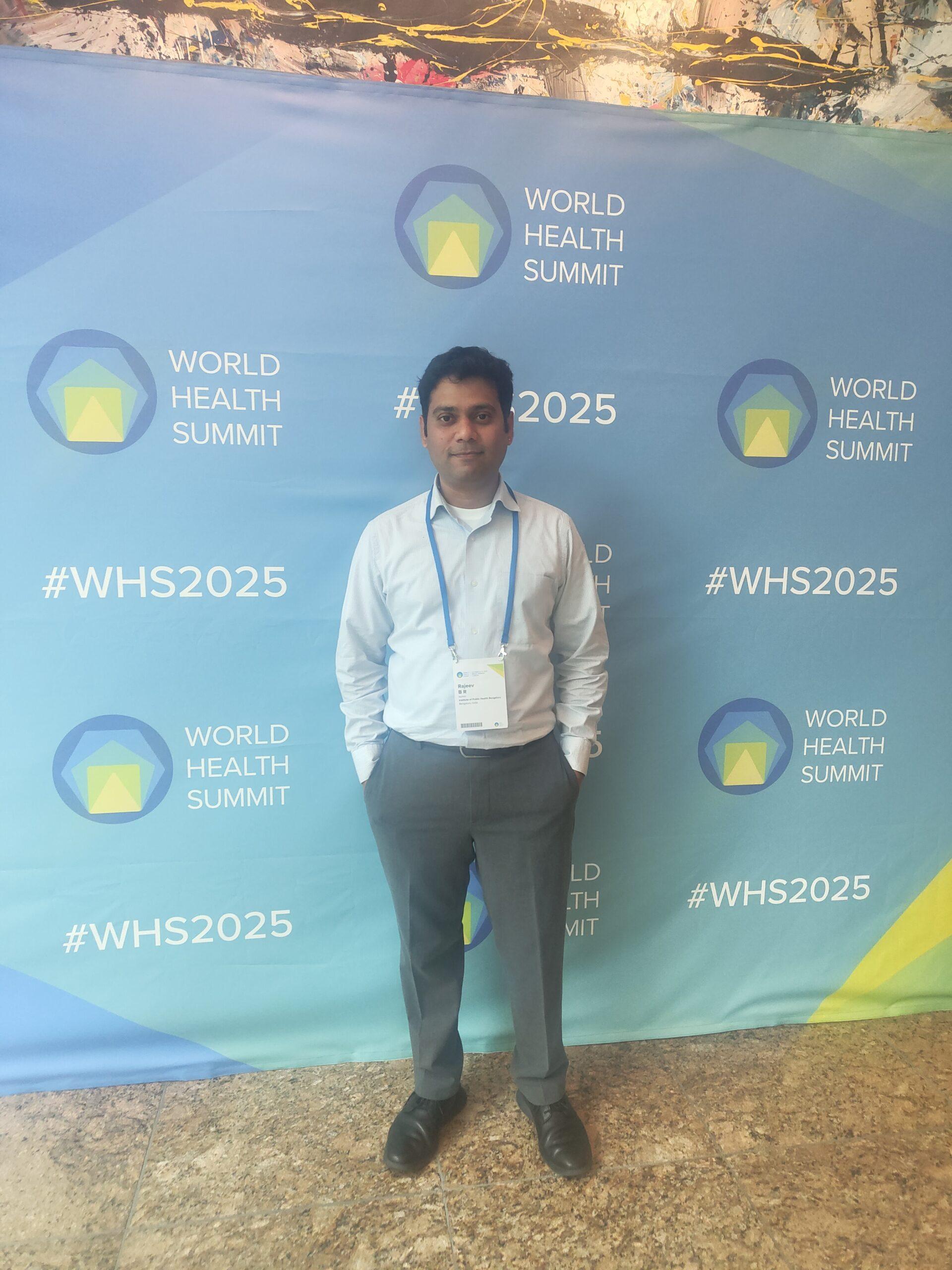
The author of this article