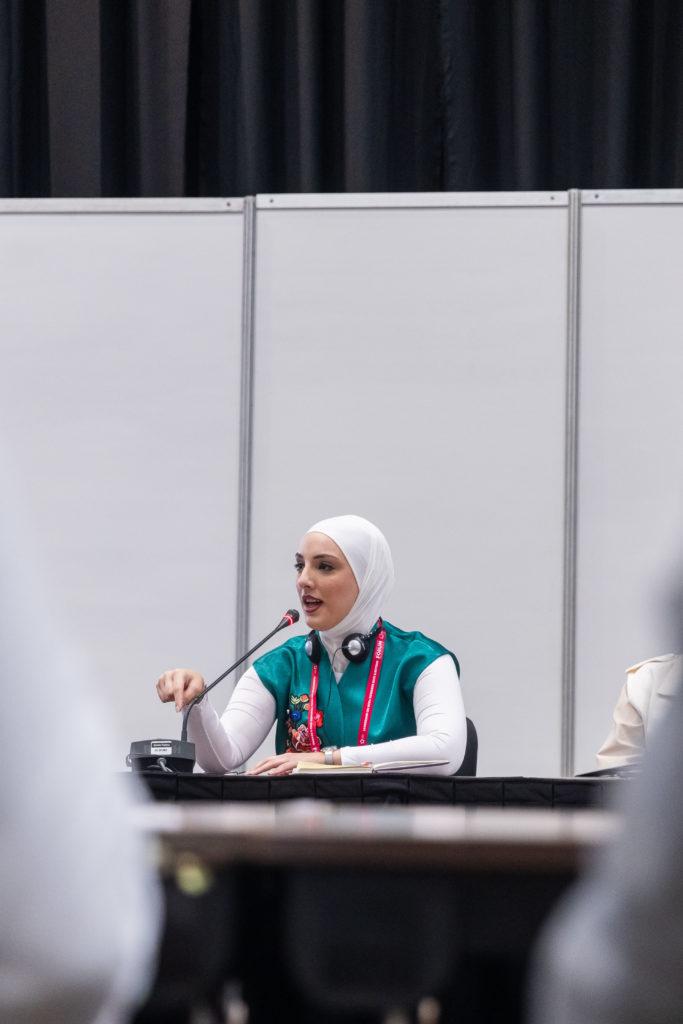

Despite growing global recognition of noncommunicable diseases (NCDs) as a major health challenge, significant gaps remain in how the global NCD movement addresses the needs of conflict-affected populations, meaningfully engages youth leadership, and integrates a gender lens. These issues were particularly evident during the recent 4th Global NCD Alliance Forum in Kigali (13-15 February), where I participated in discussions aimed at shaping the future of global NCD action.
While the Forum offered valuable dialogue on equity and health systems strengthening and took important steps to elevate youth voices and lived experiences, critical intersections, particularly between NCDs, emergencies, gender, and youth participation in decision-making, received limited structural attention. This reflection seeks to highlight these under-addressed areas as we look ahead to the2025 United Nations High-Level Meeting on NCDs and the political declaration that will guide global action in the coming years.
In humanitarian crises, continuity of care for NCDs is rarely prioritized. Access to essential treatments for conditions such as cancer, diabetes, and cardiovascular diseases is often disrupted due to displacement, destruction of health infrastructure, or blockade. These disruptions lead to avoidable suffering and death, particularly among the elderly, women, and people with chronic diseases.
Palestine offers a stark illustration of these dynamics. In Gaza, repeated military assaults, siege conditions, and health system collapse have made access to cancer treatment, dialysis, and diabetes care extremely precarious. Clearly, these realities are not unique to Gaza. Similar patterns are seen in Yemen, Sudan, Syria, and other conflict settings where chronic disease management is severely undermined by instability and violence.
Yet, global NCD strategies and humanitarian health responses continue to operate largely in silos, with little integration of NCD care into emergency preparedness and response plans. The failure to address this intersection reflects a structural gap that urgently needs to be corrected.
NCDs disproportionately affect women, particularly in conflict-affected and low-resource settings. Women face unique barriers to care, including disrupted maternal health services, gender-based violence, and structural inequalities that limit access to diagnosis and treatment. Despite these realities, gender received limited attention during the Forum, with only one session directly addressing the intersection of NCDs and women’s health.
The absence of a gender-responsive approach in global NCD policy discussions risks further marginalizing women’s health needs. Integrating gender into NCD strategies requires moving beyond representation toward meaningful policy analysis and action that address structural gender inequalities in health access and outcomes.
Arguably, youth engagement and the inclusion of people with lived experiences were visible strengths of the forum. A dedicated pre-conference, including a Youth Pre-Conference and the Our Views, Our Voices initiative, ensured that lived realities were brought to the discussions. Youth delegates were also present in several plenary sessions and produced a youth declaration that reflected broad perspectives.
However, while these initiatives represent important progress, youth participation remained largely parallel to the main decision-making spaces, limiting their opportunities to engage meaningfully and influence core outcomes. The process illustrated the broader challenge of how youth advocacy tends to be positioned within the global NCD movement. Moving forward, youth leadership must be systematically embedded within the structures of global NCD governance — not limited to symbolic participation or parallel spaces.
Youth should not be seen as a separate category of participants but as critical leaders and partners in shaping policy, advocacy, and accountability efforts.
Especially in conflict-affected contexts, young people are not just passive recipients of broken systems — they are caregivers, community organizers, health workers, and advocates holding fragile structures together. They often bear the brunt of health system failures, while simultaneously leading local efforts to support their communities. Their leadership is not only essential, it is already underway and essential for designing effective, equitable solutions.
Engaging youth meaningfully, equitably, and with trust — particularly those in humanitarian and crisis contexts — is thus critical to building inclusive systems. Doing so is not only a matter of justice, but a path toward disrupting entrenched power hierarchies. Without this shift, the global health space risks reproducing the same cycles of exclusion, with power merely transferring from one generation to the next.
The upcoming UN High-Level Meeting on NCDs in New York and its political declaration present an opportunity to address these persistent gaps. Three key areas require urgent attention:
By the way, addressing these issues is not only a matter of inclusivity but also one of effectiveness. Health equity cannot be achieved if large segments of the global population — including those in humanitarian crises, women, and young people — remain excluded from policy frameworks and resource allocation.
For the global NCD response to be truly equitable and impactful, it must move beyond traditional models of health systems strengthening and governance. It must engage directly with the complexities of conflict, displacement, and structural gender inequalities — and embrace the leadership of women and young advocates (meaningfully!) as central to its success.
This reflection, grounded in my participation at the 4th Global NCD Alliance Forum, is a call to widen the conversation and ensure that the upcoming political commitments reflect the realities of those too often left out of global health policymaking.
Acknowledgment: I’m grateful to Deepika Saluja, also present in Kigali, for her feedback on this article.