Subscribe to our weekly International update on Health Policies
Young (and occasionally less young) researchers, mostly from LMICs, present their views on global health issues.
Just before WHA79, IHP editor Kristof Decoster spoke with Jocalyn Clark, international editor of The BMJ, for her new article on the campaign for next Director-General of WHO, which has just kicked off. They had a broader discussion than was able to be included in the BMJ article. Here, we publish a fuller Q&A between these two editors who discu...
In March 2026, India amended its Transgender Persons (Protection of Rights) Act, a law that governs how transgender people are legally recognised by the state. What unsettled me the most about it was how easily it changed and how little time it took to do so. There was criticism, there were protests, there were warnings from activists. And yet t...
There is considerable interest in reforming global health governance with a plethora of recent reform proposals from actors such as the Wellcome Trust and Health Architecture Reimagined (HEAR). Moreover, in the aftermath of Covid-19 there have been numerous recommendations issued from a wide variety of multilateral and non-governmental actors su...
When we picture a victim of domestic violence in India, the image that often surfaces is that of a woman, reflecting the well-documented reality that women disproportionately experience such violence. Sadly, it’s thus an accurate picture. However, this should not obscure the fact that men, too, can be victims of domestic abuse, with often litt...
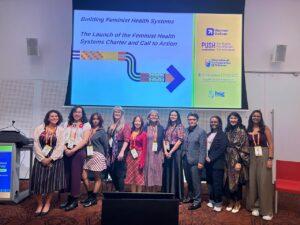
The recent Women Deliver Conference 2026 in Melbourne marked an important moment for those working at the intersection of gender, health, and justice. With the launch of the Melbourne Declaration for Gender Equality and the Feminist Health Systems Charter, with the associated calls to Action, there is now a clearer path for what feminist health ...
Much of the world is focused on fentanyl. But across Africa, a different opioid catastrophe has been quietly building for years, and it is getting worse. In the markets of Kumasi, Ghana, a motorbike taxi driver starts his shift before dawn. Before his first passenger, he swallows a handful of small white pills bought the night before from a road...
Last week the World Health Summit Regional Meeting 2026, themed ‘Reimagining Africa’s Health systems: innovation, integration and interdependence’, took place in Nairobi, Kenya at a critical moment for global health. WHS Nairobi (and side events on the margins) brought together policymakers, researchers, and practitioners to reflec...
As development assistance for health declines, many low- and middle-income countries (LMICs) are rethinking how to finance health systems that are equitable, resilient, and increasingly self-reliant. The shift from aid dependence towards fiscal sovereignty is not merely financial; it reflects a deeper transformation in governance, accountability...
As the Lyon “One Health” summit pledges face their first real test at the upcoming World Health Summit Regional Meeting in Nairobi, Africa must finally reject extractive Western engagement and build sovereign, resilient community health systems anchored in professionalised CHWs and genuine local ownership. Western engagement with Afr...