Subscribe to our weekly International update on Health Policies
Young (and occasionally less young) researchers, mostly from LMICs, present their views on global health issues.
Six years are left to meet the United Nations (UN) Sustainable Development Goals (SDGs), a ringing bell for the upcoming High-Level Political Forum on Sustainable Development (HLPF), taking place at the UN Headquarters, in New York, from 8 to 17 July 2024. In the most recent Sustainable Development Report 2024 by the UN Sustainable Development S...
Our surroundings undoubtedly affect our health, shape our routines, and ultimately impact our lives and long-term health outcomes. Recent research highlights how various neighborhood characteristics impact physical and mental health, and this both at individual and population level. As our understanding of these connections and the underlying bi...
In the busy hallway of one of the health centers in the Amhara region of Ethiopia, I encountered Melat, a middle-aged woman whose tired eyes revealed the weight of her troubles. Despite living with diabetes for years, Melat’s understanding of self-management was rudimentary at best. Like many others in her neighborhood, she relied on a few presc...
If you followed last week’s 77th World Health Assembly (WHA) – the WHO’s governing body composed of its 194 member states – through press release headlines, it was a historic success. WHO’s Director-General Dr. Tedros closed the week by stating WHA77 had been a “victory for multilateralism”. “Landmark” resolutions were passed on ...
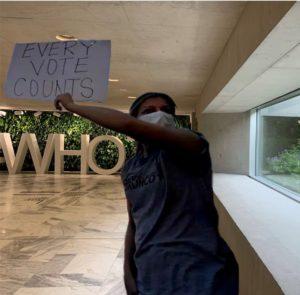
Although it’s difficult to compare for me, the 77th World Health Assembly (WHA77) has a unique character. It is driven by a kind of pressure, gentle but eloquent. This pressure, aside from the declarations of civil society and frantic social media activity of many actors present in Geneva, can be seen and felt in the gestures, the looks, and t...
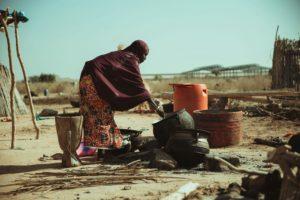
When Sunda goes to prepare dinner for her family, she first goes to a nearby bush to forage for wood or animal dung to use as cooking fuel. After hours pass, she decides she has enough, so she walks home and begins building a fire in the cooking pit. She asks her son to go to the community spicket to collect water to boil for today’s meal and ...
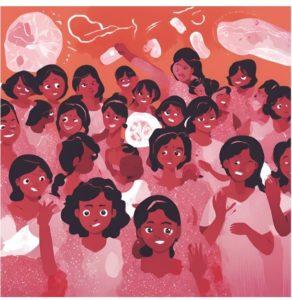
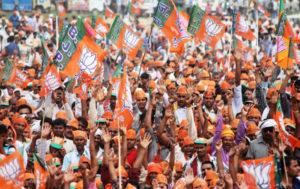
Imagine starting your period for the first time, completely unprepared and alone. Sadly, this is the reality for nearly half of all girls in India due to a pervasive culture of silence surrounding menstruation. Menstrual health is a critical issue often neglected in public discourse, and unfortunately, it’s not a priority in the current politica...
Globally, there are reports of rising uncertainty, stress, and anxiety, in response to increasing conservatism, discrimination, political unrest and violence. The World Health Organization defines mental health as “a state of well-being in which the individual realizes his or her own abilities, can cope with the normal stresses of life, can wo...
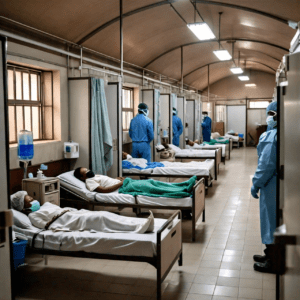
During the COVID-19 pandemic, governments the world over sought to limit its spread through the establishment of COVID-19 treatment centres (CTC) – certainly at the start of the pandemic, but also during peak waves. It was in these centres that persons infected with COVID-19 were mostly interned and taken care of. In most cases, these patients...